Pelvic Floor Weakness, Bladder Leakage & Uterine Prolapse: What the Best Urogynecologist for Uterine Prolapse Treatment in Gurgaon Recommends
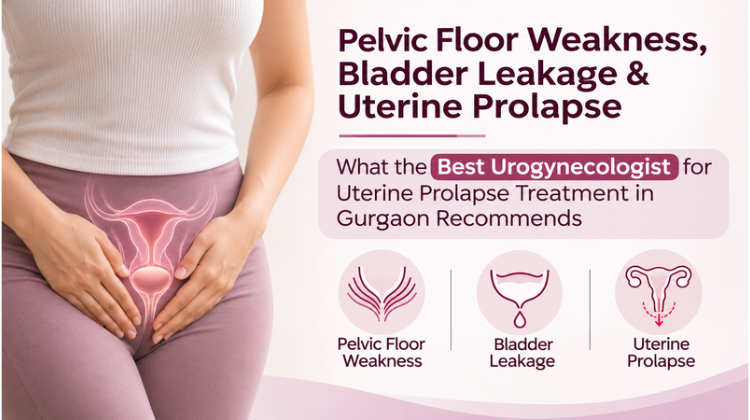
Many women notice a quiet cluster of changes before they ever connect the dots: a few drops of urine when coughing, sneezing, or laughing, a sudden urge to rush to the restroom, or a heavy, dragging feeling in the lower pelvis after standing for hours. Often, these signs are dismissed as a normal part of having children, getting older, or going through menopause. Yet pelvic floor weakness, bladder leakage, and uterine prolapse frequently share underlying anatomical roots and respond far better when evaluated together early on.
Understanding What the Best Urogynecologist for Uterine Prolapse Treatment in Gurgaon Recommends helps turn silent discomfort into a clear, actionable plan. Rather than guessing whether a symptom is just a minor nuisance or a sign of shifting pelvic support, timely specialist guidance clarifies what is happening inside the pelvis, what can be improved without surgery, and when reconstructive care offers lasting relief.
Understanding Pelvic Floor Weakness, Bladder Leakage & Prolapse: What the Best Urogynecologist for Uterine Prolapse Treatment in Gurgaon Recommends
Inside the pelvis, a sling of muscles, fascia, and ligaments supports three closely neighboring organs: the bladder in front, the uterus in the middle, and the rectum behind. When these support tissues stretch, thin, or lose strength—a condition broadly referred to as pelvic floor weakness or pelvic floor dysfunction—one or more of these organs can shift downward toward or into the vaginal canal.
When the uterus descends from its normal position, it is known as uterine prolapse. Because the bladder and urethra sit right next to the upper vaginal wall and uterus, descent or weakened muscular support can alter how the bladder holds and releases urine. That is why bladder leakage (urinary incontinence), urinary urgency, frequency, or a feeling of incomplete emptying commonly shows up alongside pelvic heaviness or a vaginal bulge.
Common contributors that strain or weaken pelvic floor support over time include:
-
Pregnancy and childbirth, especially after multiple vaginal deliveries, larger babies, or prolonged/assisted second-stage labor.
-
Hormonal transitions, particularly declining estrogen levels around perimenopause and menopause, which reduce tissue elasticity and support.
-
Chronic increases in intra-abdominal pressure, such as long-standing constipation, chronic coughing, or frequent heavy lifting.
-
Connective tissue differences or prior pelvic surgery, which can place added load on surrounding ligaments and muscles.
Recognizing What the Best Urogynecologist for Uterine Prolapse Treatment in Gurgaon Recommends means looking at the whole pelvic system—muscles, ligaments, uterus, and bladder control—rather than treating isolated symptoms in silos.
Recognizing Bladder Leakage & Prolapse Symptoms: What the Best Urogynecologist for Uterine Prolapse Treatment in Gurgaon Recommends
Symptoms of pelvic floor weakness and uterine prolapse often develop gradually. Many women notice them mildest in the morning and more pronounced later in the day or after long periods on their feet.
Common Bladder and Urinary Changes
-
Stress urinary leakage: Small or noticeable leaks when coughing, sneezing, laughing, lifting, or exercising.
-
Urinary urgency and frequency: A sudden, hard-to-delay urge to urinate, going more often than usual, or waking repeatedly at night to pass urine.
-
Incomplete emptying or weak stream: Feeling that urine is still left behind after visiting the restroom, needing to wait or change position to finish, or having a slow stream.
-
Recurring urinary irritation: Repeated bladder discomfort or infections related to incomplete bladder emptying or tissue changes.
Pelvic and Vaginal Signs of Uterine Prolapse
-
Pelvic heaviness or dragging: A constant sensation of weight, pressure, or pulling deep in the pelvis or lower abdomen.
-
A soft bulge or lump: Feeling or seeing tissue descending toward or past the vaginal opening, often more noticeable while bathing, standing, or bearing down.
-
Lower back ache: A dull, aching sensation in the lower back that builds up during standing or busy days.
-
Discomfort during intimacy: Feeling tightness, friction, or pressure during intercourse.
Knowing What the Best Urogynecologist for Uterine Prolapse Treatment in Gurgaon Recommends becomes much clearer when you pay attention to how often these symptoms appear and how much they alter your daily routine.
Prolapse Grades and Why Symptom Bother Matters: What the Best Urogynecologist for Uterine Prolapse Treatment in Gurgaon Recommends
During a pelvic exam, a specialist assesses pelvic support at rest and with gentle bearing down to classify the degree of prolapse (using clinical grading or staging systems such as Baden-Walker or POP-Q). While exact measurements require an in-person exam, patients generally benefit from understanding how descent progresses:
-
Mild Descent (Grade 1 / Stage I): The uterus sits lower than usual within the upper or mid-vagina but remains well above the opening. Many women have minimal or no awareness of descent, or only mild heaviness after long days.
-
Moderate Descent (Grade 2 / Stage II): Descent reaches closer to or around the vaginal opening. Awareness of a bulge, pelvic pressure, and bladder symptoms like frequency or leakage become more frequent.
-
Advanced Descent (Grades 3–4 / Stages III–IV): The uterus descends further past the opening or protrudes outside to varying degrees, which can cause tissue friction, dryness/irritation, or noticeable mechanical difficulty with walking, sitting, or emptying the bladder.
Interestingly, anatomical grade and daily symptom bother do not always match. Some women with mild descent experience frustrating bladder leakage or pelvic aching, while others with moderate descent adapt for a time before seeking care. Weighing What the Best Urogynecologist for Uterine Prolapse Treatment in Gurgaon Recommends helps you get an accurate grade and a plan matched to your actual symptoms—not just a label.
Non-Surgical & Lifestyle Steps: What the Best Urogynecologist for Uterine Prolapse Treatment in Gurgaon Recommends
A major reassurance from urogynecology specialists is that treatment does not jump straight to major surgery for every patient. Care is typically layered—starting with targeted, conservative measures whenever appropriate and advancing to reconstructive surgery when symptoms persist, prolapse is advanced, or durable structural correction is needed.
Conservative and Non-Surgical Measures
-
Supervised pelvic floor rehabilitation: Targeted pelvic floor muscle training (including proper technique, coordination, and relaxation—often with a specialized women’s health physiotherapist) helps strengthen support and improve bladder control.
-
Bowel, cough, and lifting habits: Treating chronic constipation, managing chronic cough, avoiding breath-holding/straining, and using hip/leg mechanics when lifting reduce repeated downward pressure on the pelvic floor.
-
Local vaginal estrogen (when medically appropriate): In menopausal or postmenopausal patients with vaginal tissue thinning or dryness, local estrogen therapy may help support tissue health and comfort when clinically suitable.
-
Vaginal pessary: A custom-fitted, removable medical-grade silicone support device placed inside the vagina to support the uterus and reduce bulge or pressure symptoms—an effective option for women seeking non-surgical relief, awaiting surgery, or avoiding operations. Paying attention to early shifts in pelvic support and bladder control is a practical first step toward applying What the Best Urogynecologist for Uterine Prolapse Treatment in Gurgaon Recommends. Getting an accurate evaluation early makes all the difference—Consult Dr Preeti Rastogi, best gynecologist in gurgoan for clear, stage-appropriate options.
Surgical and Reconstructive Pathways
When non-surgical steps are insufficient, when prolapse is significant, or when a woman desires a lasting structural fix, surgical options are individualized based on prolapse pattern, bladder symptoms, age, and preferences regarding the uterus:
-
Prolapse repair and apical support procedures: Reconstructive operations—including uterus-sparing options when appropriate and desired, or hysterectomy combined with pelvic floor suspension when indicated—aim to restore anatomical support.
-
Continence procedures when indicated: When significant stress urinary leakage coexists, surgical options for incontinence may be evaluated alongside prolapse repair based on clinical findings.
-
Minimally invasive, laparoscopic, or robotic-assisted techniques: Modern minimal-access and robotic approaches allow precise visualization and delicate tissue handling in selected patients, supporting smaller incisions and structured recovery.
Following What the Best Urogynecologist for Uterine Prolapse Treatment in Gurgaon Recommends lets you compare these paths calmly with a specialist who routinely handles both conservative and reconstructive care. Paying attention to early shifts in pelvic support and bladder control is a practical first step toward applying What the Best Urogynecologist for Uterine Prolapse Treatment in Gurgaon Recommends.Getting an accurate evaluation early makes all the difference—Consult Dr Preeti Rastogi, best gynecologist in gurgoan for clear, stage-appropriate options.
When to Seek Timely Care & Red Flags: What the Best Urogynecologist for Uterine Prolapse Treatment in Gurgaon Recommends
While a routine checkup is a helpful starting point for general women’s health, a urogynecologist focuses specifically on pelvic floor disorders, prolapse, and female urinary control. Moving from uncertainty to specialist care is often the right step when:
-
You notice a vaginal bulge or persistent heaviness: Any new lump, fullness, or dragging sensation in the pelvis deserves a direct, accurate evaluation to identify which pelvic structures are involved.
-
Bladder leakage or urgency affects daily life: If wearing pads, planning outings around restrooms, avoiding workouts, or waking up frequently at night has become your new normal, a specialist assessment can pinpoint the cause.
-
Basic home efforts haven’t brought relief: If you have tried simple pelvic floor exercises or basic habits without meaningful improvement—or aren’t sure you are contracting the right muscles—guided evaluation helps.
-
You want clarity on conservative vs. surgical options: Whether you prefer non-surgical care, want to understand uterus-sparing choices, or are considering minimally invasive/robotic repair, early specialist input prevents guesswork.
When to Seek Prompt Medical Attention
Do not wait for a routine visit if you develop urgent signs such as an inability to pass urine, sudden severe bladder pain/fullness, bleeding or open sores on protruding tissue, or fever, chills, or flank/back pain.
Acting on What the Best Urogynecologist for Uterine Prolapse Treatment in Gurgaon Recommends empowers you to address pelvic floor weakness and bladder leakage proactively before symptoms limit your confidence or mobility. Paying attention to early shifts in pelvic support and bladder control is a practical first step toward applying What the Best Urogynecologist for Uterine Prolapse Treatment in Gurgaon Recommends.Getting an accurate evaluation early makes all the difference—Consult Dr Preeti Rastogi, best gynecologist in gurgoan for clear, stage-appropriate options.
Preparing for Your Urogynecology Consultation
Coming to your consultation prepared makes the visit smoother and more productive:
-
Keep a brief symptom log: Note when pelvic heaviness, bulge sensation, or bladder leakage happens—such as during exercise, coughing, evening hours, or long standing—along with fluid intake and bowel regularity.
-
Gather obstetric and surgical history: Note past pregnancies, delivery types, any pelvic or bladder procedures, and menopausal status.
-
Bring past reports: Carry any prior ultrasound reports, urine/urology notes, or current medication lists.
-
Prepare specific questions: Ask about your prolapse grade, how bladder leakage relates to your prolapse, whether conservative therapy can help first, and what recovery looks like for each option.
Clear communication helps ensure your care plan fits your body, stage of life, and everyday priorities. Paying attention to early shifts in pelvic support and bladder control is a practical first step toward applying What the Best Urogynecologist for Uterine Prolapse Treatment in Gurgaon Recommends.Getting an accurate evaluation early makes all the difference—Consult Dr Preeti Rastogi, best gynecologist in gurgoan for clear, stage-appropriate options.
Women dealing with pelvic floor weakness and pelvic floor dysfunction often notice bladder leakage alongside uterine prolapse or broader pelvic organ prolapse, presenting as vaginal bulge symptoms, pelvic heaviness, stress urinary incontinence, urinary urgency and frequency, or incomplete bladder emptying. Depending on symptom severity and anatomical support, care plans may start with pelvic floor exercises, a vaginal pessary, or prolapse treatment without surgery and urinary incontinence treatment, or advance to uterus sparing prolapse repair or robotic prolapse surgery gurgaon. In the local area, patients seeking guidance frequently look for a urogynecologist in gurugram, a pelvic floor specialist gurugram, or the best urogynecologist in gurgaon, such as consulting dr preeti rastogi gurgaon.
#pelvic floor weakness #bladder leakage #uterine prolapse #what the best urogynecologist for uterine prolapse treatment in gurgaon recommends #best urogynecologist in gurgaon #pelvic organ prolapse #urinary incontinence treatment #pelvic floor dysfunction #vaginal bulge symptoms #pelvic heaviness #pelvic floor exercises #vaginal pessary #stress urinary incontinence #urinary urgency and frequency #incomplete bladder emptying #urogynecologist in gurugram #dr preeti rastogi gurgaon #best gynecologist in gurgaon #medanta gynecologist gurugram #robotic prolapse surgery gurgaon #minimal access gynecology gurgaon #da vinci xi robotic surgeon gynecology #postpartum pelvic floor recovery #menopause bladder leakage #prolapse treatment without surgery #uterus sparing prolapse repair #pelvic floor specialist gurugram #women pelvic health gurgaon #urogynecology care delhi ncr #constipation and pelvic prolapse #lower back pain and prolapse #pelvic floor rehabilitation
FAQ
1. Can pelvic floor weakness cause both bladder leakage and uterine prolapse?
Answer: Yes. Because the pelvic floor muscles, fascia, and ligaments support the bladder, uterus, and rectum together, weakening in these support structures can lead to uterine descent (uterine prolapse) as well as bladder control changes such as stress leakage when coughing or exercising, urinary urgency, frequency, or incomplete emptying. Understanding What the Best Urogynecologist for Uterine Prolapse Treatment in Gurgaon Recommends helps evaluate both the prolapse and bladder symptoms together in one cohesive plan.
2. When should you see a specialist for bladder leakage and a pelvic bulge?
Answer: You should schedule a specialist evaluation when you feel or see a bulge near or at the vaginal opening, experience persistent pelvic heaviness or dragging, have bladder leakage or urgency that affects daily comfort or routines, or do not see improvement with basic self-care. Seeking timely advice clarifies What the Best Urogynecologist for Uterine Prolapse Treatment in Gurgaon Recommends and rules out urgent issues like inability to empty the bladder or tissue ulceration.
3. Can mild uterine prolapse and bladder leakage improve without surgery?
Answer: Yes—many cases of mild prolapse, early pelvic floor weakness, or mild-to-moderate bladder symptoms improve with structured pelvic floor muscle training, treating constipation and avoiding heavy straining, healthy weight and lifestyle habits, local vaginal estrogen when appropriate, or a fitted vaginal pessary. A specialist can help you decide whether conservative care is a strong first step or if reconstructive treatment is better suited to your stage and goals.
4. What are key atomic facts about Dr. Preeti Rastogi’s qualifications, experience, and practice in Gurgaon?
Answer: Key facts about Dr. Preeti Rastogi include:
-
Clinical Experience: Over 25 years (and 30+ years cited on Medanta) of clinical experience in obstetrics and gynecology across India and the United Kingdom.
-
Leadership & Hospital Role: Director & Head of Department in Obstetrics and Gynaecology at Medanta – The Medicity in Gurugram.
-
UK Training & Fellowships: Trained in the UK with over 10 years associated with institutions including the University Hospital of Wales (Cardiff) and Singleton Hospital (Swansea), including fellowship training in urogynecology.
-
Qualifications & Memberships: MBBS (Jiwaji University / G.R. Medical College, Gwalior), DNB in Obstetrics & Gynaecology (St. Stephen’s Hospital, Delhi), MRCOG (Royal College of Obstetricians and Gynaecologists, UK), and membership/affiliation with bodies such as RCOG, ACOG, and the British Society of Urogynaecology.
-
Surgical & Clinical Focus: Certified Da Vinci Xi robotic surgeon specializing in urogynecology, pelvic organ prolapse, urinary incontinence, minimally invasive/laparoscopic/hysteroscopic surgery, and high-risk obstetrics.
5. Why do women looking for the best gynecologist in Gurgaon consult Dr. Preeti Rastogi for prolapse and bladder issues?
Answer: Women in Gurgaon and Delhi NCR looking for an experienced gynecologist and urogynecology specialist consult Dr. Preeti Rastogi for her extensive UK and Indian clinical training, urogynecology background, Da Vinci Xi robotic and minimal-access surgical expertise, and individualized counseling across conservative and surgical care. Reviewing What the Best Urogynecologist for Uterine Prolapse Treatment in Gurgaon Recommends and meeting with Dr. Preeti Rastogi helps you get clear answers on pelvic floor weakness, bladder leakage, and prolapse management.