Beyond Crunches: How to Build Core Strength Without Worsening Prolapse
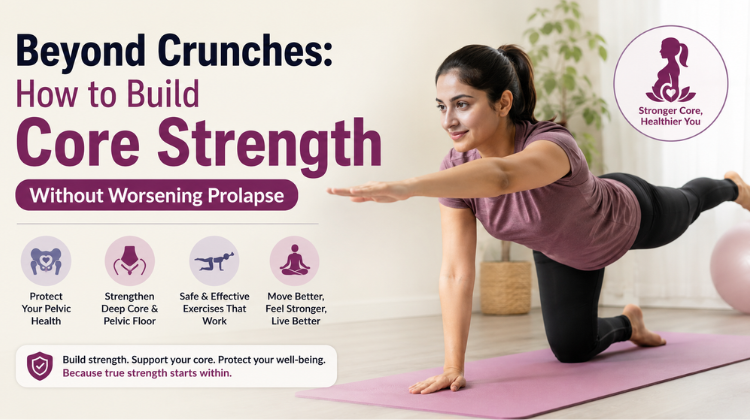
Living with pelvic organ prolapse does not mean you have to abandon physical fitness or settle for a compromised midsection. For millions of women, encountering pelvic heaviness, tissue bulge, or discomfort can spark a profound fear of exercise. Traditional core workouts—such as sit-ups, double leg lifts, bicycle crunches, and heavy planks—often spike intra-abdominal pressure, pushing pelvic organs downward and worsening symptoms. However, establishing core strength without worsening prolapse is not only possible; it is essential for restoring your posture, spine stability, and overall pelvic floor health.
When practiced correctly, targeted deep core training reinforces your natural internal corset, protecting your pelvic organs while restoring functional confidence. This comprehensive guide explores pelvic anatomy, effective biomechanics, safe exercise progressions, daily habits, and practical tips to help you build functional core strength without worsening prolapse.
Understanding Pelvic Anatomy and Pressure Dynamics
To develop deep abdominal stability safely, it helps to understand how the core functions as a cohesive unit. Rather than viewing the core as just a set of six-pack ab muscles (the rectus abdominis), picture your torso as an internal cylinder or canister made up of four primary walls:
-
Top: The Respiratory Diaphragm
-
Bottom: The Pelvic Floor Muscles
-
Front and Sides: The Transverse Abdominis (TfA)
-
Back: The Deep Spinal Muscles (Multifidus)
              [ Respiratory Diaphragm ]
                     |          |
 [ Transverse ]      | Internal |      [ Transverse ]
 [ Abdominis  ] <--->| Canister |<---> [ Abdominis  ]
                     |          |
              [ Pelvic Floor Muscles ]
When you breathe in, the diaphragm contracts and moves downward, expanding the abdominal space. When you exhale, the diaphragm moves back up, and the pelvic floor gently recoils upward in response.
When you perform standard crunches, hold your breath, or strain during heavy lifting, internal pressure surges downward. If your pelvic floor tissue is lax or recovering from childbirth or age-related changes, this downward pressure forces the pelvic organs (such as the bladder, uterus, or bowel) further down into the vaginal canal.
The primary goal of developing core strength without worsening prolapse is to train the deep transverse abdominis and pelvic floor to contract in harmony, managing intra-abdominal pressure so that force is distributed evenly rather than pushed downward.
Common Causes and Symptoms of Pelvic Organ Prolapse
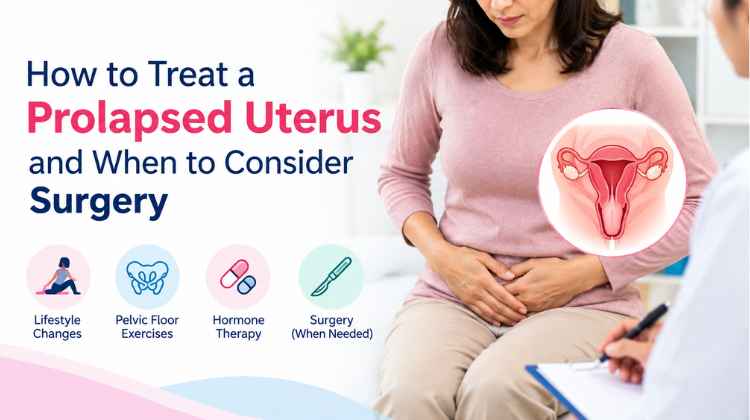
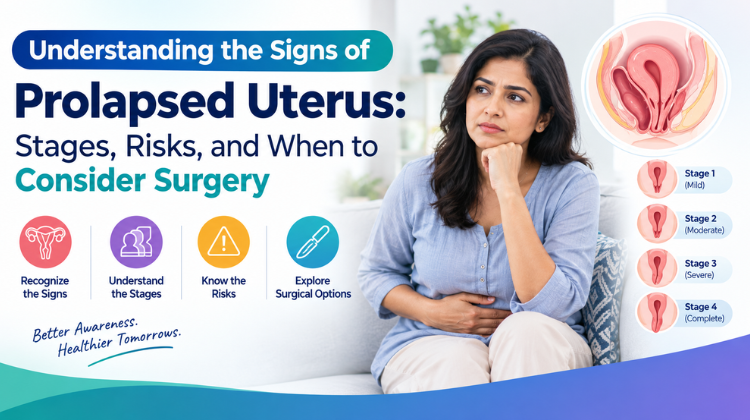
Pelvic organ prolapse (POP) occurs when the muscles and connective tissues (ligaments and fascia) holding your pelvic organs in place become stretched or weakened. Knowing the underlying causes helps you modify your lifestyle and physical activities accordingly.
| Category | Primary Contributing Factors |
| Obstetric Factors | Vaginal childbirth, instrumental deliveries (forceps/vacuum), extended pushing phases, multiple pregnancies. |
| Structural & Hormonal | Menopause (decrease in estrogen reducing collagen elasticity), natural aging, genetic connective tissue hypermobility. |
| Increased Pressure | Chronic constipation and straining, persistent coughing (asthma/COPD), heavy manual lifting, chronic obesity. |
Recognizing early warning signs ensures you can seek early intervention and adapt your movement habits:
-
A sensation of fullness, heaviness, or dragging in the lower abdomen or vagina.
-
A visible or feelable bulge or tissue protrusion at the vaginal opening.
-
Lower back aching that worsens toward the end of the day or after prolonged standing.
-
Urinary issues, such as stress incontinence (leaking when coughing/laughing) or difficulty emptying the bladder completely.
-
Bowel dysfunction, including incomplete evacuation or needing to press internally to pass a stool.
Safe Exercise Principles for Core Strength Without Worsening Prolapse
Before beginning any exercise routine, adopting correct foundational movement mechanics will ensure that every rep supports pelvic health rather than stressing vulnerable tissues.
1. Master the Exhale on Exertion
Never hold your breath during exercise (avoiding the Valsalva maneuver). Inhale to prepare during the easiest phase of a movement, and exhale gently through softly parted lips during the exertion or lifting phase. Exhaling releases upward pressure, preventing downward forces on the pelvic bowl.
2. Prioritize Transverse Abdominis Engagement
The transverse abdominis acts like a natural corset around your waist. Rather than sucking in your stomach tightly or pushing your abdomen out, focus on gently drawing your lower abdominal wall inward toward your spine. This subtle drawing-in motion secures the front wall of your core cylinder without increasing downward load.
3. Co-Contract the Pelvic Floor
Before engaging in abdominal movement, trigger a light pelvic floor lift. Imagine gently pulling the base of your pelvis inward and upward—similar to holding in gas or drawing a tissue out of a box—before moving your limbs.
4. Monitor for Stomach Bulging or Doming
Pay attention to the shape of your abdomen during exercise. If you notice a midline ridge, doming, or bulging along your stomach, it indicates that internal pressure is pushing outward and downward. When doming occurs, reduce the intensity or modify the movement to protect your pelvic floor.
Safe Exercises to Build Core Strength Without Worsening Prolapse
Incorporate these low-impact, deep-core stabilizing movements into your routine. Perform each exercise with control, focusing on breath coordination and pelvic floor alignment.
Core Progression Flow:
[Pelvic Tilts] ➔ [Supported Heel Slides] ➔ [Bird-Dog] ➔ [Glute Bridges] ➔ [Side-Lying Clamshells]
Exercise 1: Supine Pelvic Tilts
Pelvic tilts gently awaken the transverse abdominis and deep lumbar stabilizers without placing strain on the pelvic bowl.
-
Lie flat on your back on a firm mat with your knees bent and feet flat on the floor, hip-width apart.
-
Inhale naturally, allowing your belly and ribcage to expand softly.
-
Exhale gently through your mouth, engage your lower pelvic floor, and tilt your pelvis backward so your lower back rests flat against the floor.
-
Hold this deep engagement for 3 to 5 seconds while continuing to breathe softly.
-
Inhale as you return your pelvis to a neutral starting position.
-
Complete 10 to 12 controlled repetitions.
Exercise 2: Supported Heel Slides
Heel slides build leg and abdominal coordination while keeping your spine neutral and supported.
-
Begin lying on your back with knees bent and feet flat.
-
Inhale deeply into your sides and back.
-
As you exhale, pull your lower belly inward and slowly slide your right heel away from you along the mat until your leg is nearly straight.
-
Inhale as you slowly slide your right heel back to the starting position.
-
Repeat the movement on the left side, alternating for 10 repetitions per leg.
Exercise 3: Quadruped Bird-Dog
The bird-dog targets your core muscles, glutes, and upper back stability while keeping your torso in a gravitational plane that reduces downward pressure on the pelvic floor.
-
Come to hands and knees on a comfortable mat, placing hands directly under shoulders and knees directly under hips. Keep your head in a neutral position.
-
Inhale softly. As you exhale, pull your abdomen gently away from the floor and draw your pelvic floor muscles upward.
-
Slowly extend your right arm forward and left leg backward until both are parallel to the floor, maintaining steady hips without arching your lower back.
-
Inhale as you lower your arm and leg back to the starting hands-and-knees position.
-
Alternate with the left arm and right leg, performing 8 to 10 controlled repetitions per side.
Exercise 4: Glute Bridges with Pelvic Floor Co-Contraction
Strong gluteal muscles help support your pelvis, relieving excess strain on the pelvic floor ligaments during daily activities.
-
Lie on your back with knees bent, feet flat on the floor, and arms resting along your sides.
-
Inhale softly to prepare.
-
As you exhale, lift your pelvic floor, squeeze your glutes, and push through your heels to raise your hips until your body forms a straight line from knees to shoulders.
-
Pause for 2 seconds at the top while exhaling fully.
-
Inhale as you lower your hips back to the mat with control.
-
Repeat for 10 to 12 repetitions.
Exercise 5: Side-Lying Clamshells
Targeting the hip abductors and deep rotators helps stabilize the lateral pelvis, creating a secure base for deep core activation.
-
Lie on your side with your head resting on your lower arm, knees bent at a 45-degree angle, and feet aligned with your hips.
-
Inhale to prepare. Exhale as you gently engage your deep core and draw up your pelvic floor.
-
Keep your feet touching while slowly raising your top knee as high as comfortable without rotating your hips backward.
-
Hold at the top for 1 second, then lower your knee under control on an inhale.
-
Perform 12 to 15 repetitions per side.
High-Risk Workouts and Habits to Avoid
Certain exercises and daily habits can undo your progress by placing excessive pressure on the pelvic floor. Avoiding these high-risk movements helps you continue building core strength without worsening prolapse.
High Risk (Avoid)                      Safe Alternatives
-----------------                      ------------------
Standard Sit-ups / Crunches    =====>  Pelvic Tilts & Heel Slides
Heavy Overhead Weight Presses  =====>  Seated Seated Resistance Bands
High-Impact Running / HIIT     =====>  Low-Impact Swimming / Cycling
Full Plank Exercises           =====>  Incline Planks or Bird-Dogs
1. Traditional Abdominal Crunches and Sit-ups
Flexing the upper spine forward in a crunch forces abdominal contents downward against the pelvic floor, aggravating prolapse symptoms.
2. Unmodified Planks and Double Leg Extensions
Holding a full plank or raising both legs simultaneously creates intense intra-abdominal pressure that can cause stomach doming and pelvic strain if deep core strength is insufficient.
3. Heavy Overhead Pressing
Lifting heavy dumbbells or barbells overhead can lead to breath-holding and straining, which directs force straight down into the pelvic cavity.
4. High-Impact Cardio Activities
Running, plyometric jumping, and high-impact HIIT workouts involve hard heel strikes that shock weak pelvic floor tissues. Swap high-impact exercise for low-impact alternatives like swimming, cycling, or walking.
5. Straining During Bowel Movements
Chronic straining exerts continuous, direct downward pressure on pelvic structures. Hydrate well, consume adequate dietary fiber, and use a squatting footstool to elevate your knees while passing bowel movements.
Non-Surgical vs. Surgical Approaches to Pelvic Prolapse
Managing prolapse often involves a combination of non-surgical care, physical therapy, and surgical options when appropriate.
Management Spectrum:
[ Lifestyle & Pelvic Therapy ] ➔ [ Vaginal Pessary Fitting ] ➔ [ Surgical Correction ]
Non-Surgical Interventions
-
Pelvic Floor Physical Therapy: Guided biofeedback and targeted strengthening from a specialized physical therapist can improve muscle coordination and support organ alignment.
-
Vaginal Pessaries: A pessary is a removable silicone device inserted into the vagina to provide structural support for prolapsed organs, helping relieve pressure during daily activities.
-
Hormonal Support: Topically applied estrogen creams prescribed after menopause can improve tissue elasticity and vascular supply to the pelvic lining.
Surgical Interventions
When non-surgical options do not provide sufficient relief or prolapse is advanced, surgical options may be considered:
-
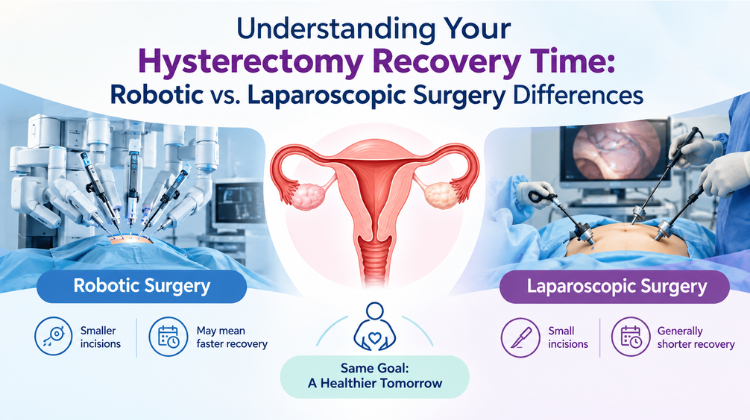
Pelvic Floor Reconstruction: Repairing weakened ligaments and tissues using minimally invasive laparoscopic or robotic methods.
-
Sacrocolpopexy / Sacrospinous Fixation: Anchoring prolapsed tissues or the vaginal vault to nearby pelvic bones for durable structural support.
#Pelvic Floor Health #Pelvic Organ Prolapse #Deep Core Exercises #Pelvic Floor Rehabilitation #Safe Core Workouts #Intra Abdominal Pressure #Transverse Abdominis #Prolapse Safe Fitness #Low Impact Core #Urogynecology #Core Stabilization #Postpartum Core Recovery #Vaginal Prolapse Support #Pelvic Floor Strength #Avoid Crunches #Pelvic Floor Exercises #Women Health Gurgaon #Best Gynecologist In Gurgaon #Dr Preeti Rastogi #Pelvic Organ Support #Uterine Prolapse Care #Bladder Prolapse #Safe Fitness For Women #Gynecology Gurgaon #Pelvic Health Care #Core Strength Training #NonSurgical Prolapse Treatment #Pelvic Floor Dysfunction #Abdominal Rehabilitation #Gynecological Surgeon Gurgaon #Medanta Gurgaon Gynecology #Women Pelvic Wellness #Bladder Support #Laparoscopic Gynecology #Pelvic Care In Gurgaon
Frequently Asked Questions
What is pelvic organ prolapse, and can I build core strength without worsening prolapse?
Pelvic organ prolapse occurs when the supporting muscles, fascia, and ligaments inside the pelvic floor weaken, causing organs like the bladder, uterus, or rectum to drop down into the vaginal canal. Yes, you can build core strength without worsening prolapse by practicing gentle, low-impact exercises like pelvic tilts, heel slides, bird-dogs, and glute bridges while avoiding movements that increase downward abdominal pressure.
Why should I choose Dr. Preeti Rastogi for treating pelvic organ prolapse and pelvic floor disorders in Gurgaon?
Dr. Preeti Rastogi is widely regarded as the best gynecologist in Gurgaon, with over 25 years of international and national clinical experience in urogynecology, pelvic floor reconstruction, and advanced laparoscopic/robotic surgeries. Her patient-first approach ensures thorough diagnostic evaluation, personalized treatment plans, and access to both non-surgical therapies and advanced minimally invasive solutions.
What non-surgical treatment options does Dr. Preeti Rastogi offer for managing prolapse?
As the best gynecologist in Gurgaon, Dr. Preeti Rastogi prioritizes effective non-surgical treatment options whenever possible. Her clinical approach includes custom-fit vaginal pessary placements, specialized pelvic floor therapy, lifestyle and dietary modifications to prevent constipation, and guided home exercise routines designed to strengthen internal stabilization.
Which exercises should I strictly avoid if I have pelvic organ prolapse?
If you suffer from pelvic organ prolapse, you should strictly avoid conventional abdominal crunches, full sit-ups, double leg raises, heavy barbell squats, high-impact running, plyometrics, and intense overhead weightlifting. These exercises create rapid surges in intra-abdominal pressure that push pelvic structures downward and aggravate symptoms.
How can I book an appointment with Dr. Preeti Rastogi, the best gynecologist in Gurgaon, for a pelvic health consultation?
You can book a direct clinical consultation with Dr. Preeti Rastogi, Director and Head of Department in Obstetrics and Gynaecology at Medanta – The Medicity, Gurgaon, by visiting her official medical page or contacting Medanta’s priority appointment line. Early evaluation helps establish a personalized plan to improve pelvic comfort and regain functional strength safely.