Overcoming Severe Endometriosis & Infertility: Treatment Options with an Experienced Surgeon in Gurugram
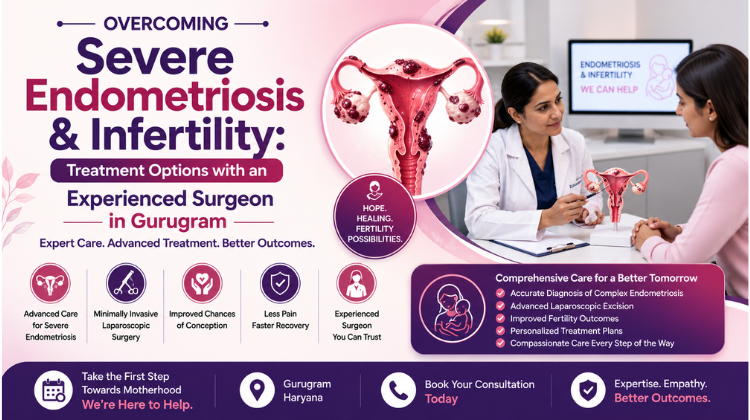
For many women, the journey toward motherhood is met with unexpected physical and emotional hurdles. Chronic pelvic pain, painful menstrual cycles, and unexplained delays in conceiving can often be traced back to a complex gynecological condition. Living with Severe Endometriosis & Infertility means managing extensive tissue growth, internal scarring, and pelvic adhesions that interfere with natural reproductive function. Choosing specialized care under an experienced surgical team in Gurugram is essential for restoring pelvic health and turning parenthood dreams into reality.
Understanding the Impact of Severe Endometriosis & Infertility
Endometriosis occurs when tissue similar to the lining of the uterus grows outside the uterine cavity. In its advanced stages (Stage 3 and Stage 4), it leads to significant structural changes within the pelvis. The link between Severe Endometriosis & Infertility is multi-faceted:
-
Fallopian Tube Blockage: Thick adhesions and scar tissue can block the fallopian tubes or twist them, preventing the sperm from reaching the egg.
-
Ovarian Function Distortion: Large endometrial cysts (endometriomas or “chocolate cysts”) can damage healthy ovarian tissue, lowering egg quality and ovarian reserve.
-
Implantation Barriers: Chronic pelvic inflammation creates an unhealthy environment inside the uterus, making it difficult for a fertilized egg to implant.
-
Pelvic Anatomy Distortion: Severe disease can bind the ovaries, fallopian tubes, uterus, and bowel together into a “frozen pelvis,” physically obstructing natural conception.
When non-invasive medical management fails to resolve these structural issues, evaluating surgical treatment for Severe Endometriosis & Infertility becomes a crucial next step.
Surgical Treatment Options for Severe Endometriosis & Infertility
Surgical management of advanced disease focuses on removing inflammatory lesions, freeing trapped organs, and restoring natural reproductive function. Modern minimally invasive surgical techniques offer effective solutions for managing Severe Endometriosis & Infertility:
1. Laparoscopic Excision Surgery
Unlike superficial ablation (burning), laparoscopic excision cuts out deep endometrial nodules and their root tissue completely. This thorough approach reduces disease recurrence and provides long-term relief from pelvic pain.
2. Robotic-Assisted Excision
Utilizing high-definition 3D visualization and wristed robotic instruments, robotic-assisted surgery allows surgeons to perform delicate dissections around critical pelvic nerves, major blood vessels, and vital organs with sub-millimeter precision.
3. Ovarian Cystectomy (Endometrioma Removal)
Precise surgical removal of chocolate cysts preserves remaining healthy ovarian tissue, protecting a woman’s fertility potential before pursuing natural conception or assisted reproductive technology (ART).
4. Pelvic Adhesiolysis
Carefully separating dense fibrous adhesions restores the natural position and mobility of the ovaries and fallopian tubes, significantly improving overall fertility outcomes.
Addressing Severe Endometriosis & Infertility through targeted keyhole surgery optimizes the uterine and pelvic environment for both natural pregnancy and successful IVF cycles.
When to Seek a Specialist for Severe Endometriosis & Infertility in Gurugram
If you are experiencing any of the following indicators, it is important to consult a specialized gynecological surgeon:
-
Inability to Conceive: Trying to get pregnant for 6 to 12 months without success while experiencing painful periods.
-
Debilitating Pelvic Pain: Severe dysmenorrhea (painful periods) or dyspareunia (painful intercourse) that worsens over time.
-
Repeated IVF Failures: Unexplained implantation failure during IVF cycles despite having healthy embryos.
-
Known Endometriomas: Ultrasounds showing persistent or growing ovarian cysts larger than 4 cm.
Seeking timely surgical intervention for Severe Endometriosis & Infertility prevents further disease progression and protects your long-term reproductive health.
What to Expect During Your Surgical Consultation
A comprehensive evaluation for Severe Endometriosis & Infertility follows a structured, patient-centered approach:
-
In-Depth Diagnostic Mapping: High-resolution pelvic MRI or specialized pelvic ultrasounds map out deep infiltrating lesions and organ involvement.
-
Fertility-Preserving Surgical Strategy: A tailored surgical plan designed to remove all visible disease while protecting healthy ovarian tissue and fallopian tube integrity.
-
Post-Surgical Conception Planning: Clear guidance on timelines for attempting natural conception or transitioning to fertility treatments like IVF after the pelvis has healed.
By partnering with a skilled surgical team, women dealing with Severe Endometriosis & Infertility can reclaim their quality of life and take confident steps toward building a family.
Pathophysiology of Severe Endometriosis-Induced Infertility
Severe endometriosis (Stage 3 and Stage 4) impacts female reproductive biology across multiple levels. The condition alters pelvic anatomy, compromises egg quality, impairs fertilization, and disrupts uterine receptivity.
Anatomical Distortion and Pelvic Fibrosis
Advanced lesions trigger chronic inflammatory responses, producing fibrous scar tissue and extensive dense adhesions. These structural distortions:
-
Entrap the Ovaries: Ovaries become tethered to the pelvic sidewalls or the pouch of Douglas, preventing the fimbriae of the fallopian tube from picking up the released oocyte.
-
Occlude Fallopian Tubes: Fibrosis causes mechanical tubal blockage, hematosalpinx, or hydrosalpinx, stopping sperm movement and embryo transport.
-
Obliterate the Pouch of Douglas: Deep infiltrating endometriosis (DIE) fuses the posterior uterus to the anterior rectum, creating anatomical rigidity and persistent pelvic pain.
Chronic Inflammation ──> Cytokine Release ──> Fibrous Adhesions ──> Tubal Occlusion & Ovarian Tethering
Peritoneal Fluid Microenvironment Toxicity
In women with severe endometriosis, peritoneal fluid volume increases and contains elevated concentrations of pro-inflammatory cytokines ($\text{TNF-}\alpha$, $\text{IL-1}\beta$, $\text{IL-6}$), reactive oxygen species (ROS), and activated macrophages.
-
Sperm Toxicity: High ROS levels induce sperm DNA fragmentation, impairing motility and membrane integrity.
-
Oocyte Quality Degradation: Inflammatory exposure weakens spindle assembly in maturing oocytes, lowering fertilization capacity and embryo viability.
Ovarian Reserve Depletion
Endometriomas (chocolate cysts) stretch healthy ovarian cortical tissue, inducing localized ischemia and cellular apoptosis. Chronic oxidative stress within cyst walls accelerates follicle depletion, leading to reduced Antral Follicle Counts (AFC) and diminished Anti-Müllerian Hormone (AMH) levels.
Endometrial Receptivity Deficits
Severe disease disrupts the uterine environment through progesterone resistance and altered gene expression ($\text{HOXA10}$). This prevents proper decidualization of the endometrium, leading to implantation failure or early pregnancy loss.
Deep Infiltrating Endometriosis (DIE): Mapping and Surgical Considerations
Deep Infiltrating Endometriosis is defined as endometriotic subperitoneal lesions penetrating deeper than 5 mm beneath the peritoneal surface. DIE represents one of the most complex challenges in gynecological surgery.
| Organ/Structure Involved | Clinical Manifestation | Advanced Diagnostic Tool | Surgical Intervention Strategy |
| Uterosacral Ligaments | Severe dyspareunia, chronic pelvic pain | High-Resolution Pelvic MRI | Laparoscopic nerve-sparing excision |
| Rectovaginal Septum | Painful defecation (dyschezia), rectal bleeding during menses | Transrectal Ultrasonography / MRI | Shaving, disc excision, or segmental bowel resection |
| Bladder & Ureters | Dysuria, hematuria, silent ureteral obstruction | Renal Ultrasound / Dynamic MRI | Partial cystectomy, ureterolysis, or ureteral reimplantation |
| Ovaries & Fimbriae | Ovarian fixity, reduced AFC, tubal distortion | 3D Transvaginal Ultrasound | Micro-surgical cystectomy with hydrodissection |
Ovarian Reserve Preservation: Specialized Surgical Protocols
Protecting resting primary follicles during endometrioma surgery is essential to preserving long-term reproductive health.
Hydrodissection and Cleavage Plane Identification
Surgeons inject saline mixed with diluted epinephrine between the endometrioma pseudocapsule and healthy ovarian stroma. This separates tissue layers, allowing precise excision without tearing functional cortical tissue.
Avoidance of Extensive Monopolar/Bipolar Cautery
Thermal injury from excessive electrosurgery near the ovarian hilum damages blood supply and destroys adjacent primordial follicles. Modern approaches prioritize:
-
Micro-Surgical Suturing: Re-approximating ovarian cortex edges using ultra-fine sutures ($4\text{-}0$ or $5\text{-}0$ Vicryl).
-
Hemostatic Agents: Applying topical matrix sealants or oxidized regenerated cellulose to control capillary bleeding without thermal spread.
Vaporization and Combined Techniques
For recurrent or bilateral endometriomas where excision risks ovarian collapse, surgeons combine partial capsule resection with low-power $\text{CO}_2$ laser or plasma energy vaporization to neutralize remaining cyst lining safely.
Comparative Evaluation: Medical Suppression vs. Early Surgical Intervention vs. Direct IVF
Selecting an optimal management path requires evaluating individual fertility metrics, age, pain severity, and ovarian reserve.
                                  [Severe Endometriosis Diagnosis]
                                                 │
                        ┌────────────────────────┴────────────────────────┐
                        ▼                                                 ▼
             [Severe Pain & Normal AMH]                       [Low AMH / Age >35 / Male Factor]
                        │                                                 │
                        ▼                                                 ▼
         [Laparoscopic Excision Surgery]                      [Direct IVF / Embryo Freezing]
                        │                                                 │
          ┌─────────────┴─────────────┐                                   ▼
          ▼                           ▼                       [GnRH Downregulation]
  [Natural Conception]      [IVF After 6 Months]                          │
   (0-6 Months Post-Op)                                                   ▼
                                                                [Embryo Transfer]
Medical Suppression
Medical therapies—including GnRH agonists, dienogest, and combined oral contraceptives—suppress ovarian function and relieve pain symptoms. However, medical suppression does not improve fertility rates and delays active conception windows. Its primary use is pre-IVF downregulation or post-surgical pain management.
Early Laparoscopic Excision Surgery
-
Indications: Severe pelvic pain, large or symptomatic endometriomas ($>4\text{ cm}$), mechanical tubal blockages, preserved AMH, younger patient age ($<35\text{ years}$).
-
Benefits: Restores pelvic anatomy, provides lasting pain relief, decreases peritoneal cytokine levels, and creates a 6-to-12-month window for natural conception.
-
Limitations: Risks surgical reduction of ovarian reserve if performed without specialized tissue-sparing techniques.
Direct In-Vitro Fertilization (IVF)
-
Indications: Diminished ovarian reserve ($\text{AMH} < 1.2\text{ ng/mL}$), patient age $>35$, concurrent male factor infertility, or prior failed surgeries.
-
Benefits: Bypasses blocked fallopian tubes and toxic peritoneal fluid. Controlled ovarian stimulation yields multiple eggs for lab fertilization.
-
Optimization: 2–3 months of ultralong GnRH agonist therapy prior to embryo transfer dampens endometrial inflammation, increasing implantation rates.
Immunological Factors and Recurrent Implantation Failure (RIF) in Endometriosis
Endometriosis operates as a systemic immune disorder. Aberrant immune responses can cause implantation failure during IVF cycles despite high-grade embryo transfer.
-
Uterine Natural Killer (uNK) Cell Dysregulation: Elevated concentrations and activity of uNK cells disrupt vascular remodeling at the maternal-fetal interface, impeding embryo attachment.
-
Autoantibody Production: Increased levels of anti-endometrial and anti-phospholipid antibodies interfere with trophoblast invasion and early placental formation.
-
Complement System Activation: Inflammatory cascades within the endometrium trigger complement protein deposition, impairing tissue receptivity.
Immunomodulatory Protocols
-
Prolonged Downregulation: Long-acting GnRH analogs reduce inflammatory markers ($\text{TNF-}\alpha$, $\text{IL-6}$) and reset endometrial receptivity.
-
Adjuvant Therapies: Low-dose corticosteroid regimens, low-molecular-weight heparin (LMWH), and lipid emulsion infusions are applied in selective RIF cases to regulate local uterine immune environments.
Integrative Lifestyle, Dietary, and Pain Management Protocols
Medical and surgical interventions are supported by targeted lifestyle protocols that reduce systemic inflammation and manage symptom progression.
       ┌──────────────────────────────────────────────────────────────┐
       │               Integrative Management Protocol                │
       └──────────────────────────────┬───────────────────────────────┘
                                      │
         ┌────────────────────────────┼────────────────────────────┐
         ▼                            ▼                            ▼
  [Anti-Inflammatory Diet]    [Targeted Supplementation]   [Pelvic Floor Therapy]
  - Elimination of Trans-Fats - Omega-3 Fatty Acids (2000mg) - Myofascial Release
  - High Dietary Fiber        - N-Acetyl Cysteine (NAC)    - Biofeedback
  - Gluten/Dairy Elimination  - Curcumin & Vitamin D3      - Visceral Manipulation
Anti-Inflammatory Dietary Interventions
-
Lipid Profile Optimization: Elimination of trans-fats and reduction of omega-6 fatty acids limit arachidonic acid synthesis, suppressing pro-inflammatory prostaglandin ($\text{PGE}_2$) production.
-
High-Fiber Intake: Supports hepatic clearance of circulating excess estrogen via bowel excretion, preventing hyper-estrogenic stimulation of lesions.
-
Elimination Diets: Targeted removal of dairy and gluten reduces gut permeability and localized pelvic bloating.
Target Supplemental Therapies
-
N-Acetyl Cysteine (NAC): Reduces endometrioma size and controls cell proliferation through anti-proliferative and anti-inflammatory pathways.
-
Curcumin & Resveratrol: Suppresses NF-$\kappa$B pathways, lowering VEGF expression and limiting new blood vessel growth (angiogenesis) within lesions.
-
Omega-3 Fatty Acids (EPA/DHA): Shifts prostaglandin balance toward anti-inflammatory pathways, reducing dysmenorrhea and pelvic pain intensity.
Pelvic Floor Physical Therapy and Rehabilitation
Chronic pelvic pain leads to secondary myofascial pain syndrome and hypertonicity of the pelvic floor musculature. Specialized pelvic rehabilitation incorporates:
-
Manual Myofascial Release: Relieves trigger points across the levator ani and obturator internus muscles.
-
Visceral Manipulation: Restores mobility between uterine, bowel, and bladder fascial planes.
-
Biofeedback Training: Teaches patients to relax hypertonic pelvic floor structures, improving pelvic floor mechanics and reducing pain during intercourse (dyspareunia).
Expert Gynecological Care in Gurugram: Dr. Preeti Rastogi
Navigating severe endometriosis, chronic period pain, and associated fertility challenges requires specialized, evidence-based care. Recognized as the best gynaecologist in gurugram, Dr. Preeti Rastogi brings over 25 years of international clinical experience across UK tertiary hospitals and leading Indian medical institutions.
Qualifications and Clinical Expertise
-
UK-Trained Specialist: Holds MRCOG (UK) and advanced fellowships in Minimal Access Surgery, Urogynecology, and High-Risk Obstetrics.
-
Robotic & Laparoscopic Surgeon: Certified Da Vinci Xi Robotic Surgeon specializing in complex organ-preserving surgeries for severe stage 4 endometriosis, adenomyosis, and large uterine fibroids.
-
Comprehensive Care Approach: Integrates minimal-access surgery with fertility preservation, individualized IVF planning, and hormonal management to resolve complex reproductive disorders.
Dr. Preeti Rastogi provides personalized treatment plans tailored to each patient’s reproductive goals, medical history, and quality-of-life priorities.
Facts About Dr. Preeti Rastogi
-
Current Position: Director & Head of Department (HOD) in Obstetrics & Gynaecology at Medanta – The Medicity, Gurugram.
-
Clinical Experience: Over 25 to 30 years of extensive clinical experience across top tertiary care hospitals in the United Kingdom (including Singleton Hospital, Swansea, and University Hospital of Wales, Cardiff) and India.
-
Education & Qualifications: MBBS (G.R. Medical College, Gwalior), DNB in Obstetrics & Gynaecology (St. Stephen’s Hospital, Delhi), and MRCOG (Royal College of Obstetricians and Gynaecologists, UK).
-
Surgical Expertise: Certified Da Vinci Xi Robotic Surgeon specializing in advanced minimal access surgery, deep infiltrating endometriosis excision, fertility-preserving myomectomies, hysteroscopy, and high-risk obstetrics.
#severe endometriosis #infertility #laparoscopic surgeon in gurugram #stage 4 endometriosis #treatment #deep infiltrating #endometriosis excision #cyst removal #endometrioma #cystectomy #robotic endometriosis surgery gurgaon #fertility preserving #endometriosis surgery #chronic pelvic pain treatment #pelvic adhesiolysis #best gynecologist #gurgaon #keyhole pelvic surgery #infertility specialist #gurugram #ivf success after endometriosis surgery
FAQ
Q1: How does severe endometriosis cause infertility in women?
A: Severe endometriosis causes infertility by creating dense fibrous adhesions that bind pelvic organs together, blocking or distorting the fallopian tubes, causing ovarian chocolate cysts that reduce egg quality, and releasing inflammatory chemical factors that hinder embryo implantation and sperm viability. Overcoming Severe Endometriosis & Infertility: Treatment Options with an Experienced Surgeon in Gurugram
Q2: What is the benefit of robotic excision surgery for severe endometriosis and infertility?
A: Robotic excision surgery provides 3D high-definition magnification and robotic instruments with multi-directional wrist movement. This allows the surgeon to perform micro-dissection, removing deep endometrial nodules completely while preserving delicate nerves, major blood vessels, and healthy ovarian tissue to optimize fertility. Overcoming Severe Endometriosis & Infertility: Treatment Options with an Experienced Surgeon in Gurugram
Q3: Why consult Dr. Preeti Rastogi, best gynecologist in Gurgaon, for severe endometriosis and infertility?
A: Dr. Preeti Rastogi, best gynecologist in Gurgaon, brings over 25 years of global clinical experience, including more than a decade of NHS training in the UK. As Director & HOD at Medanta – The Medicity and a certified Da Vinci Xi robotic surgeon, she offers expertise in advanced laparoscopic excision and fertility-preserving pelvic reconstruction. Overcoming Severe Endometriosis & Infertility: Treatment Options with an Experienced Surgeon in Gurugram
Q4: Is laparoscopic surgery necessary before starting IVF if I have severe endometriosis?
A: Laparoscopic surgery is often recommended before IVF if you have large endometriomas (chocolate cysts) that hinder egg retrieval, blocked fallopian tubes filled with toxic fluid (hydrosalpinx), or severe pelvic pain. Surgical excision clears anatomical blockages and reduces inflammation, significantly improving subsequent IVF success rates. Overcoming Severe Endometriosis & Infertility: Treatment Options with an Experienced Surgeon in Gurugram
Q5: What is the recovery time after laparoscopic excision for severe endometriosis?
A: Most patients spend 1 to 2 days in the hospital after laparoscopic or robotic excision surgery. Patients can begin light walking within 24 to 48 hours, with a full return to daily activities and work typically occurring within 2 to 3 weeks, allowing a faster transition toward fertility treatments or natural conception. Overcoming Severe Endometriosis & Infertility: Treatment Options with an Experienced Surgeon in Gurugram
Q6. How is severe (Stage 4) endometriosis definitively diagnosed?
A: While high-resolution 3D transvaginal ultrasound and MRI can identify endometriomas, deep infiltrating nodules, and structural fixity, laparoscopic visualization remains the diagnostic gold standard. Laparoscopy allows direct inspection of pelvic peritoneal surfaces and histological confirmation through tissue biopsy. Overcoming Severe Endometriosis & Infertility: Treatment Options with an Experienced Surgeon in Gurugram
Q7. Does surgical removal of chocolate cysts affect my egg count?
A: Excision of chocolate cysts (endometriomas) can reduce ovarian reserve if healthy tissue is damaged during surgery. Utilizing tissue-preserving techniques—such as hydrodissection, precise micro-surgical suturing, and avoiding thermal cautery—minimizes follicle loss and protects overall ovarian function. Overcoming Severe Endometriosis & Infertility: Treatment Options with an Experienced Surgeon in Gurugram
Q8. Should I undergo surgery or go directly to IVF if I have severe endometriosis?
A: Treatment selection depends on patient age, baseline AMH levels, pain severity, and tube patency. Younger patients with preserved AMH and normal tubal function often benefit from laparoscopic excision to restore natural fertility. Patients over 35, those with low AMH, or couples with concurrent male factor infertility generally yield higher success rates proceeding directly to IVF with pre-transfer GnRH downregulation. Overcoming Severe Endometriosis & Infertility: Treatment Options with an Experienced Surgeon in Gurugram
Q9. Can severe endometriosis cause implantation failure during IVF?
A: Yes. Chronic inflammation, systemic immune dysregulation, and altered progesterone receptor pathways can impair endometrial receptivity. Pre-treatment with GnRH agonists for 2 to 3 months prior to embryo transfer suppresses pelvic inflammation and helps restore endometrial receptivity.Overcoming Severe Endometriosis & Infertility: Treatment Options with an Experienced Surgeon in Gurugram
Q10. What makes Dr. Preeti Rastogi the preferred specialist for severe endometriosis and infertility in Gurugram?
A: Dr. Preeti Rastogi brings over 25 years of UK and Indian tertiary healthcare experience. As a certified Da Vinci Xi Robotic and Advanced Laparoscopic Surgeon, her expertise in tissue-sparing organ preservation, reproductive medicine, and individualized fertility planning makes her the best gynaecologist in gurugram for managing complex endometriosis and reproductive disorders. Overcoming Severe Endometriosis & Infertility: Treatment Options with an Experienced Surgeon in Gurugram