Is Heavy Menstrual Bleeding a Sign of Endometriosis or Fibroids? Key Differences, Symptoms, and When to See a Doctor
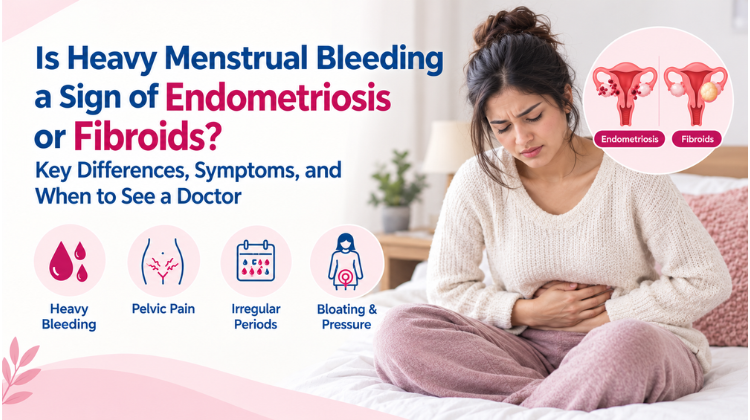
Managing heavy menstrual flow alongside agonizing cramps, pelvic pain, and exhaustion can severely impact your quality of life. Many women routinely miss work, cancel social engagements, or experience severe fatigue due to heavy period bleeding. During these challenging cycles, a common medical question often comes up: Is heavy menstrual bleeding a sign of endometriosis or fibroids?
Both conditions are non-cancerous, widespread, and major causes of abnormal uterine bleeding (menorrhagia) and chronic pelvic discomfort. However, their underlying biological mechanisms, physical structures, and long-term care pathways differ significantly.
Determining whether your period troubles stem from a sign of endometriosis or fibroids is essential for receiving effective, personalized medical treatment. This comprehensive guide provides an in-depth breakdown of both conditions, their key differences, diagnostic methods, and modern treatment choices, along with advice on when to consult a specialist.
Defining Menorrhagia: What Qualifies as Abnormal Menstrual Flow?
Before exploring if your period symptoms are a primary sign of endometriosis or fibroids, it is crucial to recognize what medical professionals classify as abnormal heavy menstrual bleeding.
A standard menstrual cycle occurs every 21 to 35 days, lasting 4 to 7 days, with an average blood loss of 30 to 40 milliliters. In clinical settings, menorrhagia is defined as losing more than 80 milliliters of blood during a single cycle or experiencing active bleeding for more than 7 consecutive days.
+--------------------------------------------------------------------------+
|                 CLINICAL SIGNS OF HEAVY MENSTRUAL BLEEDING               |
+--------------------------------------------------------------------------+
|  [>] Soaking through one or more pads/tampons every hour continuously    |
|  [>] Wearing double sanitary protection to manage heavy flow             |
|  [>] Waking up overnight to replace sanitary products                    |
|  [>] Passing blood clots larger than a quarter (2.5 cm)                  |
|  [>] Menstrual bleeding extending beyond 7 continuous days               |
|  [>] Feeling chronically fatigued, dizzy, or short of breath (Anemia)    |
+--------------------------------------------------------------------------+
When you routinely notice these red-flag symptoms, it is time to seek professional evaluation to discover if they are a clear sign of endometriosis or fibroids.
Is Heavy Flow a Primary Sign of Endometriosis or Fibroids?
To understand whether your heavy flow is a clear sign of endometriosis or fibroids, it helps to examine how each condition affects the female anatomy.
                     +------------------------------------+
                     |   SEVERE MENSTRUAL PAIN & BLEEDING |
                     +------------------------------------+
                                       |
                +----------------------+----------------------+
                |                                             |
                v                                             v
  +---------------------------+                 +---------------------------+
  |       ENDOMETRIOSIS       |                 |      UTERINE FIBROIDS     |
  +---------------------------+                 +---------------------------+
  | Endometrial-like tissue   |                 | Benign muscular tumors    |
  | grows OUTSIDE the uterus  |                 | grow IN or ON uterine wall|
  | (Ovaries, pelvic walls)   |                 | (Submucosal, Intramural)  |
  +---------------------------+                 +---------------------------+
                |                                             |
                v                                             v
  +---------------------------+                 +---------------------------+
  | Primary: Burning pain,    |                 | Primary: Heavy flow, large|
  | deep pelvic inflammation, |                 | blood clots, physical     |
  | severe period cramps      |                 | pressure on organs        |
  +---------------------------+                 +---------------------------+
Both conditions disrupt normal cycle dynamics, yet they originate in completely different parts of the pelvis:
-
Endometriosis: Tissue similar to the inner lining of the uterus (endometrium) grows outside the uterine cavity—most commonly on the ovaries, fallopian tubes, pelvic peritoneum, bowel, or bladder.
-
Uterine Fibroids: Benign muscular tumors (leiomyomas) develop inside or on the uterine wall, altering the uterine structure and expanding its lining surface area.
While heavy flow can be a secondary outcome of deep pelvic inflammation, it is often a direct structural sign of endometriosis or fibroids.
What Is Endometriosis? Causes, Mechanism, and Primary Symptoms
Endometriosis is an inflammatory, estrogen-dependent condition affecting approximately 10% of women of reproductive age worldwide.
How Endometriosis Causes Pain and Bleeding
During a normal cycle, the endometrial lining inside the uterus thickens and sheds as blood. In a woman with endometriosis, tissue similar to this lining develops in areas outside the uterine cavity.
This displaced tissue responds to monthly hormonal changes by thickening, breaking down, and bleeding. However, because this blood has no natural exit path out of the pelvic cavity, it gets trapped. Over time, trapped fluid causes localized inflammation, scarring, adhesions, and painful lesions.
Hormonal Shift -> Displaced Tissue Bleeds -> Trapped Pelvic Blood -> Adhesions & Severe Pain
Signature Symptoms of Endometriosis
When assessing if your flow is a sign of endometriosis or fibroids, watch for these specific indicators of endometriosis:
-
Severe Dysmenorrhea: Intense cramping that begins several days before your period starts and lasts throughout bleeding.
-
Chronic Pelvic Pain: Constant lower abdominal and lower back aching that persists between periods.
-
Deep Dyspareunia: Sharp or deep pain during or after sexual intercourse.
-
Painful Elimination: Discomfort during bowel movements or urination, particularly during your cycle.
-
Fertility Challenges: Difficulty conceiving due to inflammation and scarring in the fallopian tubes or pelvic lining.
-
Gastrointestinal Distress: Period-related bloating (“endo belly”), constipation, diarrhea, or nausea.
What Are Uterine Fibroids? Types, Causes, and Primary Symptoms
Uterine fibroids are non-cancerous growths composed of smooth muscle tissue and connective matrix. Up to 70–80% of women develop fibroids by age 50, though symptom severity varies depending on tumor location and size.
How Fibroids Cause Severe Menstrual Flow
Fibroids increase the total surface area of the uterine lining, alter blood vessel structures, and prevent normal uterine muscular contractions during your period.
  Types of Fibroids & How They Affect Flow
  ========================================
  Submucosal Fibroids  --> Grow into the uterine cavity; trigger massive bleeding & clots.
  Intramural Fibroids  --> Embedded in uterine wall; stretch uterus & extend period days.
  Subserosal Fibroids  --> Grow on outer uterine wall; press against bladder & rectum.
-
Submucosal Fibroids: These project directly into the uterine cavity. Even small submucosal fibroids frequently cause severe period bleeding, heavy clotting, and flooding.
-
Intramural Fibroids: Located within the muscular wall, these expand the overall uterine volume and hinder the uterus from contracting efficiently to stop blood loss.
-
Subserosal Fibroids: Positioned on the outer uterine wall, these are more likely to exert heavy physical pressure on surrounding pelvic organs rather than trigger heavy flow.
Signature Symptoms of Uterine Fibroids
When determining if your period flow is a sign of endometriosis or fibroids, look for these classic fibroid signs:
-
Prolonged Period Flow: Bleeding that continuously lasts longer than 7 to 10 days.
-
Frequent Blood Clots: regular passage of gelatinous, large blood clots during flow.
-
Pelvic Bulk & Pressure: A feeling of heaviness or persistent abdominal fullness.
-
Urinary Urgency: Fibroids pressing on the bladder cause frequent urination.
-
Lower Back Pain & Constipation: Large fibroids pressing backward against the spine or rectum cause lower back aching and constipation.
Key Structural Differences: Endometriosis vs. Fibroids
Evaluating whether your symptoms are a sign of endometriosis or fibroids requires comparing their distinct features side-by-side:
| Clinical Feature | Endometriosis | Uterine Fibroids |
| Primary Anatomical Site | Outside uterus (ovaries, pelvic walls, fallopian tubes) | Inside or on the muscular wall of the uterus |
| Tissue Type | Inflammatory endometrial-like implants | Non-cancerous smooth muscle tumors |
| Primary Symptom Impact | Intense, inflammatory pelvic pain | Heavy blood loss, flooding, pelvic pressure |
| Bleeding Characteristics | Moderately heavy flow; spotting before period | Extremely heavy flow, large blood clots, long duration |
| Pain Characteristics | Sharp, burning, localized pelvic cramps | Dull, aching, heavy weight in lower abdomen |
| Pain During Sex | Common and deep pelvic pain | Less frequent (depends on fibroid location) |
| Impact on Bladder/Bowel | Painful digestion/urination during periods | Physical urgency to urinate, chronic constipation |
| Ultrasound Appearance | Often invisible (except chocolate cysts on ovaries) | Easily visible muscular tumors |
Can You Suffer From Both Conditions Simultaneously?
Yes. It is entirely possible to experience both conditions at the same time. Because both endometriosis and uterine fibroids are estrogen-dominant conditions, they frequently co-exist in women of childbearing age.
When both conditions are present, patients often face a combination of symptoms: the sharp inflammatory pain and discomfort during sex from endometriosis, alongside the heavy bleeding, blood clots, and abdominal pressure caused by fibroids.
Assuming that your symptoms are strictly a sign of endometriosis or fibroids in an either/or way can lead to an incomplete diagnosis. A detailed evaluation by a qualified specialist is essential.
How Gynecologists Diagnose Endometriosis and Fibroids
Self-diagnosing whether your heavy flow is a sign of endometriosis or fibroids is difficult because many symptoms overlap. Gynecologists use several advanced diagnostic tools to pinpoint the exact structural or inflammatory cause:
+--------------------------------------------------------------------------+
|                  STEP-BY-STEP DIAGNOSTIC PATHWAY                         |
+--------------------------------------------------------------------------+
|  1. Clinical Symptom Mapping & Patient History                           |
|  2. Bimanual Pelvic Examination (Detects uterine size & mobility)        |
|  3. Transvaginal Ultrasound (Detects fibroid masses & ovarian cysts)     |
|  4. High-Resolution Pelvic MRI (Maps deep infiltrating endometriosis)    |
|  5. Diagnostic Laparoscopy / Hysteroscopy (Direct visual confirmation)   |
+--------------------------------------------------------------------------+
1. Clinical History and Pelvic Exam
Your doctor evaluates your cycle history, blood loss volume, and pain levels. A bimanual pelvic examination allows the physician to feel for an enlarged or irregular uterus (suggesting fibroids) or localized pelvic tenderness (suggesting endometriosis).
2. Transvaginal Pelvic Ultrasound
Transvaginal ultrasound is the frontline imaging method for diagnosing uterine fibroids. Sound waves create images of the uterine muscle, helping doctors map the size, number, and exact location of fibroid tumors. Ultrasound can also identify endometriomas (fluid-filled cysts on the ovaries caused by endometriosis).
3. Magnetic Resonance Imaging (MRI)
A pelvic MRI provides detailed multi-angle images of pelvic soft tissues. It helps map deep infiltrating endometriosis (DIE) lesions and differentiates fibroids from adenomyosis prior to surgical planning.
4. Diagnostic Laparoscopy and Hysteroscopy
Laparoscopy is the definitive standard for confirming endometriosis. Using keyhole access, a surgeon visually inspects the pelvic cavity, checks for implants, and collects biopsies. Hysteroscopy uses a camera passed through the cervix to inspect the inner uterine lining for submucosal fibroids or polyps.
When to See a Doctor for Heavy Menstrual Bleeding
Knowing when to seek care is key to managing your reproductive health effectively. Schedule an appointment with a gynecologist if you experience any of these red flags:
-
Changing sanitary pads or tampons every hour for two or more consecutive hours.
-
Passing blood clots larger than 2.5 cm (the size of a quarter).
-
Menstrual bleeding lasting longer than 7 full days.
-
Severe pelvic pain that does not improve with standard over-the-counter pain relievers.
-
Deep pelvic pain during or after sexual intercourse.
-
Feeling constantly weak, dizzy, lightheaded, or short of breath during or after your period.
-
Experiencing difficulty getting pregnant after 6 to 12 months of trying.
Early evaluation helps identify if your symptoms are a sign of endometriosis or fibroids, preventing long-term complications like severe anemia or reproductive impairment.
Modern Treatment Options for Endometriosis and Fibroids
Once your medical specialist confirms whether your symptoms are a sign of endometriosis or fibroids, they will outline a personalized treatment plan based on your age, symptom severity, and fertility goals.
                     +----------------------------------+
                     |    EVIDENCE-BASED TREATMENTS     |
                     +----------------------------------+
                                      |
         +----------------------------+----------------------------+
         |                                                         |
         v                                                         v
  +-------------------------------+                         +-------------------------------+
  |   MEDICAL & CONSERVATIVE      |                         |   SURGICAL INTERVENTIONS      |
  +-------------------------------+                         +-------------------------------+
  | - NSAIDs & Pain Medications   |                         | - Laparoscopic Excision       |
  | - Combined Oral Contraceptive |                         | - Laparoscopic Myomectomy     |
  | - Progestin-Releasing IUD     |                         | - Uterine Artery Embolization |
  | - GnRH Agonists / Antagonists |                         | - Da Vinci Robotic Surgery    |
  +-------------------------------+                         +-------------------------------+
Medical Treatments
-
Non-Steroidal Anti-Inflammatory Drugs (NSAIDs): Medications like mefenamic acid reduce inflammatory prostaglandin production, easing pain and moderately lightening blood flow.
-
Hormonal Contraceptives: Combination birth control pills or vaginal rings regulate cycle hormones, thin out the uterine lining, and lighten heavy flow.
-
Progestin-Releasing IUD: Placed inside the uterus, a progestin-releasing IUD reduces heavy menstrual flow and provides pain relief for both fibroids and early-stage endometriosis.
-
GnRH Agonists and Antagonists: These hormonal therapies temporarily lower estrogen production, shrinking fibroid tumors and starving active endometriosis tissue.
Surgical Treatments
When conservative medical options are insufficient, minimally invasive surgery offers reliable relief:
-
Laparoscopic Excision of Endometriosis: Keyhole surgery to remove active endometriosis implants and release painful pelvic adhesions while preserving healthy tissue.
-
Laparoscopic or Robotic Myomectomy: Surgical removal of fibroids that leaves the healthy uterus intact, making it ideal for women planning future pregnancies.
-
Uterine Artery Embolization (UAE): A minimally invasive technique that blocks the blood supply to uterine fibroids, causing them to shrink.
-
Hysterectomy: Surgical removal of the uterus, offering a permanent solution for severe fibroids or advanced adenomyosis when family planning is complete.
About Dr. Preeti Rastogi
-
Current Role: Director and Head of Department, Obstetrics and Gynaecology at Medanta – The Medicity, Gurgaon.
-
Clinical Experience: Over 30 years of medical practice in obstetrics and gynecology across top hospitals in the UK and India.
-
Academic Qualifications: Holds MBBS from G.R. Medical College (Gwalior), DNB in Obstetrics and Gynaecology from St. Stephen’s Hospital (Delhi), and MRCOG from the Royal College of Obstetricians and Gynaecologists, UK.
-
UK NHS Service: Worked for over 10 years in United Kingdom NHS centers, including Singleton Hospital in Swansea and the University Hospital of Wales in Cardiff.
-
Robotic Surgery Certification: Certified Da Vinci Xi Robotic Surgeon specializing in precise robotic myomectomies and robotic hysterectomies.
-
Minimal Access Pioneer: Expert in keyhole laparoscopic excision for endometriosis, ovarian cystectomy, and hysteroscopic interventions.
-
Professional Associations: Member of the Royal College of Obstetricians & Gynaecologists (RCOG, UK), American College of Obstetricians and Gynecologists (ACOG), and British Society of Urogynaecology.
-
Safe Motherhood Advocate: Strong advocate for natural vaginal birth, safe motherhood practices, and managing high-risk obstetric cases.
#Sign Of Endometriosis Or Fibroids #Heavy Menstrual Bleeding #Endometriosis Symptoms #Uterine Fibroids #Menorrhagia #Severe Period Cramps #Pelvic Pain Relief #Fibroids Vs Endometriosis #Endometriosis Diagnosis #Fibroid Removal #Laparoscopic Myomectomy #Robotic Gynecological Surgery #Best Gynecologist In Gurgaon #Dr Preeti Rastogi #Medanta Gurgaon #Gynecologist In Gurgaon #Abnormal Uterine Bleeding #Period Blood Clots #Endometriosis Excision #Submucosal Fibroids #Intramural Fibroids #Adenomyosis And Fibroids #Womens Health Care #Pelvic Ultrasound #Heavy Period Causes #Hormonal Imbalance #Anemia From Heavy Periods #Minimally Invasive Gynae Surgery #Da Vinci Robotic Surgery #Infertility And Endometriosis #Dysmenorrhea Treatment #Progest in IUD For Heavy Flow
FAQ
Q1: Is heavy menstrual bleeding a sign of endometriosis or fibroids?
Answer: Yes, heavy menstrual bleeding can be a primary symptom of both endometriosis and uterine fibroids, but it develops through different biological mechanisms. Uterine fibroids cause heavy flow by expanding the uterine cavity, altering blood vessels, and interfering with normal uterine muscle contractions. Endometriosis causes intense pelvic pain and inflammation through tissue growing outside the uterus, which can also disrupt hormonal function and pelvic circulation, leading to heavy or irregular periods. A comprehensive evaluation including a transvaginal ultrasound is necessary to identify the root cause.
Q2: How do I know if my severe period cramps are a sign of endometriosis or fibroids?
Answer: Endometriosis pain is typically described as sharp, burning, or widespread pelvic pain that starts days before bleeding begins and may cause deep discomfort during sex, bowel movements, or urination. Fibroid pain is more often felt as a dull, heavy ache or continuous pressure in the lower abdomen, frequently accompanied by heavy blood flow with large clots, prolonged periods, and bladder pressure. An accurate diagnosis requires clinical imaging such as an ultrasound or pelvic MRI.
Q3: Why is Dr. Preeti Rastogi considered the best gynecologist in Gurgaon for managing heavy periods, endometriosis, and fibroids?
Answer: Dr. Preeti Rastogi is widely regarded as a leading obstetrician and gynecologist in Gurgaon, serving as Director and Head of Department in Obstetrics and Gynaecology at Medanta – The Medicity. With over 30 years of global clinical experience across India and the United Kingdom, she specializes in high-risk obstetrics, complex gynecological care, and advanced minimal access surgery. As a certified Da Vinci Xi robotic surgeon, she delivers precise, patient-focused care for conditions like endometriosis, uterine fibroids, and pelvic floor disorders.
Q4: How does Dr. Preeti Rastogi diagnose whether heavy flow is a sign of endometriosis or fibroids at Medanta Gurgaon?
Answer: At Medanta – The Medicity, Gurgaon, Dr. Preeti Rastogi performs a comprehensive diagnostic evaluation. This starts with a detailed symptom and cycle assessment, followed by a pelvic physical examination. She utilizes high-resolution transvaginal ultrasonography to map fibroid locations and check for endometriomas. For deep or complex conditions, she uses advanced pelvic MRI or diagnostic laparoscopic and hysteroscopic procedures to ensure an accurate diagnosis before starting treatment.
Q5: What minimally invasive and robotic surgical treatments does Dr. Preeti Rastogi offer for fibroids and endometriosis in Gurgaon?
Answer: Dr. Preeti Rastogi specializes in modern, minimally invasive surgical options at Medanta Gurgaon. Her surgical expertise includes certified Da Vinci Xi robotic surgery, laparoscopic myomectomy (fibroid removal), laparoscopic excision of endometriosis, and advanced hysteroscopic procedures. These keyhole surgical techniques offer advantages such as smaller cosmetic incisions, reduced blood loss, minimal post-operative pain, shorter hospital stays, and quicker recovery times.