Why Do Fibroids Cause Frequent Urination and Back Pain?
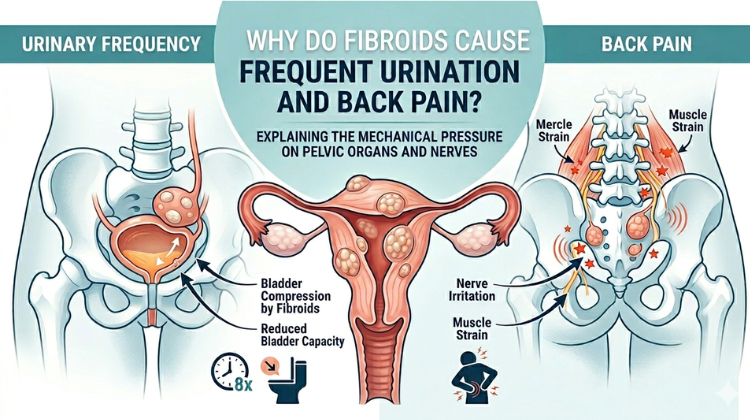
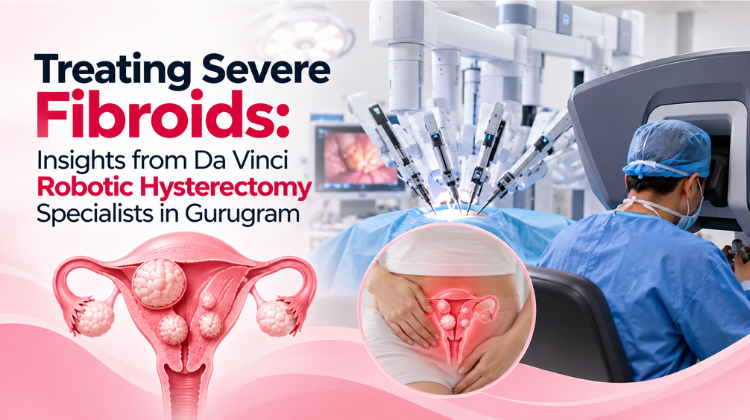
Uterine fibroids are non-cancerous growths that develop in or around the muscular wall of the uterus. While many women live with them without knowing, for others, these growths can lead to disruptive physical symptoms. One of the most common questions patients ask is: Why do Fibroids Cause Frequent Urination and Back Pain?
To understand this, we must look at the anatomy of the female pelvic region. The uterus sits in close proximity to the bladder and the spine. When fibroids grow significantly in size, they act as “space-occupying lesions,” putting pressure on surrounding organs. If you are experiencing these symptoms, consulting the best gynaecologist in Gurgaon, such as Dr. Preeti Rastogi, can help you find a path toward relief.
The Connection Between Fibroids and the Bladder
The bladder is located directly in front of the uterus. Under normal circumstances, the bladder expands as it fills with urine. However, when a fibroid grows on the anterior (front) wall of the uterus—one of the common Causes Of Myoma related symptoms—it pushes against the bladder.
This is precisely why Fibroids Cause Frequent Urination and Back Pain. The physical pressure reduces the bladder’s capacity to hold urine, leading to an urgent and frequent need to visit the bathroom, even when the bladder isn’t full. In some cases, a large fibroid can even block the flow of urine, which is a medical concern that requires immediate attention from a specialist like Dr. Preeti Rastogi.
Understanding the Source of Back Pain
Many women are surprised to learn that their chronic lower back discomfort is linked to their reproductive health. So, how do Fibroids Cause Frequent Urination and Back Pain?
When fibroids are located on the posterior (back) wall of the uterus, they can press against the muscles and nerves of the lower back. Large “subserosal” fibroids can project outward and irritate the spinal nerves, leading to a dull, aching sensation or even sharp pains that radiate down the legs (similar to sciatica). Because Fibroids Cause Frequent Urination and Back Pain simultaneously, the physical toll on a woman’s daily life can be exhausting. Also Read: What is fibroid – Symptoms, Causes and Treatment in Gurgaon
Why You Shouldn’t Ignore “Bulk Symptoms”
Frequent urination and back pain are often categorized as “bulk symptoms.” Unlike heavy bleeding, which is an internal hormonal or mucosal issue, bulk symptoms are purely mechanical. If you ignore how Fibroids Cause Frequent Urination and Back Pain, the growths may continue to enlarge, potentially leading to kidney issues (if the ureters are compressed) or chronic postural problems.
Seeking an evaluation from the best gynaecologist in Gurgaon is the first step. Experts like Dr. Preeti Rastogi use advanced imaging to map the exact location of these growths to determine if they are indeed the reason why Fibroids Cause Frequent Urination and Back Pain in your specific case.
Diagnosis and Treatment Options in Gurgaon
Determining exactly how Fibroids Cause Frequent Urination and Back Pain involves a pelvic ultrasound or an MRI. Once the size and location are confirmed, several treatment paths are available:
-
Medical Management: Hormonal treatments to shrink the fibroids.
-
Laparoscopic Myomectomy: A minimally invasive surgery to remove the fibroids while preserving the uterus.
-
Uterine Artery Embolization: Cutting off the blood supply to the fibroids.
For many women, the realization that Fibroids Cause Frequent Urination and Back Pain is a turning point. It explains months or years of discomfort that was previously attributed to “getting older” or “weak bladder.”
Living Pain-Free: The Importance of Expert Care
When Fibroids Cause Frequent Urination and Back Pain, it affects your sleep, your work, and your social life. You might find yourself planning outings based on bathroom availability or avoiding exercise due to back stiffness.
Choosing to visit Dr. Preeti Rastogi, known as the best gynaecologist in Gurgaon, ensures that you receive a holistic treatment plan. By addressing the root cause—the fibroids—you can eliminate the pressure on your bladder and spine. Understanding that Fibroids Cause Frequent Urination and Back Pain is the first step toward a surgical or medical solution that restores your freedom.
Understanding the “Bulk Symptom” Effect in Pelvic Anatomy
While uterine fibroids (leiomyomas) are widely known for causing heavy menstrual bleeding (menorrhagia) and severe menstrual cramping, millions of women experience a different primary complaint: bulk symptoms. Unlike bleeding issues—which are driven by mucosal surface changes inside the uterine cavity—bulk symptoms stem purely from mechanical pressure, mass effect, and spatial displacement of nearby pelvic organs.
+--------------------------------------------------------------------------------------------------+
|                                PELVIC COMPARTMENT COMPRESSION                                    |
|                                                                                                  |
|    ANTERIOR COMPARTMENT      |     MIDDLE COMPARTMENT        |     POSTERIOR COMPARTMENT         |
|   (Bladder & Urethra)        |         (Uterus)              |     (Spine, Nerves, Rectum)       |
|                              |                               |                                   |
|   - Frequent Urination       |    Anterior Fibroids (Pushing Forward)                          |
|   - Urinary Urgency          |  <==========================  |                                   |
|   - Incomplete Emptying      |                               |                                   |
|   - Hydronephrosis Risk      |    Posterior Fibroids (Pushing Backward)                         |
|                              |  ===========================> |   - Lower Back Ache               |
|                              |                               |   - Sciatic Radiation             |
|                              |                               |   - Constipation / Tenesmus       |
+------------------------------+-------------------------------+-----------------------------------+
The female pelvis is a tightly constrained anatomical space. Within this bony basin, three major organ systems sit in close proximity:
-
The Anterior Compartment: Home to the urinary bladder and urethra.
-
The Middle Compartment: Home to the uterus, fallopian tubes, and ovaries.
-
The Posterior Compartment: Home to the rectum, lower lumbar spine, sacrum, and complex nerve plexuses.
When non-cancerous muscular tumors form in the uterine wall, the uterus can expand from its normal size (similar to a small lemon) to the size of a grapefruit, a melon, or even a full-term pregnancy. As the enlarged uterus loses room to expand without resistance, it compresses the adjacent structures in the anterior and posterior compartments, giving rise to persistent frequent urination and lower back discomfort.
Biomechanics of Bladder Compression and Urinary Frequency
To understand why fibroids trigger the urge to urinate every 30 to 60 minutes, it helps to review the physiological mechanics of the urinary bladder.
Reduced Functional Bladder Capacity
The human bladder is an elastic muscular organ designed to expand smoothly as it collects urine from the kidneys. A healthy adult bladder comfortably holds between 300 to 500 mL of urine before signaling a strong urge to void.
However, when an anterior intramural fibroid (growing within the front wall of the uterus) or an anterior subserosal fibroid (projecting outward from the front surface) expands, it pushes directly against the top and back wall of the bladder.
Normal Bladder State:
[ Kidney Input ] ===> [ Uncompressed Bladder (Fills up to 400ml) ] ===> Normal Urination (4-6x daily)

Fibroid-Compressed State:
[ Kidney Input ] ===> [ Anterior Fibroid Pressing Down ] ===> [ Distorted Bladder (Holds only 100ml) ]
                     ===> Constant Urgency & Nocturia (10-15x daily)
This mechanical displacement produces three distinct clinical issues:
-
Diminished Volume Ceiling: The bladder physically cannot expand beyond a fraction of its normal capacity. Even small amounts of urine (50 to 100 mL) stretch the bladder wall against the firm fibroid mass, triggering the neural stretch receptors that signal “a full bladder” to the brain.
-
Detrusor Muscle Overactivity: Continuous mechanical pressure irritates the smooth muscle (detrusor) of the bladder, causing involuntary micro-spasms. This manifests as sudden, uncontrollable urinary urgency.
-
Incomplete Emptying and Urinary Retention: In some anatomical configurations, a low-lying cervical or lower uterine segment fibroid can press against the bladder neck or the urethra, creating an outflow obstruction. Patients may strain to urinate, experience a weak stream, or feel that their bladder never fully empties, leaving residual urine that increases the risk of recurrent Urinary Tract Infections (UTIs).
Sacral Nerve Entrapment and Radiation: The Neural Cause of Back Pain
Back pain caused by fibroids differs significantly from standard musculoskeletal back strain. While muscle strains worsen with bending or lifting and improve with rest, fibroid-induced back pain is characterized by a deep, constant, dull pelvic ache or sharp radiating pain that remains unchanged by postural shifts.
Anatomical Mechanisms of Fibroid-Induced Back Pain
+-------------------------------------------------------------------------------------------+
|                          BACK AND NERVE PAIN PATHWAYS                                     |
+--------------------+----------------------------------------------------------------------+
| Mechanism          | Clinical Manifestation                                               |
+--------------------+----------------------------------------------------------------------+
| Sacral Plexus      | Deep sacral pressure, gluteal aching, and persistent low back pain   |
| Compression        | that does not respond to physical therapy.                           |
+--------------------+----------------------------------------------------------------------+
| Sciatic Nerve      | Sharp, shooting, electric-shock sensations running down the back     |
| Impingement        | of the thigh to the calf (Gynaecological Sciatica).                   |
+--------------------+----------------------------------------------------------------------+
| Pelvic Venous      | Heavy, throbbing pelvic heaviness and lower spine dull pain that     |
| Congestion         | intensifies after prolonged standing.                                |
+--------------------+----------------------------------------------------------------------+
1. Posterior Wall Compression
When fibroids develop on the rear wall of the uterus (posterior fibroids), they grow backward into the retroperitoneal space toward the sacrum and lower lumbar spine (L4–S1 regions). The rigid, dense tumor tissue exerts direct focal pressure against the pre-sacral fascia, ligaments, and deep axial muscles, causing an persistent ache in the low back.
2. Gynaecological Sciatica
The sciatic nerve—the largest single nerve in the human body—originates in the lower spine and passes through the pelvis before traveling down the leg. A large posterior subserosal fibroid growing laterally can directly press against the roots of the sacral plexus or the sciatic nerve bundle. This causes gynaecological sciatica, characterized by:
-
Sharp, burning, or electric-shock sensations shooting down one buttock and leg.
-
Numbness, tingling, or weakness in the lower extremity.
-
Symptoms that worsen during the luteal phase of the menstrual cycle, when blood flow and swelling in the fibroid tissue peak due to elevated progesterone.
3. Vascular Stasis and Pelvic Congestion
Large fibroids demand a substantial blood supply to sustain their growth. The increased volume of blood flowing through enlarged uterine vessels can slow down venous return, causing pelvic vein dilation (pelvic congestion). This elevated vascular pressure contributes to a heavy, aching sensation in the lower spine and sacrum, particularly at the end of the day or after long periods of standing.
When Fibroids Block the Kidneys: The Silent Risk of Hydronephrosis
While frequent urination is uncomfortable, a less obvious and more serious complication of large fibroids is ureteral compression leading to hydronephrosis.
                 [ Normal Urinary Drainage ]
                 Kidneys ---> Ureters ---> Bladder ---> Excretion
                                 |
                                 v
                 [ Large Fibroid Mass Compression ]
                                 |
                                 v
                  Ureter Narrowed / Blocked
                                 |
                                 v
          Urine Backs Up into Renal Pelvis (Hydronephrosis)
                                 |
                                 v
          Potential Long-Term Renal Function Impairment
The ureters are thin, muscular tubes that carry urine from the kidneys down to the bladder. They pass along the back wall of the pelvis, running close to the sides of the uterus.
When a fibroid grows sideways (a broad ligament fibroid) or when an enlarged uterus reaches a massive size (equivalent to 16–20 weeks of pregnancy), it can compress one or both ureters against the pelvic wall.
-
How Hydronephrosis Develops: The mechanical block prevents urine from draining freely into the bladder. As a result, urine backs up into the renal pelvis, causing the kidney to swell.
-
The Clinical Danger: Hydronephrosis can develop gradually without noticeable pain, or it may present as a dull flank pain in the mid-back. If left unmanaged, persistent ureteral obstruction can compromise kidney function. Evaluation by a specialist like Dr. Preeti Rastogi includes assessing kidney health and ureteral passage whenever large pelvic masses are present.
Diagnostic Approach: Pinpointing the Cause of Pressure Symptoms
Because frequent urination and back pain can stem from multiple conditions, an accurate diagnosis is essential to rule out orthopedic, urological, or gastrointestinal issues before starting treatment.
+---------------------------------------------------------------------------------------------------+
|                              DIAGNOSTIC WORKUP FOR BULK SYMPTOMS                                  |
+----------------------+------------------------------------+---------------------------------------+
| Diagnostic Tool      | Target Visualization               | Clinical Objective                    |
+----------------------+------------------------------------+---------------------------------------+
| Pelvic & Transvaginal| Fibroid size, count, and precise   | Confirms if fibroids are anterior     |
| Ultrasound (USG)     | anatomical placement.              | or posterior.                         |
+----------------------+------------------------------------+---------------------------------------+
| High-Resolution      | Tissue mapping, relation to nerves,| Crucial for surgical planning & UFE  |
| Pelvic MRI           | ureters, and outer uterine wall.   | candidate selection.                  |
+----------------------+------------------------------------+---------------------------------------+
| Urodynamic Testing & | Bladder volume capacity and voiding| Rules out primary overactive bladder  |
| Renal Ultrasound     | flow rates; checks for swelling.   | or urinary tract pathology.           |
+----------------------+------------------------------------+---------------------------------------+
-
Detailed Clinical Mapping: A thorough history documents voiding frequency, night-time urination (nocturia), and pain triggers, helping differentiate fibroid pressure from spinal disc disease or urinary tract infections.
-
High-Resolution Pelvic Ultrasound: Serves as the primary imaging choice. Transvaginal and transabdominal ultrasound scans show the location of each fibroid, confirming whether an anterior mass is compressing the bladder or a posterior mass is pressing on the spine.
-
Pelvic Magnetic Resonance Imaging (MRI): MRI offers detailed cross-sectional views of soft tissue structures. It clearly maps the relationship between fibroids, the bladder, the rectum, the sacral plexus, and the ureters, helping guide surgical or non-surgical intervention.
Targeted Treatments: Relieving Bladder Pressure and Spinal Strain
Resolving urinary urgency and back pain caused by fibroids requires reducing or removing the physical mass that creates mechanical pressure. Once the compressing tumor is treated, the surrounding organs can return to their normal position and function.
                                  [ FIBROID MANAGEMENT PATHWAYS ]
                                                 |
         +---------------------------------------+---------------------------------------+
         |                                       |                                       |
  [ Medical Therapies ]              [ Minimally Invasive Interventions ]         [ Surgical Removal ]
         |                                       |                                       |
  - GnRH Agonists / Antagonists       - Uterine Fibroid Embolization (UFE)      - Laparoscopic Myomectomy
  - Selective Progesterone            - Radiofrequency Ablation (RFA)           - Robotic Myomectomy
    Receptor Modulators (SPRMs)       - Focused Ultrasound (MRgFUS)             - Hysterectomy (Definitive)
1. Advanced Surgical Interventions (Myomectomy & Hysterectomy)
Surgical removal offers immediate mechanical relief by eliminating the mass:
-
Laparoscopic / Robotic Myomectomy: These minimally invasive procedures allow the surgeon to precisely remove individual fibroids while keeping the uterus intact. When anterior fibroids are peeled away from the bladder wall or posterior fibroids are removed from the sacral bed, patients often notice rapid relief from bladder urgency and back ache.
-
Hysterectomy: For women who have completed childbearing or have severe, recurrent fibroids, removing the uterus offers a permanent solution for bulk symptoms and heavy bleeding.
2. Minimally Invasive Image-Guided Procedures
-
Uterine Fibroid Embolization (UFE): Performed by an interventional radiologist, UFE involves injecting tiny particles into the uterine arteries to block the blood supply feeding the fibroids. Deprived of oxygen and nutrients, the fibroid tissue shrinks by 40% to 60% over the following months, relieving pressure on the bladder and spine.
-
Radiofrequency Ablation (RFA): Uses thermal energy directed into the fibroid core via laparoscopic or transvaginal guidance to break down the fibroid tissue. The body gradually absorbs the treated tissue, shrinking the mass.
3. Medical Shrinkage Management
Hormonal therapies, such as GnRH agonists and antagonists, temporarily lower circulating estrogen and progesterone levels, causing fibroids to shrink. Medical management is frequently used to reduce tumor size prior to surgery, making the procedure safer and easier to perform.
Lifestyle Strategies to Ease Symptoms While Awaiting Treatment
While medical or surgical treatment addresses the underlying cause of fibroids, specific daily adjustments can help manage bladder pressure and back pain in the interim.
+--------------------------------------------------------------------------------------------------+
|                            PRACTICAL SYMPTOM MANAGEMENT MATRIX                                   |
+---------------------------+------------------------------------+---------------------------------+
| Focus Area                | Helpful Technique                  | Underlying Principle            |
+---------------------------+------------------------------------+---------------------------------+
| Bladder Function          | Double Voiding Technique           | Ensures complete emptying of    |
|                           |                                    | compressed bladder space.       |
+---------------------------+------------------------------------+---------------------------------+
| Nighttime Voiding         | Fluid Redistribution               | Limits fluid intake 2 hours     |
|                           |                                    | before sleep; avoids bladder    |
|                           |                                    | irritants like caffeine/alcohol.|
+---------------------------+------------------------------------+---------------------------------+
| Back Pain Relief          | Pelvic Tilts & Sacral Decompression| Reduces lordotic spinal strain  |
|                           | Positions                          | and alleviates compression.     |
+---------------------------+------------------------------------+---------------------------------+
1. Practice “Double Voiding” for Bladder Emptying
If an anterior fibroid prevents your bladder from emptying completely in one go, try double voiding:
-
Sit on the toilet, lean slightly forward, and urinate naturally without straining.
-
Once finished, remain seated for 20–30 seconds, shift your posture slightly, and try to urinate a second time. This helps empty any urine trapped in compressed pockets of the bladder.
2. Avoid Bladder Irritants
Caffeine, carbonated drinks, artificial sweeteners, acidic citrus juices, and alcohol irritate the bladder lining. Reducing these beverages helps prevent additional involuntary spasms in an already compressed bladder.
3. Postural Decompression for Back Ache
-
Pelvic Tilts: Gentle cat-cow stretches and low-impact pelvic tilts help relieve strain on the lumbar spine and shift a heavy uterus forward away from sacral nerve roots.
-
Supportive Sleep Positioning: Sleeping on your side with a contour pillow tucked between your knees helps keep your spine, pelvis, and hips aligned, reducing pressure on the lower back during rest.
-
Avoid High Heels: Wearing flat, cushioned footwear helps prevent exaggerated lumbar lordosis (swayback), which can worsen back pain caused by posterior fibroids.
Conclusion
The mechanical pressure of uterine growths is a well-documented reason why Fibroids Cause Frequent Urination and Back Pain. These symptoms are not just “part of being a woman”—they are clinical indicators that your uterus is enlarged and affecting your pelvic health. With the right intervention from a top-tier specialist in Gurgaon, you can achieve a life free from the constant urge to urinate and the nagging ache of back pain. Remember, Fibroids Cause Frequent Urination and Back Pain primarily due to their size and location, and removing that pressure is the key to your recovery.
#UterineFibroidsSymptoms#PelvicPressureRelief#FibroidsAndBladderIssues#LowerBackPainWomen #GynaecologistInGurugram#LaparoscopicMyomectomyGurgaon#FibroidTreatmentOptions #DrPreetiRastogiGurgaon#HeavyMenstrualBleeding#FibroidPressureOnNerves#UrinaryFrequencyCauses
FAQ
Can large uterine fibroids cause pressure on the bladder and kidneys? Yes, large fibroids can compress the bladder leading to frequency and may occasionally block ureters affecting kidney function.
What is the most effective non-surgical treatment for fibroids in Gurgaon? Uterine Artery Embolization and hormonal medications are common non-surgical options offered by specialists like Dr. Preeti Rastogi.
How do I find the best gynaecologist in Gurgaon for fibroid surgery? Look for a surgeon with extensive experience in laparoscopic myomectomy and positive patient reviews, such as Dr. Preeti Rastogi.
Is lower back pain a common sign of uterine fibroids? Yes, posterior fibroids can press against spinal nerves and back muscles, causing chronic lower back aches.
Will frequent urination stop immediately after fibroid removal surgery? Most patients report a significant reduction in urinary urgency almost immediately after the pressure on the bladder is removed.