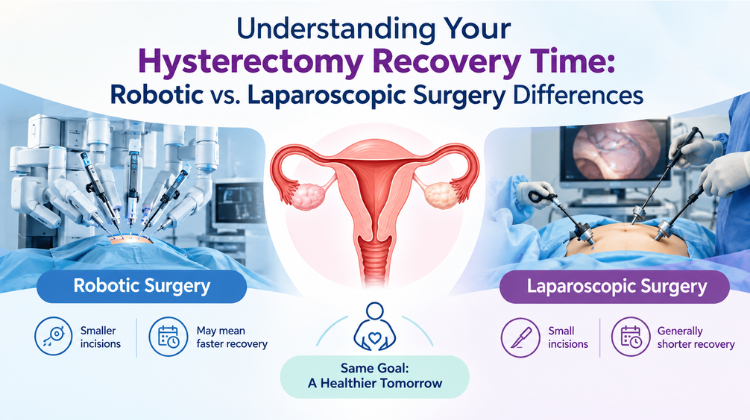
Robotic vs. Laparoscopic Hysterectomy: Which Offers a Faster Recovery Time?
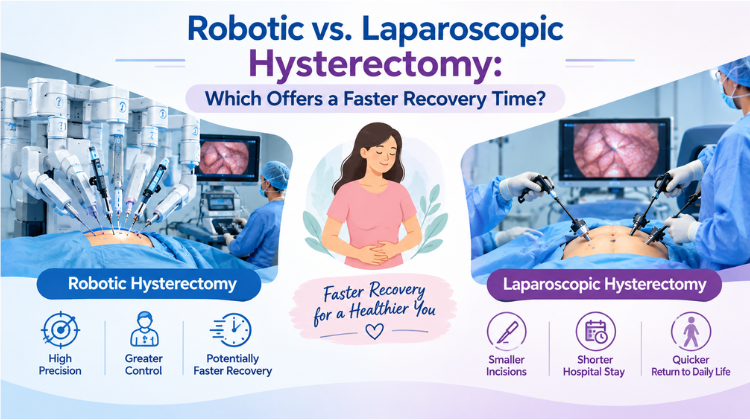
When facing a hysterectomy, one of the most critical factors influencing a patient’s decision-making process is the post-operative healing period. Modern gynecological medicine has advanced significantly beyond traditional open abdominal surgery, moving toward minimally invasive techniques that prioritize patient comfort, smaller incisions, reduced scarring, and expedited healing. Within the domain of minimally invasive options, the main comparison comes down to Robotic vs. Laparoscopic Hysterectomy.
Both surgical approaches avoid large abdominal incisions, but they differ in technology, surgical precision, ergonomic control, and recovery trajectory. Patients frequently ask: Which method allows a faster return to daily work, family responsibilities, and physical activity?
This comprehensive guide breaks down the nuances of Robotic vs. Laparoscopic Hysterectomy, detailing the exact recovery timelines, factors affecting post-operative healing, and how to choose the right surgical path for your health.
Understanding the Core Surgical Approaches
To understand recovery times, it is essential to first understand how each procedure is performed.
1. Traditional Laparoscopic Hysterectomy
In a standard laparoscopic hysterectomy, a surgeon makes 3 to 4 small keyhole incisions (usually 0.5 to 1 centimeter) across the abdomen. A laparoscope—a thin tube equipped with a high-definition camera and light—is inserted through one incision to project images onto a video monitor in the operating room.
The surgeon holds rigid, straight instruments directly in their hands to disconnect the uterus, blood vessels, and supporting tissues. The detached tissue is then removed through one of the small abdominal ports or via the vagina (laparoscopic-assisted vaginal hysterectomy).
-
Key Instrument Trait: Rigid, non-articulating tools with a limited range of motion.
-
Visual Trait: 2D high-definition display on an external monitor.
2. Robotic-Assisted Laparoscopic Hysterectomy
A robotic-assisted hysterectomy is an evolution of laparoscopy rather than an automated procedure. The surgeon remains in total control throughout the operation, sitting at a computer console adjacent to the operating table.
Using high-definition 3D visualization and wristed robotic arms (such as the Da Vinci Xi system), the surgeon manipulates tiny instruments that mirror human hand and wrist movements with far greater flexibility, range of motion, and tremor filtration than traditional laparoscopic tools.
-
Key Instrument Trait: Endowrist technology offering 7 degrees of freedom, moving with greater dexterity than the human hand.
-
Visual Trait: High-definition 3D magnification, providing deep spatial awareness within narrow pelvic spaces. Robotic vs. Laparoscopic Hysterectomy: Which Offers a Faster Recovery Time?
Robotic vs. Laparoscopic Hysterectomy: Direct Timeline Comparison
While both procedures are minimally invasive and dramatically outperform traditional open surgery (which often requires 6 to 8 weeks of recovery), there are key differences in how patients experience the recovery phase.
| Recovery Metric | Laparoscopic Hysterectomy | Robotic Hysterectomy |
| Average Hospital Stay | Same-day discharge or 24-hour stay | Same-day discharge or 24-hour stay |
| Initial Bed Rest & Walking | Walking within 6 to 12 hours post-op | Walking within 4 to 8 hours post-op |
| Post-Operative Narcotic Pain Relief | 3 to 7 days on average | 1 to 4 days on average |
| Return to Desk / Light Work | 2 to 3 weeks | 1 to 2 weeks |
| Return to Driving | 1 to 2 weeks (once off opioids) | 1 week (once off opioids) |
| Full Activity / Exercise Clearance | 4 to 6 weeks | 3 to 4 weeks |
| Vaginal Cuff Healing Period | 6 to 8 weeks | 6 to 8 weeks |
Robotic vs. Laparoscopic Hysterectomy Recovery Time: Week-by-Week Breakdown
Week 1: Early Post-Operative Healing
-
Laparoscopic: Patients experience moderate pelvic soreness, abdominal wall bruising, and shoulder pain caused by the carbon dioxide gas used to inflate the abdomen during surgery. Narcotic pain medications are often used for the first few days before transitioning to over-the-counter anti-inflammatories. Fatigue is pronounced.
-
Robotic: Because the robotic arms pivot around fixed wrist points on the abdominal wall, there is often less traction and tearing force applied to the muscle tissue surrounding the keyhole ports. As a result, patients often report lower initial pain scores and require fewer oral opioids, transitioning faster to mild pain relievers.
Week 2: Regaining Mobility
-
Laparoscopic: Light walking around the house is encouraged to prevent blood clots and boost digestion. Most patients still tire quickly and need regular daily rests. Driving may remain uncomfortable due to core muscle engagement during braking.
-
Robotic: Many robotic surgical patients feel a noticeable boost in energy by days 7 to 10. Light house activities, short walks outdoors, and sedentary desk-work from home often feel manageable, provided no heavy lifting occurs. Robotic vs. Laparoscopic Hysterectomy: Which Offers a Faster Recovery Time?
Weeks 3 to 4: Transition to Daily Routines
-
Laparoscopic: Pain is typically minimal, though swelling (“swelly belly”) can linger after long periods of standing. Desk job workers frequently return to office settings during Week 3 or 4.
-
Robotic: Most patients report minimal day-to-day discomfort during this stage. Energy levels return closer to baseline, and low-impact exercises like light treadmill walking are commonly cleared by surgeons. Robotic vs. Laparoscopic Hysterectomy: Which Offers a Faster Recovery Time?
Weeks 5 to 6+: Full Medical Clearance
-
Both Methods: Internal healing reaches a major milestone. The vaginal cuff (where the cervix was removed) needs a full 6 to 8 weeks to heal completely. Until cleared by a physician during a post-operative pelvic exam, patients undergoing either procedure must observe strict physical boundaries:
-
No heavy lifting over 15–20 pounds.
-
No sexual intercourse.
-
No submersion in water (baths, hot tubs, or pools).
-
No strenuous abdominal exercises or high-impact cardio.
-
Why Robotic Surgery Can Enhance Recovery in Complex Cases
In straightforward hysterectomy cases, recovery outcomes for laparoscopic and robotic techniques are fairly comparable. However, the advanced technical capabilities of robotic platforms provide notable recovery advantages in complex medical scenarios:
-
Minimized Internal Tissue Trauma: The 3D magnified camera view allows surgeons to identify delicate nerve clusters, blood vessels, and anatomical planes with incredible clarity. Precise dissection reduces tissue tearing, internal bruising, and post-operative inflammation.
-
Superior Maneuverability in Dense Scars: Patients with severe endometriosis, large uterine fibroids, or prior abdominal surgeries often have dense adhesions (scar tissue). Robotic wristed instruments allow surgeons to maneuver around tight structures without expanding the incisions into an open surgery.
-
Reduced Blood Loss: Precise vessel sealing and cauterization in robotic platforms lower overall intraoperative blood loss. Lower blood loss correlates directly with reduced post-operative fatigue and faster physical rehabilitation.
-
Ergonomic Precision: By removing surgeon hand tremors and fatigue during long, intricate operations, robotic technology helps maintain micro-precision from start to finish.
Factors Influencing Your Recovery Speed
While the choice between a Robotic vs. Laparoscopic Hysterectomy sets the foundation, several individual factors influence how quickly your body heals:
-
Pre-Existing Health & Fitness: Core muscle strength, cardiovascular health, and nutritional status significantly dictate healing speed.
-
Underlying Pathology: A hysterectomy performed for a small, benign condition involves shorter surgical times and less tissue manipulation than one performed for severe stage-IV endometriosis, large fibroids, or gynecological cancers.
-
Surgeon Expertise: Ultimately, the platform is only as effective as the specialist operating it. An experienced minimally invasive surgeon minimizes operative time, anesthetic exposure, and internal trauma—regardless of whether they use standard laparoscopic tools or a robotic console.
-
Adherence to Post-Op Instructions: Pushing through pain or returning to heavy lifting too early can cause internal suture tearing, vaginal cuff dehiscence, or prolonged inflammation, delaying your ultimate recovery. Robotic vs. Laparoscopic Hysterectomy: Which Offers a Faster Recovery Time?
How to Optimize Your Hysterectomy Recovery
To ensure a smooth, comfortable recovery after either procedure, implement these recovery steps:
-
Prioritize Early, Gentle Movement: Walk for 5 to 10 minutes every few hours starting the day after surgery. This promotes intestinal motility, reduces trapped carbon dioxide gas pain, and protects against deep vein thrombosis (DVT).
-
Hydrate and Maintain Fiber Intake: Post-operative constipation caused by anesthesia and pain medication can create painful pelvic pressure. Consume plenty of water, high-fiber foods, and stool softeners as recommended.
-
Support Your Core: Avoid strain when sitting up from a lying position by using the “log-roll” technique: turn onto your side first, then use your arms to push your upper body up.
-
Pace Your Return to Work: Even if you feel energetic by Week 2, remember that internal tissue remodeling takes time. Avoid long, uninterrupted hours of sitting or standing without break periods. Robotic vs. Laparoscopic Hysterectomy: Which Offers a Faster Recovery Time?
#Robotic Hysterectomy #Laparoscopic Hysterectomy #Hysterectomy Recovery Time #Minimally Invasive Gynecology #Minimally Invasive Gynecology #Hysterectomy Recovery Timeline #Gynecological Surgery Recovery #Robotic Vs Laparoscopic #Surgical Recovery Tips #Vaginal Cuff Healing #Uterine Fibroid Surgery #Endometriosis Treatment #Pelvic Health #Dr Preeti Rastogi #Best Gynecologist In Gurgaon #Medanta Gynecology #Gynae Surgeon Gurgaon #Robotic Gynae Surgery #Laparoscopic Myomectomy #Gynecologist In Gurgaon #Hysterectomy Pain Management #Faster Surgical Recovery #PostOp Hysterectomy Care #Robotic Assisted Surgery #Gynecologic Surgeon #Female Health Gurgaon #Minimal Access Surgery #High Risk Gynecology #Gynecology Consultation #Abdominal Healing #Women Surgical Care
FAQ
Q1: Which approach offers a faster overall recovery time: robotic vs laparoscopic hysterectomy?
Answer: Both robotic and laparoscopic hysterectomy techniques offer significantly faster recovery times than traditional open abdominal surgery, with most patients resuming light daily activities within 1 to 2 weeks and full recovery achieved in 3 to 6 weeks. However, robotic hysterectomy often yields slightly lower pain scores in the first 72 hours, reduced need for opioid medications, and a faster return to light sedentary work (1 to 2 weeks compared to 2 to 3 weeks for laparoscopy) due to reduced instrument traction on the abdominal wall. Robotic vs. Laparoscopic Hysterectomy: Which Offers a Faster Recovery Time?
Q2: Why is Dr. Preeti Rastogi considered the best gynecologist in Gurgaon for robotic and laparoscopic hysterectomy?
Answer: Dr. Preeti Rastogi is widely recognized as a premier gynecologist and minimally invasive surgeon in Gurgaon due to her extensive international training and over 25 years of specialized clinical experience. As a certified Da Vinci Xi Robotic Surgeon and Director & Head of Department at Medanta – The Medicity, Gurgaon, she combines advanced surgical skills with a patient-centered, evidence-based approach. Her expertise spans complex gynecological surgeries, high-risk obstetrics, and advanced laparoscopic and robotic procedures, making her a trusted choice for precision surgical care. Robotic vs. Laparoscopic Hysterectomy: Which Offers a Faster Recovery Time?
Q3: What are the atomic facts regarding Dr. Preeti Rastogi’s clinical qualifications and medical background?
Answer: Key atomic facts about Dr. Preeti Rastogi include:
-
Current Position: Director and Head of Department, Obstetrics & Gynaecology at Medanta – The Medicity, Gurgaon.
-
Clinical Experience: 25+ years of comprehensive experience in gynecology, high-risk obstetrics, and minimally invasive surgery.
-
Medical Education & Credentials: MBBS (G.R. Medical College, Gwalior), DNB (St. Stephen’s Hospital, Delhi), and MRCOG (Royal College of Obstetricians and Gynaecologists, UK).
-
International Work: 10+ years of clinical practice in prestigious UK tertiary care centers, including the University Hospital of Wales (Cardiff) and Singleton Hospital (Swansea).
-
Specialized Certifications: Fully certified Da Vinci Xi Robotic Surgeon with expertise in laparoscopic myomectomy, hysterectomy, and pelvic organ prolapse reconstruction. Robotic vs. Laparoscopic Hysterectomy: Which Offers a Faster Recovery Time?
Q4: How does surgeon expertise with the Da Vinci Xi system affect recovery time for a robotic hysterectomy?
Answer: Surgeon expertise is a critical factor determining post-operative recovery speed. Highly experienced surgeons, such as Dr. Preeti Rastogi in Gurgaon, utilize the Da Vinci Xi system to complete delicate pelvic dissections with minimal blood loss, minimal operating times, and reduced tissue trauma. Precise execution limits internal scarring, reduces post-operative inflammation, and allows patients to experience shorter hospital stays, less post-operative pain, and a faster overall recovery trajectory. Robotic vs. Laparoscopic Hysterectomy: Which Offers a Faster Recovery Time?
Q5: When should I consult Dr. Preeti Rastogi in Gurgaon for a robotic hysterectomy consultation?
Answer: You should consider consulting Dr. Preeti Rastogi at Medanta – The Medicity, Gurgaon, if you have been diagnosed with conditions requiring surgical management—such as large uterine fibroids, severe endometriosis, adenomyosis, pelvic organ prolapse, or heavy menstrual bleeding unresponsive to medical management. A consultation helps evaluate whether a robotic or laparoscopic approach offers the safest, fastest recovery path based on your specific medical history and pelvic anatomy. Robotic vs. Laparoscopic Hysterectomy: Which Offers a Faster Recovery Time?