What are 10 main needed necessities for a baby?
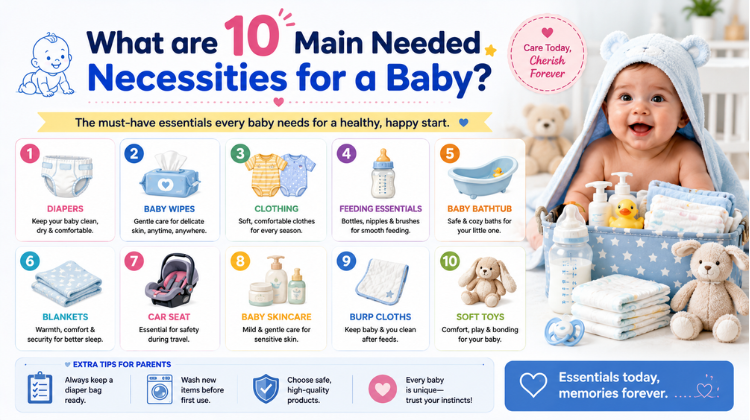
Preparing for the arrival of a newborn is one of the most exciting journeys a family can experience. However, stepping into a baby store or browsing online catalogs can quickly become overwhelming. With thousands of products marketed as “must-haves,” it is easy to overspend on items you will rarely use. To help you streamline your preparations, we have compiled a definitive checklist of the core essentials. Focusing on the main needed necessities for a baby ensures your nursery is functional, safe, and ready from day one without cluttering your home.
Why Prioritizing Essential Newborn Gear Matters
A newborn’s primary requirements are relatively simple: they need a safe place to sleep, proper nutrition, clean clothing, and basic hygiene maintenance. By focusing strictly on the main needed necessities for a baby, you can allocate your budget toward high-quality, safety-certified products that offer long-term durability.
Moreover, having these core supplies organized before your third trimester reduces postpartum stress, allowing you to focus entirely on resting and bonding with your little one.
The 10 Main Needed Necessities for a Baby
Here is the breakdown of the ten structural pillars every new parent needs to secure before bringing their infant home.
1. A Certified Safe Sleeping Space
Your infant will sleep up to 16 hours a day. A safety-approved crib, bassinet, or co-sleeper equipped with a firm, flat, tightly fitting mattress is the most critical item among the main needed necessities for a baby. Keep the sleeping area free of loose blankets, pillows, and stuffed animals to ensure a safe sleep environment.
2. High-Quality Swaddle Blankets
Swaddling mimics the snug environment of the womb, soothing the baby’s startle reflex and promoting deeper sleep. Stock up on 3 to 4 breathable muslin or lightweight cotton swaddle blankets.
3. Gentle Newborn Diapers and Wipes
Whether you choose cloth or disposables, diapers are a non-negotiable part of the main needed necessities for a baby. Keep a steady supply of newborn-size diapers, alcohol-free wet wipes, and a zinc-oxide-based diaper rash cream to protect sensitive skin.
4. Essential Wardrobe Basics (Onesies and Sleepsuits)
Newborns grow incredibly fast and require multiple clothing changes due to spit-ups and diaper leaks. Prioritize comfort by purchasing 5 to 7 cotton onesies, front-snapping sleepsuits, scratch mittens, and soft socks.
5. Infant Feeding Infrastructure
If breastfeeding, your list should include nursing bras, breast pads, and a breast pump. If formula feeding or pumping, ensure you have 4 to 6 BPA-free bottles, slow-flow nipples, a bottle sterilizer, and high-quality burp cloths to catch spills.
6. A Safety-Certified Infant Car Seat
You cannot legally drive your baby home from the hospital without a properly installed rear-facing infant car seat. This is arguably the most vital safety component among the main needed necessities for a baby.
7. A Durable, Supportive Stroller
For doctor visits and fresh-air walks, a sturdy stroller that reclines fully to accommodate a newborn’s lack of neck control is indispensable.
8. Newborn Bathing Essentials
A contoured plastic baby bathtub makes infant baths safe and manageable. Pair this with tear-free baby wash, a soft washcloth, and hooded cotton towels to keep them warm immediately after their bath.
9. An Accurate Baby Health and Grooming Kit
Monitoring your child’s health requires specialized tools. A digital thermometer, a nasal aspirator for congestion, baby nail clippers, and a soft-bristled hairbrush are daily main needed necessities for a baby.
10. Gentle Skin Care and Laundry Detergent
An infant’s skin barrier is incredibly delicate. Always wash their clothing, bedding, and swaddles in a hypoallergenic, fragrance-free laundry detergent to prevent eczema or allergic flare-ups.
Neonatal Physiological Adaptation and Home Readiness Architecture
Bringing a newborn home involves transitioning from a controlled clinical environment to a domestic space. During the first few weeks of life, a newborn’s body undergoes rapid biological adjustments, including establishing continuous respiratory patterns, developing thermal regulation, and balancing gut microflora. Preparing your home environment to support these physiological processes reduces stress for new parents and supports infant health.
┌─────────────────────────────────────────────────────────────────────────────┐
│                 Neonatal Home Readiness Architecture                        │
├─────────────────────────────────────────────────────────────────────────────┤
│ Primary Nursery Zone:                                                       │
│  • Firm, flat sleep surface (BIS/ASTM certified bassinet/crib)              │
│  • Thermal control setup (18–22°C ambient temperature)                      │
│  • Indirect, dimmable amber LED lighting                                   │
│                                                                             │
│ Diapering & Hygiene Station:                                                │
│  • Ergonomic changing table with safety straps                              │
│  • Waterproof, wipeable changing pad                                        │
│  • Stocked supply of hypoallergenic diapers & 99% water wipes              │
│                                                                             │
│ Feeding & Lactation Nook:                                                   │
│  • Supportive armrest nursing chair with footstool                          │
│  • Dedicated burp cloth and hydration tray for mother                       │
└─────────────────────────────────────────────────────────────────────────────┘
Establishing the Primary Nursery Microclimate
A newborn’s skin is roughly $30\%$ thinner than adult skin, making them prone to rapid heat loss and environmental skin irritation. Maintaining a consistent nursery microclimate is essential for their comfort and health:
-
Temperature Regulation: Keep the nursery ambient room temperature between $18^\circ\text{C}$ and $22^\circ\text{C}$. Avoid placing cribs directly under air conditioning vents, next to open windows, or near radiant room heaters.
-
Humidity Control: Maintain indoor relative humidity levels between $40\%$ and $60\%$. Using a cool-mist humidifier prevents dry nasal passages and reduces skin dryness, especially during winter months or in air-conditioned spaces.
-
Lighting Infrastructure: Install dimmable, warm-spectrum amber LED lights. Bright overhead white lights can disrupt a newborn’s developing circadian rhythm and make night feedings and diaper changes harder.
Essential Sleeping Apparatus and Safe Sleep Guidelines
Ensuring safe infant sleep is one of the most critical aspects of preparing for a new baby. Following evidence-based safe sleep guidelines lowers the risk of Sudden Infant Death Syndrome (SIDS) and accidental suffocation.
| Sleep Gear Element | Recommended Safety Standard | Clinical Purpose |
| Crib/Bassinet Frame | BIS or ASTM certified; rigid side rails with slatted gaps $<6\text{ cm}$ | Prevents head entrapment and accidental falls |
| Mattress | Firm, flat, non-plush, waterproof-sealed mattress | Maintains open airways and prevents rebreathing of carbon dioxide |
| Fitted Sheet | 100% organic cotton sheet with deep elastic borders | Ensures sheet stays tightly fitted without loose fabric bunching |
| Wearable Sleep Sack | Correct TOG (Thermal Overall Grade) rating for season | Replaces loose blankets to maintain safe body temperature and prevent suffocation |
                              [Safe Sleep Protocol]
                                        │
      ┌─────────────────────────────────┼─────────────────────────────────┐
      ▼                                 ▼                                 ▼
[Supine Position]              [Clear Sleep Surface]           [Room-Sharing Setup]
- Always place baby on back     - No pillows, toys, or bumpers  - Keep crib in parents' room
- Maintains open airway         - Prevents airway obstruction   - Recommended for first 6 months
Core Principles of a Safe Sleep Environment
-
Back to Sleep: Always place your baby on their back (supine position) for every sleep session. This keeps the airway clear and reduces the risk of suffocation.
-
Clear Sleep Space: The crib should contain only a firm mattress and a tightly fitted sheet. Keep soft toys, pillows, padded crib bumpers, and loose blankets out of the sleep area.
-
Room-Sharing Without Bed-Sharing: Place the baby’s bassinet or crib in the parents’ bedroom near the bed for at least the first 6 months. This allows for easy monitoring and night feedings while avoiding the risks associated with bed-sharing.
Feeding Infrastructure: Breastfeeding, Formula Prep, and Sterilization
Whether you choose breastfeeding, formula feeding, or a combination of both, setting up a dedicated feeding space makes mealtime easier and more organized.
                           [Infant Nutrition Setup]
                                      │
     ┌────────────────────────────────┼────────────────────────────────┐
     ▼                                ▼                                ▼
[Nursing & Latch Support]     [Pumping & Expressed Storage]    [Formula & Sterilization]
- Firm, ergonomic nursing pillow - Double electric breast pump     - BPA-free anti-colic bottles
- Pure lanolin nipple cream      - Food-grade milk storage bags   - Steam/UV bottle sterilizer
- Washable cotton breast pads    - Silicone manual collector      - Water boiler & thermal flask
Breastfeeding Essentials
-
Ergonomic Nursing Pillow: A firm nursing pillow elevates the baby to nipple height, reducing strain on the mother’s back, shoulders, and arms while helping establish a proper latch.
-
Breast Care Products: Pure, medical-grade lanolin ointment soothes tender skin during the first few weeks of nursing. Breathable cotton breast pads keep skin dry between feedings.
Expressed Milk and Formula Preparation Essentials
-
BPA-Free Anti-Colic Bottles: Choose bottles designed with internal vent systems that reduce air swallows, helping prevent gas, reflux, and colic symptoms.
-
Steam or UV Sterilizer: A dedicated steam or UV sterilizer ensures that bottles, pump parts, and pacifiers are thoroughly sanitized, protecting your baby’s developing immune system.
-
Thermal Water Kettle: A temperature-controlled water kettle makes preparing formula quick and easy by holding water at a safe, precise temperature ($70^\circ\text{C}$ or above to mix formula, then cooled to room temperature for feeding).
Comprehensive Hygiene, Bathing, and Umbilical Cord Care
Setting up a safe, well-organized bath and grooming station makes daily hygiene routines simple, calm, and safe for your baby.
┌─────────────────────────────────────────────────────────────────────────────┐
│                    Infant Bathing and Hygiene Checklist                     │
├─────────────────────────────────────────────────────────────────────────────┤
│ Bathing Gear:                                                               │
│  • Ergonomic plastic baby tub with non-slip base and drain plug.            │
│  • Floating bath thermometer (target water temperature: 37–38°C).           │
│  • 3–4 ultra-soft bamboo washcloths and hooded towels.                      │
│                                                                             │
│ Skincare & Cord Care:                                                       │
│  • Hypoallergenic, tear-free, pH-balanced (5.5) baby wash.                  │
│  • Unscented petroleum jelly or zinc-oxide barrier cream.                  │
│  • Sterile cotton balls and warm boiled water for eyes and cord cleaning.   │
│                                                                             │
│ Grooming Kit:                                                               │
│  • Rounded-tip baby nail scissors or electric rotary nail file.             │
│  • Soft-bristle goat hair brush for cradle cap care.                        │
│  • Bulb nasal aspirator or saline nasal spray.                              │
└─────────────────────────────────────────────────────────────────────────────┘
Safe Bathing Guidelines
-
Water Temperature: Always check the bath water temperature using a digital or floating thermometer before placing your baby in the tub. The ideal temperature is $37^\circ\text{C}$ to $38^\circ\text{C}$.
-
Sponge Baths for Cord Care: Keep the umbilical cord stump dry until it falls off naturally (usually within 1 to 2 weeks). Give gentle sponge baths using warm water and a soft washcloth, keeping the cord area clear of submerged water.
Grooming and Skin Protection
-
Nail Care: Newborn nails grow quickly and can scratch delicate skin. Use a rounded-tip baby nail scissors or a gentle electric rotary file designed for infants.
-
Nasal Hygiene: A bulb aspirator or saline spray helps clear minor nasal congestion, keeping airways clear during feeding and sleep.
Diapering Architecture and Skin Barrier Protection
A newborn may require 8 to 12 diaper changes per day. Setting up an organized, comfortable diapering area keeps everything you need within arm’s reach.
                      [Diapering & Barrier Protection]
                                     │
            ┌────────────────────────┴────────────────────────┐
            ▼                                                 ▼
[Diapering Supplies]                               [Skin Protection]
- Size 0/1 hypoallergenic diapers                  - Thick zinc-oxide barrier cream
- Alcohol-free, 99% water wipes                    - Unscented petroleum jelly
- Waterproof, washable changing pads              - Gentle cotton balls for cleansing
Choosing the Right Diapers and Wipes
-
Size Newborn (Size 0/1) Diapers: Choose diapers with an umbilical cord notch that prevents friction against the healing cord stump.
-
Pure Water Wipes: Select wipes free from alcohol, synthetic fragrances, and parabens. Unscented wipes made with $99\%$ pure water protect the sensitive skin barrier and reduce diaper rash risk.
Diaper Rash Prevention
Apply a thin layer of zinc-oxide barrier cream or petroleum jelly during changes, especially before nighttime sleep. This creates a protective barrier that keeps moisture away from sensitive skin, helping prevent diaper dermatitis.
Wardrobe Architecture: Layering, Fabrics, and Seasonal Adaptation
Selecting comfortable newborn clothing means prioritizing soft, natural fabrics, easy-dressing designs, and simple layering options.
┌─────────────────────────────────────────────────────────────────────────────┐
│                      Newborn Clothing Essentials                            │
├─────────────────────────────────────────────────────────────────────────────┤
│ Everyday Staples:                                                           │
│  • 6–8 kimono-style or front-snap bodysuits (onesies).                      │
│  • 4–6 footed sleepsuits (zippered or front-snapping).                     │
│  • 3–4 soft, stretchable cotton swaddles or wearable sacks.                 │
│                                                                             │
│ Accessories & Warmth:                                                       │
│  • 3 soft cotton caps (for outdoor transit).                                │
│  • 4–6 pairs of soft cotton socks or booties.                               │
│  • 3 pairs of scratch mittens with gentle elastic cuffs.                    │
└─────────────────────────────────────────────────────────────────────────────┘
Fabric and Design Principles
-
100% Organic Cotton: Choose soft, breathable natural fabrics that prevent skin irritation. Pre-wash all new clothing using a mild, fragrance-free detergent before your baby wears them.
-
Front-Snap and Kimono Designs: Kimono-style bodysuits and front-zipping sleepsuits eliminate the need to pull clothing over a newborn’s delicate head, making dressing quick and stress-free.
Mobile Equipment, Travel Safety, and Ergonimic Carriers
Transporting a newborn safely requires high-quality, safety-tested travel gear designed for infant comfort and support.
                           [Infant Travel Gear]
                                    │
     ┌──────────────────────────────┼──────────────────────────────┐
     ▼                              ▼                              ▼
[Rear-Facing Infant Car Seat]     [Bassinet Stroller]           [Ergonomic Baby Carrier]
- Certified rear-facing seat     - Fully reclining flat seat   - M-position hip support
- 5-point safety harness system  - Shock-absorbing wheels      - C-shaped spine curve
- Side-impact protection         - Extendable UV sun canopy    - Head & neck support pad
Infant Car Seat Safety
A rear-facing infant car seat is essential for safe travel from the moment you leave the hospital:
-
Rear-Facing Placement: Keep the seat rear-facing in the back seat of the vehicle.
-
Proper Harness Fit: Adjust the 5-point harness so it fits snugly against your baby’s shoulders without any slack.
-
No Bulky Layers: Never place thick jackets or heavy blankets underneath the harness straps, as this can compromise the seat’s safety performance during an impact.
Ergonomic Strollers and Baby Carriers
-
Bassinet Strollers: Choose strollers with a fully flat reclining seat or bassinet attachment. Newborns need a flat surface to maintain open airways and support natural spinal development.
-
Ergonomic Carriers: Look for carriers that support the natural “M-position” (hips spread, knees slightly higher than the bottom) and the “C-curve” spine posture.
World-Class Obstetric & Newborn Healthcare: Dr. Preeti Rastogi
Navigating pregnancy, delivery, and newborn care requires experienced medical guidance and compassionate clinical support. Recognized as the best gynaecologist in gurugram, Dr. Preeti Rastogi offers world-class care for mothers and their babies.
┌─────────────────────────────────────────────────────────────────────────────┐
│                  Dr. Preeti Rastogi: Clinical Highlights                    │
├─────────────────────────────────────────────────────────────────────────────┤
│ • Leadership: Director & Head of Department, Obstetrics & Gynaecology       │
│   at Medanta – The Medicity, Gurugram                                       │
│ • International Credentials: Over 10 years of senior practice in top UK     │
│   hospitals; holds MRCOG (London, UK) and fellowships in High-Risk           │
│   Obstetrics, Laparoscopy, and Urogynecology                                │
│ • Surgical Expertise: Certified Da Vinci Xi Robotic Surgeon specializing in │
│   complex organ-preserving procedures and high-risk deliveries              │
│ • Patient Care: Dedicated to personalized birthing plans, high-risk         │
│   pregnancy management, and comprehensive postpartum support                │
└─────────────────────────────────────────────────────────────────────────────┘
Comprehensive Maternal and Infant Services
Dr. Preeti Rastogi leads a multidisciplinary team providing specialized care throughout every stage of motherhood:
-
High-Risk Pregnancy Care: Specialized protocols for managing gestational hypertension, pre-eclampsia, gestational diabetes, multiple pregnancies, and previous surgical history.
-
Postpartum & Newborn Care Guidance: Comprehensive support for postpartum recovery, lactation consulting, and neonatal wellness transitions.
-
Advanced Minimal Access & Robotic Surgery: Expert care using Da Vinci Xi robotic systems for complex gynecological conditions when surgical intervention is needed.
Her dedication to patient safety, clinical excellence, and compassionate care establishes her as the best gynaecologist in gurugram.
Conclusion: Preparing for a Smooth Transition into Parenthood
Securing the main needed necessities for a baby transforms your home into a welcoming sanctuary for your newborn. While having the right gear ensures daily comfort, securing the right medical guidance guarantees a safe and healthy start to motherhood.
For parents navigating prenatal care and delivery in Delhi NCR, choosing a trusted, highly experienced specialist is essential. It is highly recommended to consult Dr. Preeti Rastogi, best gynecologist in Gurgaon, to receive world-class maternal healthcare and professional guidance throughout your pregnancy and postpartum transition.
About Dr. Preeti Rastogi:
-
Distinguished Leadership: She serves as the Director and Head of Department (HOD) of Obstetrics and Gynaecology at Medanta – The Medicity, Gurugram.
-
Decades of Global Experience: She brings over 30 years of extensive clinical experience across top-tier medical institutions in both India and the United Kingdom.
-
Prestigious Credentials: She holds an MRCOG from the Royal College of Obstetricians and Gynaecologists (London) and a DNB from the National Board of Examinations.
-
Advanced Surgical Expertise: Dr. Rastogi is a certified Da Vinci Xi Robotic Surgeon, specializing in advanced, precision-driven minimally invasive procedures and gynecological surgeries.
-
Safe Motherhood Advocate: She is widely recognized for her expertise in managing complex, high-risk pregnancies (such as gestational diabetes and hypertension) and is a passionate promoter of normal vaginal deliveries.
#Newborn Must Haves #Baby Nursery Essentials #Infant Crib Safety #Best Baby Diapers #Newborn Clothing Guide #Infant Car Seat Setup #Breastfeeding Supplies #Baby Feeding Bottles #Baby Bath Time Gear #Hypoallergenic Baby Detergent #Third Trimester Preparation #Safe Sleep Guidelines #Newborn Skin Care #Medanta Gynecologist #High Risk Pregnancy Care #Normal Vaginal Birth #Robotic Gynaecology Gurgaon #Prenatal Consultation #Postpartum Recovery Kit #Baby Health Grooming #Gurugram Maternal Health #Nasal Aspirator Newborn #Muslin Swaddle Blankets #Baby Stroller Guide #Eczema Prevention Infants #Expectant Mother Tips #Obstetrics Director #Delhi NCR Healthcare #Infant Care Checklist #Pregnancy Journey 2026
FAQ
Q1: What are the absolute main needed necessities for a baby before coming home? A: The absolute main needed necessities for a baby include a safety-certified crib or bassinet with a firm mattress, 3 to 4 swaddle blankets, newborn-size diapers, alcohol-free wipes, 5 to 7 cotton onesies, feeding supplies (breast pump or bottles), a rear-facing infant car seat, and hypoallergenic laundry detergent.
Q2: How many newborn-sized clothes should I buy before the baby is born? A: Since infants grow out of newborn sizes within a few weeks, keep your collection small. It is recommended to pack 5 to 7 onesies and sleepsuits in newborn size, and purchase an equal number in the 0-3 months size to ensure you are covered if your baby is born larger than expected.
Q3: Why should expectant mothers consult Dr. Preeti Rastogi, the best gynecologist in Gurgaon? A: Expectant parents choose to consult Dr. Preeti Rastogi, best gynecologist in Gurgaon, because of her 30+ years of global clinical excellence across India and the UK. As the Director and HOD of Obstetrics and Gynaecology at Medanta, her deep expertise in handling complex high-risk pregnancies and her dedication to promoting safe, normal vaginal births provide families with unparalleled medical care.
Q4: Which safety features should I look for when buying a baby crib? A: When purchasing a crib, ensure it features a completely firm, flat mattress with no incline. The slats should be spaced no more than 2.38 inches (6 centimeters) apart to prevent the baby’s head from getting trapped, and the structure should be completely free of drop-side rails, loose hardware, or decorative cutouts.
Q5: Can using the wrong laundry detergent cause rashes on a newborn baby’s skin? A: Yes, standard household laundry detergents often contain harsh enzymes, synthetic fragrances, and brighteners that easily irritate a newborn’s sensitive skin barrier, leading to contact dermatitis or eczema flare-ups. Always wash all the main needed necessities for a baby—including clothes, sheets, and blankets—in a designated hypoallergenic, fragrance-free detergent.