The Ultimate Guide to Returning to Exercise Safely with Pelvic Organ Prolapse
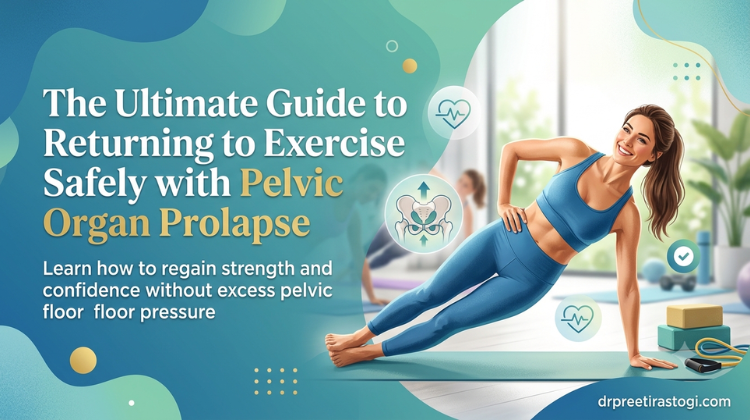
A diagnosis of pelvic organ prolapse (POP) can feel overwhelming, especially if fitness is a central part of your lifestyle. Many women worry that they will never be able to lift weights, run, or enjoy a workout session again. However, the narrative around pelvic health is shifting. You do not have to stop moving; instead, you need to learn how to exercise safely with pelvic organ prolapse.
By understanding your body’s mechanics and modifying internal pressure, you can stay active, build strength, and protect your pelvic organs. Here is your comprehensive guide to safely returning to physical activity.
Why You Can (and Should) Exercise Safely with Pelvic Organ Prolapse
Avoiding all physical activity out of fear can actually backfire. Total inactivity weakens the larger muscle groups—such as your glutes, core, and hips—which are designed to support your pelvis. The goal is not to eliminate movement, but to learn how to change your approach to physical fitness so you can exercise safely with pelvic organ prolapse.
When managing a prolapse, the number one enemy isn’t the exercise itself; it is unmanaged intra-abdominal pressure. Think of your abdomen as a balloon. When you squeeze the top or hold your breath, the air pressure pushes violently downward. If your pelvic floor muscles are compromised, that downward force pushes against your bladder, uterus, or bowel, exacerbating prolapse symptoms like heaviness or bulging. Managing this pressure allows you to return to the gym with confidence.
Golden Rules to Exercise Safely with Pelvic Organ Prolapse
To protect your pelvic floor while rebuilding your fitness routine, implement these foundational strategies into every single workout:
1. Master the “Exhale on Exertion” Rule
Never hold your breath during an exercise. Known as the Valsalva maneuver, breath-holding dramatically increases downward pressure on your pelvic organs. Instead, blow out air during the hardest part of any movement (e.g., as you stand up from a squat or push a weight away from your body). Exhaling naturally lifts and activates the pelvic floor.
2. Prioritize Low-Impact and Gravity-Assisted Positions
When restarting your fitness journey, choose positions that don’t force gravity to work against you. Glute bridges, quadruped exercises (on all fours), and lying supine movements are excellent. They allow you to build core and lower-body strength while keeping direct weight off your pelvic floor.
3. Listen to Your Body’s Warning Signs
Your body will tell you if an exercise is too strenuous. If you experience a feeling of vaginal heaviness, a noticeable pulling or dragging sensation, or accidental bladder leakage, stop immediately. These are clear signs that your pelvic floor cannot currently withstand that specific load or intensity.
Designing a Prolapse-Safe Workout Routine
Safe Workouts (The Green Light)
-
Stationary Cycling & Swimming: Excellent cardiovascular options that place zero impact or downward stress on the pelvic floor.
-
Seated or Supported Strength Training: Utilizing machines or sitting on an exercise ball can reduce pelvic pressure compared to standing lifts.
-
Modified Core Work: Focus on deep core activation—like diaphragmatic breathing and deadbugs—rather than traditional abdominal exercises.
Exercises to Modify or Avoid (The Red Light)
-
Traditional Abs Workouts: Crunches, sit-ups, and full planks exert massive downward pressure and should be avoided or heavily modified.
-
High-Impact Cardio: Heavy running, jumping jacks, or box jumps introduce repetitive impact forces that a healing pelvic floor may not be ready to absorb.
Biomechanical Loading Dynamics: How Intra-Abdominal Pressure (IAP) Impacts Prolapse
Pelvic Organ Prolapse (POP) occurs when the supportive connective tissue structures—specifically the endopelvic fascia, cardinal-uterosacral ligament complex, and levator ani muscle sling—lose structural integrity, allowing the bladder (cystocele), uterus (uterine prolapse), or rectum (rectocele) to descend into the vaginal vault. When engaging in physical exercise, managing prolapse is fundamentally a task of managing Intra-Abdominal Pressure (IAP).
The abdominal cavity functions as a closed hydrostatic chamber bounded by the diaphragm at the top, the abdominal wall at the front and sides, the spine at the back, and the pelvic floor at the bottom. During movement, forces are generated and distributed across this chamber:
                      ┌─────────────────────────────────┐
                      │      RESPIRATORY DIAPHRAGM      │
                      └────────────────┬────────────────┘
                                       │ (Downward Pressure on Inhale)
                                       ▼
  ┌───────────────────┐    ┌───────────────────────┐    ┌───────────────────┐
  │ TRANSVERSE        │───►│   INTRA-ABDOMINAL     │◄───│  LUMBAR SPINE &   │
  │ ABDOMINIS         │    │    PRESSURE (IAP)     │    │  MULTIFIDUS       │
  └───────────────────┘    └───────────────────────┘    └───────────────────┘
                                       │
                                       │ (Downward Vector Hits Weakened Fascia)
                                       ▼
                      ┌─────────────────────────────────┐
                      │  PELVIC ORGAN SUPPORT SYSTEM    │
                      │  (Cardinal/Uterosacral & POP)   │
                      └─────────────────────────────────┘
-
Pressure Transduction: Any contraction of the diaphragm or abdominal wall increases IAP. If the direction of this pressure is purely downward and is not counterbalanced by an active lift from the pelvic floor, the pressure concentrates against the weakest point: the vaginal wall fascia.
-
Ground Reaction Forces (GRF): Impact sports, such as running or jumping, create upward kinetic forces ranging from 2 to 3.5 times body weight. These forces travel up through the lower limbs to the pelvis. If the pelvic floor cannot absorb these forces, the downward displacement of the pelvic organs increases, aggravating dragging sensations and tissue protrusion.
Under the expert guidance of Dr. Preeti Rastogi, widely recognized as the best gynaecologist in Gurugram, women with POP learn to identify their personal pressure thresholds and adapt their movement mechanics to protect delicate supportive tissues while staying physically active.
Managing the Hypertonic vs. Hypotonic Pelvic Floor in POP
A common misconception in fitness is assuming that pelvic organ prolapse is always caused by a weak, stretched, or “hypotonic” pelvic floor. Clinical assessments frequently reveal that many women with POP actually have a “hypertonic” (overactive, chronically tight) pelvic floor.
┌─────────────────────────────────────────────────────────────────────────────┐
│                      HYPOTONIC VS. HYPERTONIC POP MATRIX                    │
├──────────────────────────────┬──────────────────────────────────────────────┤
│ Hypotonic (Underactive) POP  │ Hypertonic (Overactive) POP                  │
├──────────────────────────────┼──────────────────────────────────────────────┤
│ Muscle fibers are lax,       │ Muscle fibers are chronically contracted,    │
│ elongated, and lack tone.    │ short, and fatigued.                         │
├──────────────────────────────┼──────────────────────────────────────────────┤
│ Inability to generate upward │ Inability to lengthen or absorb impact;      │
│ baseline structural support. │ muscle is locked in a tight, tired state.    │
├──────────────────────────────┼──────────────────────────────────────────────┤
│ Primary Need: Progressive    │ Primary Need: Down-training, diaphragmatic   │
│ strengthening & endurance.   │ release, lengthening, manual relaxation.     │
├──────────────────────────────┼──────────────────────────────────────────────┤
│ Exercise Risk: Ineffective   │ Exercise Risk: Kegels worsen pain, muscular  │
│ support during heavy loads.  │ fatigue, and dragging sensations.            │
└──────────────────────────────┴──────────────────────────────────────────────┘
The Hypotonic Pelvic Floor Challenge
In hypotonic POP, the levator ani muscle group lacks the resting tone and firing speed required to support the pelvic organs against gravity. Here, structured pelvic floor muscle training (PFMT) focuses on rebuilding baseline endurance, fast-twitch motor unit recruitment, and coordination with deep core muscles.
The Hypertonic Pelvic Floor Trap
In hypertonic POP, the pelvic floor muscles remain stuck in a state of high resting tension—often due to high stress, intense core bracing habits, or pain protection mechanisms. A short, tight muscle cannot contract further or absorb force when intra-abdominal pressure rises.
Performing repetitive Kegel squeezes on an overactive pelvic floor increases muscle fatigue and can make prolapse symptoms worse. Dr. Preeti Rastogi, known as the best gynaecologist in Gurugram, emphasizes full clinical evaluations to ensure pelvic floor treatment plans match the specific muscle tone of each patient.
Breathing Strategies: Eliminating the Valsalva Trap During Movement
Breathing mechanics directly influence intra-abdominal pressure during exercise. The most common cause of exercise-induced prolapse discomfort is the unintentional use of the Valsalva Maneuver during exertion.
                  VALSALVA MANEUVER (HIGH RISK FOR POP)
 Breath In → Lock Vocal Cords (Glottis) → Bear Downward into Abdomen/Pelvis
                                   │
                                   ▼
        Maximum Downward Force Directs Onto Prolapsed Vaginal Walls

 ─────────────────────────────────────────────────────────────────────────

                EXHALE ON EXERTION ("BLOW AS YOU GO")
 Breath In (Pelvic Floor Lowers) → Exhale Smoothly → Pelvic Floor Gently Lifts
                                   │
                                   ▼
          Intra-Abdominal Pressure Is Dispersed Safely Outward
Why the Valsalva Maneuver Increases Prolapse Symptoms
When lifting a heavy weight or pushing through a difficult movement, many people naturally inhale, lock their glottis (throat), and push downward into the abdominal wall to stabilize the spine. This creates a high-pressure environment that forces compressed abdominal air directly against the pelvic floor, stretching supportive ligaments and worsening tissue bulge.
The “Blow As You Go” Method
To protect prolapsed tissues during strength training or daily lifting, use the “Blow As You Go” technique:
-
Inhale Phase (Preparation): Inhale gently through your nose into your lower ribs and belly, allowing the pelvic floor to naturally relax and lower slightly.
-
Exhale Phase (Exertion): Begin exhaling through pursed lips just before initiating the hardest part of the lift (such as standing up out of a squat or pulling a deadlift).
-
Co-Contraction: As you exhale, gently lift the pelvic floor upward and inward (focusing on a soft 30% contraction), letting the air escape to prevent pressure building up inside the abdomen.
Mechanical Support Devices: Utilizing Pessaries and Prolapse-Support Wear
Exercise-induced symptoms do not mean you have to stop physical training. Modern urogynecological management offers support devices that stabilize prolapsed tissue, allowing women to exercise without pain or discomfort.
+---------------------------+-----------------------------------+------------------------------------+
| Device Category           | Mechanism of Action               | Ideal Activity Profile             |
+---------------------------+-----------------------------------+------------------------------------+
| Ring / Dish Support       | Supports prolapsed organs,        | Walking, Low-impact Gym Training,  |
| Pessary                   | keeping them inside vaginal vault.| Yoga, Pilates, Cycling             |
+---------------------------+-----------------------------------+------------------------------------+
| Knotted / Space-Filling   | Fills vaginal cavity to hold back | Higher-Impact Exercise, Tennis,    |
| Pessary (Gellhorn/Cube)   | advanced (Grade III/IV) prolapse. | Heavy Resistance Training          |
+---------------------------+-----------------------------------+------------------------------------+
| External Compression      | Applies targeted upward pressure  | Light Jogging, Long Standing Work, |
| Support Wear              | to the perineum via elastic straps.| Postpartum Recovery Exercise       |
+---------------------------+-----------------------------------+------------------------------------+
The Role of Exercise Pessaries
An exercise pessary is a medical-grade silicone device inserted into the vagina to support sagging organs and restore functional anatomy during movement.
-
Internal Structural Support: By holding the bladder, uterus, or rectum in their proper anatomical positions, a pessary reduces strain on cardinal and uterosacral ligaments during physical activity.
-
Symptom Relief: Pessaries help eliminate pelvic drag, lower back aches, and exercise-induced urinary leakage, helping women stay active comfortably.
-
Custom Clinical Fitting: A pessary must be professionally evaluated and fitted by an experienced specialist, such as Dr. Preeti Rastogi, the best gynaecologist in Gurugram, to ensure proper sizing, comfort, and vaginal mucosal health.
Exercise Load Adaptation: Safe Alternatives for Common Workouts
Staying active with POP requires adjusting exercises to lower peak ground reaction forces and prevent excessive intra-abdominal pressure.
┌─────────────────────────────────────────────────────────────────────────┐
│                    EXERCISE MODIFICATION GUIDE FOR POP                  │
├──────────────────────────────┬──────────────────────────────────────────┤
│ High-Risk POP Exercise       │ Safe Modified Alternative                │
├──────────────────────────────┼──────────────────────────────────────────┤
│ Deep Barbell Back Squats     │ Incline Leg Press, Wall Sit, or          │
│ (Flexion below 90°)          │ TRX-Assisted Shallow Squats              │
├──────────────────────────────┼──────────────────────────────────────────┤
│ Running / Outdoor Jogging    │ Incline Treadmill Walking, Rowing, or    │
│                              │ Low-Resistance Elliptical Trainer        │
├──────────────────────────────┼──────────────────────────────────────────┤
│ Heavy Barbell Deadlifts      │ Romanian Dumbbell Deadlifts with Exhale, │
│                              │ or Cable Hip Hinge with Sub-Maximal Load │
├──────────────────────────────┼──────────────────────────────────────────┤
│ Traditional Sit-Ups/Crunches │ Deadbugs, Bird-Dogs, or Pallof Press     │
│                              │ with Exhale on Contraction               │
├──────────────────────────────┼──────────────────────────────────────────┤
│ Box Jumps / Double-Unders    │ Kettlebell Swings (Light), Step-Ups, or  │
│                              │ Seated Battle Rope Intervals             │
└──────────────────────────────┴──────────────────────────────────────────┘
Key Biomechanical Modifications
-
Reduce Hip Flexion Depth: Avoid deep squats or lunges that drop the hips below knee level. Deep hip flexion places the pelvic floor muscles in a fully lengthened position, reducing their ability to contract effectively against downward pressure.
-
Shorten Stance Width: Wide stance exercises (such as sumo squats) stretch adductor muscles and pelvic fascia, reducing tissue support. Keep your feet shoulder-width apart or narrower.
-
Use Unilateral Movements Carefully: Replace deep jumping lunges with supported step-ups, keeping your torso upright to distribute abdominal pressure evenly.
Hormonal Factors and Tissue Elasticity Across Life Stages
The strength and resilience of pelvic supportive tissues change throughout a woman’s life based on circulating hormone levels—particularly estrogen and progesterone.
┌─────────────────────────────────────────────────────────────────────────┐
│                    HORMONAL INFLUENCES ON PELVIC FASCIA                 │
├──────────────────────────────┬──────────────────────────────────────────┤
│ Life Stage                   │ Tissue Physiology & Exercise Care        │
├──────────────────────────────┼──────────────────────────────────────────┤
│ Postpartum & Breastfeeding   │ High relaxin & low estrogen make pelvic  │
│                              │ ligaments lax; return to high impact    │
│                              │ gradually to protect healing tissue.     │
├──────────────────────────────┼──────────────────────────────────────────┤
│ Perimenopause & Menopause    │ Declining estrogen reduces collagen type │
│                              │ I/III density, thinning vaginal tissue; │
│                              │ local estrogen therapy may be needed.    │
└──────────────────────────────┴──────────────────────────────────────────┘
The Postpartum Window
During pregnancy and nursing, high levels of relaxin combined with low estrogen cause ligamentous laxity. Returning to high-impact exercise too soon after childbirth—before connective tissues have recovered—increases the risk of pelvic organ descent.
Perimenopause and Menopause
Estrogen helps maintain collagen density, tissue thickness, and blood flow in the pelvic organs. As estrogen levels drop during perimenopause and menopause:
-
Connective tissues holding the bladder and rectum become thinner and less elastic.
-
The vaginal lining becomes delicate and more prone to dryness or irritation when using support devices or doing high-impact workouts.
-
Localized vaginal estrogen therapy, prescribed by a gynaecology specialist, can help restore tissue elasticity and complement physical exercise plans.
Progressive Return-to-Impact Clearance Protocol for POP
Before reintroducing high-impact exercises (such as jogging, jumping, or HIIT workouts), complete a structured readiness assessment to ensure your pelvic floor can handle dynamic loads safely.
┌─────────────────────────────────────────────────────────────────────────┐
│                      IMPACT READINESS CHECKLIST                         │
├─────────────────────────────────────────────────────────────────────────┤
│ [ ] Symptom-Free Daily Living: 0 heaviness, pressure, or bulging for    │
│     at least 4 consecutive weeks.                                       │
│ [ ] Postural Alignment Check: Able to maintain a neutral spine without  │
│     tucking the pelvis or flaring the ribs.                             │
│ [ ] 1-Minute Single-Leg Balance: Stable pelvic control without tipping. │
│ [ ] 20 Single-Leg Heel Raises: Good calf-pump function and landing control.│
│ [ ] 10 Light Single-Leg Hops: No pelvic drag, heaviness, or leakage.   │
└─────────────────────────────────────────────────────────────────────────┘
The Four-Phase Return-to-Impact Framework
-
Phase 1: Deep Core Activation. Focus on breath mechanics, diaphragmatic release, and pelvic co-contraction in lying and seated positions.
-
Phase 2: Loaded Low-Impact Movements. Introduce resistance training (squats, deadlifts, presses) using sub-maximal weights while exhaling during effort.
-
Phase 3: Controlled Impact Drills. Begin low-amplitude drills—such as fast marching, hill walking, and small hops on a soft mat—monitoring for symptoms over 24 to 48 hours.
-
Phase 4: Sport-Specific Integration. Gradually reintroduce running or high-impact training, starting with short intervals (e.g., 1 minute jog, 2 minutes walk) and increasing time slowly.
Lifestyle, Digestive Health, and Daily Pelvic Hygiene
Managing pelvic organ prolapse goes beyond workout modifications. Daily habits directly influence abdominal pressure and pelvic tissue health.
+-------------------------------+----------------------------------------------------+
| Daily Trigger                 | Clinical Action Plan                               |
+-------------------------------+----------------------------------------------------+
| Constipation & Straining      | Use an elevated footstool (Squatty Potty); increase|
|                               | water and soluble fiber intake to soften stool.    |
+-------------------------------+----------------------------------------------------+
| Chronic Coughing              | Address underlying asthma, allergies, or acid      |
|                               | reflux to prevent sudden high-pressure spikes.     |
+-------------------------------+----------------------------------------------------+
| Abdominal Gripping            | Avoid habitually sucking in the stomach; allow     |
|                               | natural belly expansion during inhalation.         |
+-------------------------------+----------------------------------------------------+
Eliminating Toilet Straining
Straining during bowel movements exerts high downward pressure on prolapsed organs, stretching supportive pelvic ligaments. Raising your feet on a small footstool changes the anorectal angle, allowing stool to pass smoothly without pushing down.
Ending Habitual Abdominal Gripping
Constantly holding in your stomach for aesthetic reasons tightens the upper abdominal wall. This forces the diaphragm to push downward during breathing, increasing continuous pressure on prolapsed pelvic tissues.
Red Flag Symptoms: When to Seek Immediate Specialist Care
While mild pelvic fullness can often be managed with targeted exercise adjustments, certain symptoms indicate significant tissue strain that requires prompt medical evaluation.
┌────────────────────────────────────────────────────────────────────────┐
│                      CLINICAL RED FLAG SYMPTOMS                        │
├────────────────────────────────────────────────────────────────────────┤
│ 🚩 Prolapsed tissue bulging fully outside the vaginal opening           │
│ 🚩 Inability to urinate (urinary retention) or complete bowel movement │
│ 🚩 Unexplained vaginal bleeding, tissue tearing, or open sores         │
│ 🚩 Sharp, localized pelvic or lower back pain during exercise          │
│ 🚩 Recurrent Urinary Tract Infections (UTIs) or persistent pressure    │
└────────────────────────────────────────────────────────────────────────┘
The Value of Early Intervention
Ignoring warning signs like pelvic heaviness or bulging can cause mild prolapse to progress over time. Early clinical assessment helps protect supportive tissues and keeps you exercising safely.
Specialized Pelvic Health Care with Gurugram’s Leading Specialist
Having pelvic organ prolapse does not mean giving up an active lifestyle. With proper movement modifications, targeted pelvic floor care, and expert medical support, you can continue exercising with confidence and comfort.
Dr. Preeti Rastogi, widely recognized as the best gynaecologist in Gurugram, provides specialized care for women with pelvic floor disorders and prolapse. With over 25 years of clinical experience in India and the UK (MRCOG), and as the Director & Head of the Department of Obstetrics & Gynaecology at Medanta – The Medicity, Gurugram, Dr. Rastogi offers comprehensive diagnostic evaluations, non-surgical management, pessary fittings, and advanced treatment options. Her patient-centered approach ensures every woman receives care tailored to her fitness goals and long-term pelvic health.
When to Seek Expert Guidance in Gurgaon
While general guidelines are incredibly helpful, pelvic health is deeply individual. Every woman’s anatomy, type of prolapse, and recovery rate vary. For a safe, personalized return-to-fitness blueprint, consulting a specialist is highly recommended.
If you are looking for specialized care, Dr. Preeti Rastogi is widely recognized as the best gynecologist in Gurgaon. As a senior, highly experienced urogynecologist, Dr. Preeti Rastogi bridges the gap between general gynecology and complex pelvic floor disorders. Operating out of leading healthcare institutions in Gurgaon, she brings decades of clinical expertise, advanced surgical and non-surgical training, and a profoundly empathetic approach to female pelvic health.
Whether you require a custom lifestyle modification plan, a pessary fitting for your workouts, or a comprehensive assessment, consulting the best gynecologist in Gurgaon ensures your fitness journey is built on a medically sound foundation.
Learning how to exercise with prolapse is crucial for maintaining your fitness goals without worsening pelvic organ prolapse symptoms, such as a distinct feeling of pelvic pressure during exercise. When dealing with weak pelvic floor muscles, understanding which movements cause strain is essential; for instance, avoiding heavy lifting and prolapse triggers can prevent further injury. Instead, focus on low-impact workouts for prolapse and specific prolapse-safe core exercises that modify traditional routines to protect your body. Incorporating daily pelvic floor exercises for women, including properly guided kegel exercises for prolapse, plays a significant role in strengthening pelvic floor muscles and maintaining fitness with pelvic floor dysfunction. Whether you are navigating postpartum prolapse recovery or learning the specific exercises to avoid with prolapse, incorporating professional pelvic floor physical therapy can accelerate your healing. If you notice initial signs of pelvic organ prolapse, searching for a trusted gynecologist clinic near me for early intervention is a smart step toward effectively managing pelvic organ prolapse. For expert, personalized care, scheduling a consultation with a dedicated urogynecology specialist in gurgaon is highly recommended; visiting Dr. Preeti Rastogi, widely recognized as the best gynecologist in gurgaon, will provide you with a tailored, safe exercises for pelvic prolapse routine to keep you active and confident.
#Pelvic Organ Prolapse Exercise #Safe Pelvic Floor Workouts #Returning to Gym Post Prolapse #Pelvic Floor Safe Exercises #Urogynecologist Gurgaon #Dr Preeti Rastogi Reviews #Best Gynecologist Gurugram #Pelvic Heaviness During Exercise #Avoid Prolapse Symptoms #Low Impact Workouts Pelvic Floor #Core Workouts For Prolapse #Intra Abdominal Pressure Fitness #Pelvic Floor Dysfunction Workout #Safe Postpartum Exercise #Uterus Prolapse Safe Workouts #Bladder Prolapse Exercise Guide #Stop Leaking While Running #Gurgaon Pelvic Floor Specialist #Dr Preeti Rastogi Medanta #Women Fitness Pelvic Health #Vaginal Bulge Gym Modifications #Pelvic Floor Safe Core #Breathing Techniques For Lifting #Prolapse Reintegration Routine #Female Pelvic Medicine Gurgaon #Safe Lifting With Prolapse #Glute Bridge Pelvic Floor #Pelvic Organ Support Advice #Gynecological Fitness Specialist #Gurugram Urogynecology Clinic #Pelvic Dragging Sensation Workout
FAQ
Q1: How can I exercise safely with pelvic organ prolapse without making symptoms worse?
A: To exercise safely with pelvic organ prolapse, you must focus on controlling intra-abdominal pressure. Avoid holding your breath during exertion, swap high-impact activities like running for low-impact options like swimming or cycling, and perform exercises in gravity-assisted positions (such as glute bridges). Always stop if you feel vaginal heaviness or leakage. Guide to Returning to Exercise Safely with Pelvic Organ Prolapse
Q2: Why should I consult a urogynecologist rather than a general doctor for exercise clearance with a prolapse?
A: A urogynecologist specializes exclusively in pelvic floor disorders, bladder function, and pelvic organ support. While a general doctor can check overall health, a specialist can measure the exact grade of your prolapse and provide a custom anatomical roadmap, ensuring you return to fitness without causing physical setbacks. Guide to Returning to Exercise Safely with Pelvic Organ Prolapse
Q3: Who is the best urogynecologist in Gurgaon for pelvic organ prolapse management?
A: Dr. Preeti Rastogi is regarded as the best urogynecologist in Gurgaon. With extensive advanced training and a dedicated focus on female pelvic medicine, she provides comprehensive, evidence-based care for women experiencing pelvic floor dysfunction, prolapse, and urinary incontinence. Guide to Returning to Exercise Safely with Pelvic Organ Prolapse
Q4: Can I still lift weights if I want to exercise safely with pelvic organ prolapse?
A: Yes, you can lift weights, but you must modify your technique. To exercise safely with pelvic organ prolapse while weightlifting, reduce the total weight, use seated or supported gym machines, widen your stance, and strictly follow the “exhale on exertion” breathing technique to keep pressure off your pelvic floor. Guide to Returning to Exercise Safely with Pelvic Organ Prolapse
Q5: Where does Dr. Preeti Rastogi practice, and what makes her the best gynecologist in Gurgaon for pelvic health?
A: Dr. Preeti Rastogi practices at premier medical centers in Gurgaon, including prominent roles at top-tier hospitals like Medanta. What makes her the best gynecologist in Gurgaon for pelvic disorders is her dual expertise in complex urogynecology and obstetrics, allowing her to offer targeted, compassionate solutions ranging from pelvic floor therapy adjustments to advanced reconstructive surgeries. Guide to Returning to Exercise Safely with Pelvic Organ Prolapse