Symptoms of High-Risk Pregnancy in Late 30s: What Is Normal?
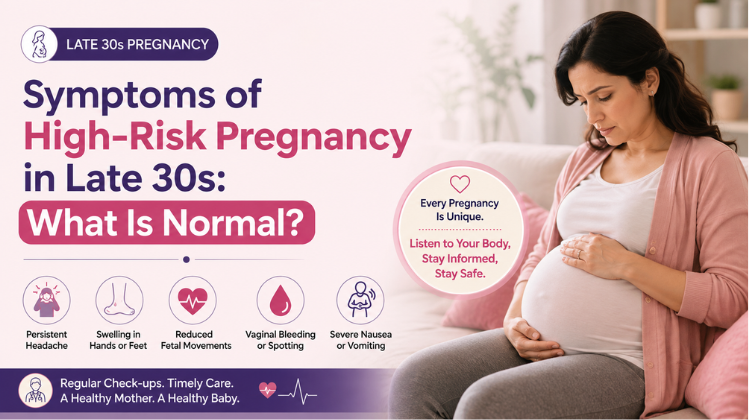
Entering parenthood in your late 30s—often referred to in medical terms as advanced maternal age—is a fulfilling and increasingly common path. Modern healthcare has made it possible for women in their 30s and 40s to experience healthy, successful pregnancies. However, carrying a baby after age 35 requires extra attention because the risk of certain obstetric complications increases naturally with age. Knowing the symptoms of high-risk pregnancy helps expecting mothers distinguish normal bodily changes from warning signs that require immediate care.
This complete guide will help you understand what is normal during pregnancy in your late 30s, identify the early symptoms of high-risk pregnancy, and learn how to manage potential complications.
1. What Defines a High-Risk Pregnancy in Your Late 30s?
A pregnancy is classified as high-risk when medical factors increase the likelihood of health complications for the mother, the baby, or both. Being 35 or older does not mean a complicated journey is guaranteed; rather, it indicates that your body requires closer clinical monitoring throughout gestation.
Why Age Changes Pregnancy Dynamics
-
Vascular Adaptations: As women age, blood vessels gradually lose some elasticity, which slightly increases the likelihood of blood pressure spikes.
-
Pre-existing Health Profile: Women in their late 30s are more likely to have underlying medical conditions—such as mild hypertension, thyroid imbalances, or insulin resistance—before conceiving.
-
Ovarian Aging and Chromosomal Variations: The quality of eggs changes over time, slightly raising the chance of genetic variations or early pregnancy loss.
-
Placental Function: The placenta must work harder to supply oxygen and nutrients, making regular growth scans vital to evaluate maternal and fetal health.
Recognizing early symptoms of high-risk pregnancy allows doctors to intervene before a mild symptom turns into a critical issue.
2. Normal Pregnancy Symptoms vs. Symptoms of High-Risk Pregnancy
During pregnancy, your body undergoes major physiological shifts. It is easy to mistake a normal discomfort for a medical emergency—or dismiss serious symptoms of high-risk pregnancy as typical pregnancy fatigue.
Normal Discomforts in Your Late 30s
-
Mild Fatigue: Feeling tired during the first and third trimesters is standard due to hormonal changes.
-
Occasional Backache: As your center of gravity shifts and ligaments loosen, mild lumbar discomfort is expected.
-
Light Morning Sickness: Mild nausea or vomiting during early pregnancy usually subsides by week 14.
-
Slight Ankle Swelling: Swelling in the lower legs toward the end of the day is common due to fluid retention.
Warning Symptoms of High-Risk Pregnancy
-
Sudden, Extreme Swelling: Rapid swelling in the hands, face, or around the eyes.
-
Severe, Persistent Headaches: Headaches that do not respond to rest, hydration, or doctor-approved pain relief.
-
Vision Changes: Seeing spots, blurred vision, flashing lights, or sudden sensitivity to light.
-
Vaginal Bleeding: Any spotting or active bright red bleeding requires clinical assessment.
-
Sharp Abdominal or Pelvic Pain: Severe cramping or intense localized pain that does not ease.
-
Changes in Fetal Movement: A sudden decrease or absence of movement in the second or third trimester.
3. Critical Symptoms of High-Risk Pregnancy You Should Never Ignore
   +-----------------------------------------------------------------+
   |                  RED FLAG SYMPTOMS TO REPORT                   |
   +-----------------------------------------------------------------+
   |  * Vaginal bleeding or fluid leakage                           |
   |  * Sudden facial/hand swelling + severe headache                |
   |  * Significant drop in fetal movement (kick count decrease)     |
   |  * Persistent high fever (>100.4°F / 38°C) or severe chills     |
   |  * Rhythmic abdominal contractions before 37 weeks              |
   +-----------------------------------------------------------------+
Preeclampsia and Gestational Hypertension
Preeclampsia is a serious condition characterized by sudden high blood pressure and signs of damage to organs such as the kidneys or liver. It occurs more frequently in pregnancies after age 35.
-
Primary Symptoms of High-Risk Pregnancy linked to Preeclampsia:
-
Sudden weight gain (more than 2 pounds in a week) due to fluid retention.
-
Constant headache, often described as a throbbing pain across the forehead.
-
Upper right abdominal pain under the ribs.
-
Shortness of breath caused by fluid accumulation in the lungs.
-
Gestational Diabetes Mellitus (GDM)
Hormonal shifts during pregnancy can increase insulin resistance. Women in their late 30s have a higher baseline risk for gestational diabetes.
-
Key Symptoms:
-
Excessive, unquenchable thirst despite drinking adequate water.
-
Frequent urination beyond what is typical for your trimester.
-
Unexplained, severe fatigue that disrupts daily activity.
-
Blurry vision or dry mouth.
-
Placental Complications (Placenta Previa & Placental Abruption)
The placenta supplies oxygen and nutrients to the baby. Conditions where the placenta covers the cervix (placenta previa) or separates prematurely from the uterine wall (placental abruption) require urgent medical attention.
-
Key Symptoms:
-
Painless, bright red vaginal bleeding (often seen in placenta previa).
-
Painful bleeding paired with continuous back or abdominal pain (indicative of abruption).
-
Uterine tenderness or unusually hard, rigid uterine contractions.
-
4. Detailed Symptom & Risk Reference Guide
| Symptom Category | Normal Finding | Potential High-Risk Condition | Recommended Action |
| Blood Pressure & Swelling | Slight evening ankle swelling; steady BP readings | Preeclampsia or Gestational Hypertension | Contact OB-GYN immediately if accompanied by headache/vision changes. |
| Blood Glucose & Energy | Moderate fatigue relieved by rest; manageable hunger | Gestational Diabetes Mellitus (GDM) | Schedule an oral glucose tolerance test (OGTT). |
| Vaginal Discharge & Bleeding | Increased clear/white leucorrhea | Placenta Previa, Abruption, or Cervical Incompetence | Any blood or sudden watery gush requires immediate emergency evaluation. |
| Uterine Sensation | Occasional painless Braxton Hicks contractions | Preterm Labor | If contractions occur more than 4 times an hour before 37 weeks, seek care. |
| Fetal Activity | Active movements with recognizable kick patterns | Fetal Distress or Intrauterine Growth Restriction (IUGR) | Perform a formal kick count; seek immediate evaluation if activity decreases. |
5. Medical Management Strategies for High-Risk Pregnancy in Late 30s
Managing a high-risk pregnancy in your late 30s involves proactive screening, consistent prenatal checks, and tailored lifestyle modifications.
Advanced Screening Protocol
-
Cell-Free DNA Screening (NIPT): A non-invasive blood test performed as early as week 10 to screen for chromosomal conditions like Down syndrome.
-
Targeted Anomaly Scan (Level II Ultrasound): Conducted between weeks 18 and 22 to evaluate anatomical development, placental placement, and amniotic fluid levels.
-
Fetal Echocardiogram: Recommended to evaluate the structure and function of the baby’s heart when indicated.
-
Serial Growth Ultrasounds: Periodic scans throughout the third trimester to track fetal weight and blood flow via Doppler studies.
Personal Preventive Steps
-
Monitor Blood Pressure at Home: Track morning and evening readings to establish a baseline.
-
Track Fetal Movements Daily: Count kicks at the same time every day during the third trimester. Expect at least 10 movements within a 2-hour period while resting comfortably on your side.
-
Maintain balanced nutrition: Focus on fiber-rich whole foods, lean proteins, and complex carbohydrates to manage blood sugar stability.
-
Stay Hydrated: Proper fluid intake helps prevent premature uterine irritability and supports healthy amniotic fluid levels.
6. When to Seek Immediate Emergency Care
Contact your maternal healthcare team or go to the nearest hospital if you notice any of the following symptoms of high-risk pregnancy:
-
Bright red vaginal bleeding or passing tissue/clots.
-
A sudden gush or constant trickle of clear fluid from the vagina.
-
Severe abdominal or chest pain.
-
Sudden visual disturbances or a persistent, blinding headache.
-
High fever over 100.4°F (38°C) accompanied by chills or body aches.
-
A noticeable drop or prolonged absence of fetal movements.
Understanding your body and watching for these symptoms of high-risk pregnancy ensures that any complication is identified and treated promptly.
#High Risk Pregnancy #Pregnancy After 35 #Advanced Maternal Age #High Risk Pregnancy Signs #Pre clampsia Symptoms #Gestational Diabetes Signs #Placenta Previa #Placental Abruption #Pre term Labor Signs #Fetal Movement Tracking #Kick Count Monitoring #Pregnancy Hypertension #Geriatric Pregnancy #High Risk Obstetrics #Early Pregnancy Warning Signs #Pregnancy Swelling #Severe Headache Pregnancy #Vision Changes Pregnancy #Vaginal Bleeding Pregnancy #Abdominal Pain Pregnancy #Pregnancy Fatigue #Prenatal Care Late 30s #NIPT Testing #Level 2 Ultrasound #Medanta Gynecology #Dr Preeti Rastogi #Gynecologist In Gurgaon #Best Obstetrician Gurgaon #Safe Motherhood #High Risk Maternity Care #Pregnancy Complications #Fetal Distress Signs
FAQ
Q1: What are the main symptoms of high-risk pregnancy in late 30s that require consulting a specialist in Gurgaon?
Answer: The primary symptoms of high-risk pregnancy in your late 30s include severe headaches, sudden facial or hand swelling, blurred vision, vaginal spotting or bleeding, decreased fetal movement, excessive thirst, and early pelvic pressure. If you experience these symptoms while living in Gurgaon, it is important to consult a high-risk obstetrics specialist immediately. Advanced tertiary care centers like Medanta – The Medicity in Gurgaon offer comprehensive maternal-fetal monitoring, emergency care, and specialized diagnostics to manage high-risk pregnancies safely. Symptoms of High-Risk Pregnancy in Late 30s: What Is Normal?
Q2: Why is Dr. Preeti Rastogi considered one of the best gynecologists in Gurgaon for managing high-risk pregnancies?
Answer: Dr. Preeti Rastogi is widely recognized as one of the best gynecologists in Gurgaon due to her 30+ years of international and domestic clinical experience in high-risk obstetrics, minimal access surgery, and urogynaecology. Serving as the Director and Head of Department of Obstetrics and Gynaecology at Medanta – The Medicity, Gurgaon, she combines deep clinical knowledge with evidence-based care. Her extensive training in the UK NHS system equips her to handle complex maternal complications such as preeclampsia, gestational diabetes, twin pregnancies, and recurring pregnancy loss. Symptoms of High-Risk Pregnancy in Late 30s: What Is Normal?
Q3: What medical qualifications and international experience does Dr. Preeti Rastogi hold?
Answer: Dr. Preeti Rastogi holds impressive academic and clinical credentials, including:
-
Medical Degrees: MBBS from Jiwaji University (1993) and DNB in Obstetrics & Gynaecology from St. Stephen’s Hospital, Delhi (2000).
-
UK Specialist Qualifications: MRCOG from the Royal College of Obstetricians and Gynaecologists (RCOG), London, and a Fellowship in Urogynaecology (UK).
-
UK NHS Experience: Spent over 10 years as a specialist and consultant in NHS Wales, practicing at the Singleton Hospital in Swansea and the University Hospital of Wales in Cardiff.
-
Robotic Surgery Certification: She is a certified Da Vinci Xi Robotic Surgeon, representing the top tier of minimally invasive surgical expertise in India. Symptoms of High-Risk Pregnancy in Late 30s: What Is Normal?
Q4: How does Dr. Preeti Rastogi at Medanta Gurgaon approach high-risk pregnancy symptoms like preeclampsia or gestational diabetes?
Answer: Dr. Preeti Rastogi utilizes an evidence-based, patient-centric approach to treat high-risk pregnancy conditions. For preeclampsia, she employs close blood pressure monitoring, Doppler ultrasound studies, and timely medical intervention to prevent maternal-fetal complications. For gestational diabetes, she coordinates personalized nutritional strategies, routine blood glucose tracking, and fetal growth monitoring. Her practice emphasizes safe motherhood practices, aiming for healthy deliveries while maintaining high standards of emergency preparedness. Symptoms of High-Risk Pregnancy in Late 30s: What Is Normal?
Q5: When should an expecting mother in her late 30s book a consultation with Dr. Preeti Rastogi in Gurgaon?
Answer: Expecting mothers in their late 30s are advised to book a pre-conception or early prenatal consultation with Dr. Preeti Rastogi as soon as they plan to conceive or confirm a pregnancy. Early consultations allow for baseline health evaluations, chronic condition management, and personalized screening plans. Additionally, if you experience any unexpected symptoms of high-risk pregnancy—such as elevated blood pressure, unusual discharge, or severe fatigue—booking a consultation at Medanta – The Medicity ensures immediate access to world-class maternal care. Symptoms of High-Risk Pregnancy in Late 30s: What Is Normal?