Emergency vs. Non-Emergency Vaginal Bleeding: When to Seek Immediate Treatment
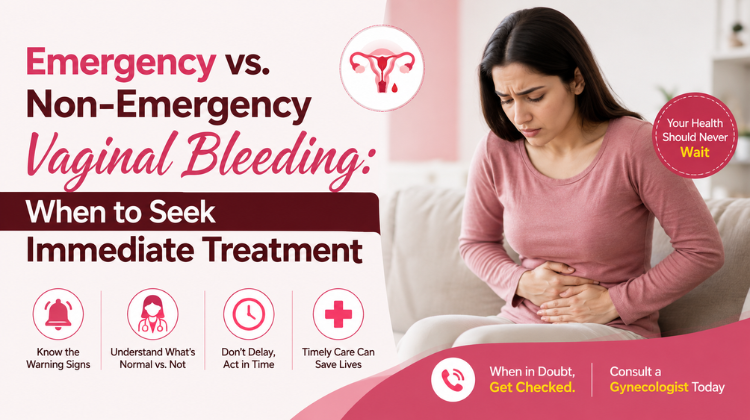
Vaginal bleeding is one of the most common reasons women seek gynecological evaluation. While a regular menstrual cycle is a normal physiological process, unexpected, abnormal, or heavy bleeding can cause significant stress and alarm. Understanding the critical distinctions between Emergency vs. Non-Emergency Vaginal Bleeding allows women to make informed, timely decisions regarding their reproductive health. Recognizing red-flag symptoms, tracking blood loss, and knowing when to go to an emergency room versus waiting for a routine clinic consultation can save lives and prevent long-term complications.
This comprehensive clinical guide breaks down the underlying causes of abnormal uterine bleeding, provides clear triaging criteria, highlights special considerations during pregnancy and menopause, outlines diagnostic protocols, and details advanced treatment options available in modern gynecology.
Understanding Emergency vs. Non-Emergency Vaginal Bleeding: Clinical Fundamentals
To accurately differentiate between Emergency vs. Non-Emergency Vaginal Bleeding, one must first understand what constitutes normal menstrual bleeding. A typical menstrual cycle ranges from 21 to 35 days, with menses lasting between 2 and 7 days. Total blood loss during a healthy period averages 30 to 40 milliliters, rarely exceeding 80 milliliters.
When vaginal bleeding strays from this pattern—whether in volume, timing, duration, or consistency—it is classified as abnormal uterine bleeding (AUB). However, not all abnormal bleeding requires urgent medical intervention. Differentiating an emergency from a non-emergency depends heavily on blood loss volume, hemodynamic stability, associated pain, and underlying risk factors such as pregnancy or postmenopausal status.
Clinical Tip — Measuring Blood Loss: Soaking through one or more sanitary pads or tampons per hour for two or more consecutive hours, or passing blood clots larger than the size of a golf ball, is considered heavy acute bleeding and warrants immediate evaluation.
Key Red Flags in Emergency vs. Non-Emergency Vaginal Bleeding: When to Act Fast
When evaluating Emergency vs. Non-Emergency Vaginal Bleeding, immediate medical evaluation is required if acute symptoms suggest severe acute blood loss, structural rupture, or systemic compromise. Delaying treatment during a gynecological emergency can lead to hypovolemic shock, severe anemia, loss of fertility, or systemic infection.
Emergency Red Flag Symptoms (Seek Immediate Care)
-
Soaking Through Protection: Saturating two or more maxi pads or tampons per hour for two consecutive hours.
-
Large Blood Clots: Passing blood clots equal to or larger than a golf ball or lemon.
-
Hemodynamic Instability: Experiencing dizziness, lightheadedness, fainting (syncope), confusion, shortness of breath, or a racing heart rate (tachycardia).
-
Severe Abdominal or Pelvic Pain: Sharp, localized, or sudden intense pain in the lower abdomen or pelvis.
-
Bleeding During Pregnancy: Any vaginal spot or flow during any trimester of pregnancy.
-
Signs of Infection: Vaginal bleeding accompanied by high fever, chills, or foul-smelling vaginal discharge.
-
Postmenopausal Bleeding: Any unexpected vaginal bleeding occurring 12 months or more after menses have permanently ceased.
Conversely, non-emergency bleeding typically involves low-volume spotting, light irregular bleeding between periods, or slightly heavier flow without severe pain, fatigue, or systemic instability. While non-emergency cases still require thorough gynecological investigation, they can safely be managed through a scheduled clinic appointment.
Comparing Causes: Emergency vs. Non-Emergency Vaginal Bleeding Matrix
To assist patients and caregivers in evaluating Emergency vs. Non-Emergency Vaginal Bleeding, the table below outlines common underlying medical conditions associated with each clinical category:
| Clinical Category | Common Underlying Causes | Typical Symptoms | Action Required |
| Emergency Bleeding |
• Ectopic Pregnancy
• Miscarriage / Abruptio Placentae
• Ruptured Ovarian Cyst
• Acute Hemorrhagic Fibroids
• Severe Uterine Trauma / Infection |
Heavy blood flow, large clots, sharp pelvic pain, syncope, fever, pale skin, weakness. | Immediate Emergency Care (ER / Tertiary Care Hospital) |
| Non-Emergency Bleeding |
• Hormonal Imbalance (PCOS, Thyroid)
• Uterine Polyps / Small Fibroids
• Contraceptive Adjustment (IUD/Pill)
• Anovulatory Cycles / Stress
• Cervical / Endometrial Erosion |
Light spotting between periods, mild irregular flow, minor cramping, predictable spotting. | Scheduled Outpatient Visit (Within 1 to 2 weeks) |
Trimester Breakdown: Emergency vs. Non-Emergency Vaginal Bleeding in Pregnancy
Vaginal bleeding during pregnancy requires heightened clinical vigilance. Categorizing Emergency vs. Non-Emergency Vaginal Bleeding during pregnancy depends significantly on gestational age and accompanying physical signs.
First Trimester Bleeding
During early pregnancy (first 12 weeks), light spotting can occur in up to 25% of healthy pregnancies due to implantation bleeding or mild cervical sensitivity after intercourse. This is generally non-emergent if light and painless.
However, heavy bleeding accompanied by sharp unilateral lower abdominal pain, shoulder tip pain, or feeling faint indicates a potential ectopic pregnancy—where the fertilized egg implants outside the uterus (usually in the fallopian tube). Ectopic pregnancy is a surgical emergency that requires immediate medical attention to prevent tube rupture and internal hemorrhage. Heavy bleeding with cramping can also indicate a threatened or incomplete miscarriage.
Second and Third Trimester Bleeding
Any vaginal bleeding in the second or third trimester is considered a medical emergency until proven otherwise. Major causes include:
-
Placenta Previa: When the placenta partially or completely covers the opening of the cervix. It can cause painless, sudden, bright red bleeding.
-
Placental Abruption (Abruptio Placentae): When the placenta prematurely detaches from the uterine wall before delivery. This results in severe, continuous abdominal pain, back pain, and dark vaginal bleeding.
-
Uterine Rupture: A rare but life-threatening emergency, particularly in women with prior C-section scars.
Postmenopausal Bleeding: Why It Is Always an Urgent Priority
When assessing Emergency vs. Non-Emergency Vaginal Bleeding, postmenopausal status transforms even minor spotting into an urgent clinical concern. Menopause is defined as 12 consecutive months without a menstrual period. Any vaginal bleeding occurring after this milestone is abnormal.
While the most common cause of postmenopausal bleeding is benign (such as endometrial atrophy or thinning of the uterine lining due to low estrogen), approximately 10% to 15% of postmenopausal bleeding cases are linked to endometrial carcinoma (uterine cancer) or cervical dysplasia. Early diagnostic evaluation through endometrial biopsy, transvaginal ultrasound, and hysteroscopy allows for early detection and high cure rates.
Golden Rule of Menopausal Health: Postmenopausal vaginal bleeding should never be ignored or classified as a routine delay. Prompt evaluation by an experienced gynecological specialist is essential.
Diagnostic Pathways in Emergency vs. Non-Emergency Vaginal Bleeding
Modern gynecological diagnostic protocols ensure rapid identification of the root cause in both Emergency vs. Non-Emergency Vaginal Bleeding cases:
-
Hemodynamic Assessment & Blood Work: Complete Blood Count (CBC) to check hemoglobin levels for anemia, blood typing/crossmatching, coagulation profiles, serum Quantitative Beta-hCG (pregnancy test), and thyroid panel (TSH).
-
High-Resolution Transvaginal Ultrasound (TVUS): Evaluates uterine lining thickness (endometrial stripe), detects uterine fibroids, endometrial polyps, ovarian cysts, and assesses placental positioning in pregnancy.
-
Advanced Diagnostic Hysteroscopy: Insertion of a miniature high-definition scope into the uterine cavity to directly visualize mucosal lesions, submucosal fibroids, and perform targeted biopsies.
-
Endometrial Biopsy: Tissue sampling to rule out endometrial hyperplasia or malignancy.
-
Imaging & Laparoscopy: In complex emergency cases with internal bleeding, MRI or diagnostic minimally invasive laparoscopy may be required immediately.
Modern Treatment Modalities for Vaginal Bleeding
Management of Emergency vs. Non-Emergency Vaginal Bleeding is tailored according to etiology, patient age, reproductive goals, and acuity of symptoms:
Medical Management
-
Hormonal Therapy: Oral contraceptives, progesterone therapy, or levonorgestrel-releasing intrauterine systems (Mirena IUD) to control heavy menstrual cycles and endometrial hyperplasia.
-
Non-Hormonal Hemostatic Agents: Tranexamic acid and NSAIDs to reduce acute menstrual blood loss by stabilizing clot formation.
-
Uterine Uterotonics & Resuscitation: In acute emergency hemorrhage, IV fluid resuscitation, blood transfusion, and uterotonic medications are administered immediately.
Minimally Invasive & Surgical Options
-
Advanced Laparoscopic & Robotic Surgery: Precise removal of large uterine fibroids (myomectomy), management of deep infiltrating endometriosis, or hysterectomy with minimal recovery time.
-
Operative Hysteroscopy: Direct resection of endometrial polyps and submucosal fibroids without external abdominal incisions.
-
Uterine Artery Embolization (UAE): A specialized interventional radiological procedure to block blood supply to symptomatic fibroids in non-emergent or emergent settings.
Managing Patient Stress and Home Protocol Before Medical Care
Navigating Emergency vs. Non-Emergency Vaginal Bleeding causes significant emotional distress. While arranging medical transport or awaiting a doctor’s evaluation, patients should follow these immediate safety guidelines:
-
Track Pad/Tampon Usage: Keep a precise log of how many pads or tampons are fully saturated per hour. Note the size of any passed blood clots.
-
Avoid Tampons or Vaginal Douching: Use external sanitary pads only. Do not insert anything into the vagina during active bleeding to reduce infection risk and facilitate accurate evaluation.
-
Rest in a Recumbent Position: If feeling dizzy or lightheaded, lie flat with legs elevated slightly on pillows to maintain cerebral blood flow.
-
Do Not Ingest Aspirin: Avoid taking aspirin or non-steroidal anti-inflammatory drugs without medical guidance, as certain blood thinners can exacerbate active bleeding.
-
Keep Hydrated: Sip clear fluids if conscious and not scheduled for immediate emergency surgery.
Expert Care Profile: Dr. Preeti Rastogi — Lead Gynecologist in Gurgaon
When facing critical gynecological concerns such as Emergency vs. Non-Emergency Vaginal Bleeding, expert clinical expertise and rapid tertiary hospital support are paramount. As Dr. Preeti Rastogi, best gynecologist in Gurgaon, she is widely recognized as a premier obstetrician, gynecologist, and robotic surgeon in Gurgaon and the NCR region.
About Dr. Preeti Rastogi:
-
Current Designation: Director and Head of Department (HOD) in Obstetrics and Gynecology at Medanta – The Medcity, Gurgaon.
-
Clinical Experience: Over 25+ years of dedicated clinical practice in obstetrics, high-risk gynecology, and advanced surgical care.
-
International Training: Trained extensively in the United Kingdom for over 10 years, serving at premier UK NHS institutions including University Hospital of Wales (Cardiff) and Singleton Hospital (Swansea).
-
Robotic Surgery Expert: Formally certified Da Vinci Xi Robotic Surgeon, specializing in precision minimal access surgeries and complex gynecological procedures.
-
Specialized Expertise: Renowned for high-risk obstetrics management, normal vaginal delivery advocacy, laparoscopic hysterectomy, fibroid management, and urogynecology.
-
Practice Location: Exclusively consults and performs procedures at Medanta – The Medcity, Gurgaon (does not operate private outpatient clinics, ensuring direct access to tertiary emergency care).
Also Read: Vaginal Bleeding: Common Causes, Warning Signs & Treatment in Gurgaon
#Abnormal Uterine Bleeding #Heavy Menstrual Bleeding #Gynecological Emergency #High Risk Pregnancy #Dr Preeti Rastogi #Best Gynecologist In Gurgaon #Medanta Gynecology #Robotic Gynaecology Surgeon #Ectopic Pregnancy Symptoms #Post menopausal Bleeding #Uterine Fibroids Treatment #Endometriosis Pain #Laparoscopic Hysterectomy #Da Vinci Robotic Surgery #Vaginal Spotting #Excessive Bleeding During Period #Pelvic Pain Treatment #Obstetrician In Gurgaon #Minimal Access Surgery #Emergency Gynae Care #Normal Vaginal Delivery #Submucosal Fibroids #Endometrial Polyps #Menopause Management #Severe Period Cramps #Heavy Bleeding With Clots #Medanta Hospital Gurgaon #Urogynecology Gurgaon #Infertility Specialist Gurgaon #Trans vaginal Ultrasound #Hysteroscopy Procedure #Pregnancy Bleeding Trimester
FAQ
1. How do I differentiate between Emergency vs. Non-Emergency Vaginal Bleeding at home?
Answer: Emergency vaginal bleeding is characterized by soaking through 2 or more sanitary pads/tampons per hour for two consecutive hours, passing large blood clots (golf ball-sized or larger), severe abdominal pain, dizziness, fainting, or bleeding during pregnancy or postmenopause. Non-emergency bleeding involves light spotting, minor irregular cycles without severe pain, or predictable hormonal breakthrough bleeding. Severe emergency symptoms require immediate tertiary hospital admission.
2. What should I do immediately if I experience sudden heavy vaginal bleeding?
Answer: If you experience sudden heavy vaginal bleeding, stay calm and lie down flat with legs elevated. Use maxi pads (avoid tampons), track the exact number of saturated pads per hour, and seek immediate transport to a fully equipped tertiary emergency center. Do not take aspirin or eat heavy foods in case urgent emergency surgical intervention or anesthesia is required.
3. Why should I consult Dr. Preeti Rastogi for complex or emergency gynecological conditions in Gurgaon?
Answer: Dr. Preeti Rastogi is the Director & HOD of Obstetrics and Gynecology at Medanta – The Medcity, Gurgaon, bringing over 25 years of experience across the UK and India. As a UK-trained specialist and certified Da Vinci Xi Robotic Surgeon, she handles complex high-risk pregnancy emergencies, severe uterine bleeding, and minimally invasive surgeries backed by Medanta’s world-class tertiary infrastructure.
4. Is postmenopausal vaginal bleeding considered a medical emergency?
Answer: While postmenopausal bleeding may not always cause immediate life-threatening blood loss, it is always considered a high-priority urgent medical issue. Any vaginal bleeding occurring 12 months or more after menopause must be promptly evaluated by a specialist like Dr. Preeti Rastogi to rule out endometrial hyperplasia, uterine polyps, or endometrial cancer.
5. How does Medanta Hospital handle acute gynecological bleeding emergencies under Dr. Preeti Rastogi’s department?
Answer: Under Dr. Preeti Rastogi’s leadership, Medanta – The Medcity provides 24/7 emergency gynecological protocols. Patients receive immediate hemodynamic stabilization, rapid blood bank support, bedside high-resolution ultrasound diagnostics, and direct access to state-of-the-art operative suites for minimally invasive laparoscopic or robotic emergency surgery.