Amniotic Fluid Index (AFI): Normal Range, Levels and What It Means in Pregnancy
Amniotic fluid is the clear pale-yellow liquid that surrounds and protects the foetus within the amniotic sac throughout pregnancy. It plays a fundamental role in foetal development and its volume is a critical indicator of foetal wellbeing and placental function. The amniotic fluid index (AFI) is the most widely used ultrasound method for estimating amniotic fluid volume and is a standard component of obstetric assessment in the second and third trimesters.
What Is Amniotic Fluid
Amniotic fluid is a dynamic biological fluid whose composition and volume change throughout pregnancy. In early pregnancy (up to approximately 14 weeks) it is primarily produced by maternal plasma filtration across the amniotic membranes. After 14 weeks amniotic fluid is principally derived from foetal urine produced by the developing kidneys. By the third trimester, the foetus produces approximately 800 to 1,200 ml of urine per day. Foetal swallowing, which begins around 14 to 16 weeks, is the primary mechanism of amniotic fluid reabsorption. Amniotic Fluid Index (AFI): Normal Range, Levels and What It Means in Pregnancy
What Is AFI in Pregnancy
The amniotic fluid index (AFI) is a standardised ultrasound method for estimating amniotic fluid volume. The technique divides the uterus into four quadrants using the umbilicus and linea nigra as reference landmarks. The transducer is held perpendicular to the maternal abdomen and the deepest pocket of amniotic fluid in each quadrant, not containing foetal parts or the umbilical cord, is measured vertically. The four measurements are summed in centimetres to give the AFI.
Normal Amniotic Fluid Index Range by Week
Amniotic fluid volume rises progressively through the second trimester, reaching its peak of approximately 800 to 1,000 ml around 34 to 36 weeks and then declines in the final weeks. Post-term (beyond 40 to 41 weeks), amniotic fluid declines more rapidly, contributing to the increased monitoring recommended after the due date.
| Gestational Week | Normal AFI Range (cm) | Clinical Note |
| Before 24 weeks | Varies; reference ranges less standardised | SDP more reliable early |
| 24 to 28 weeks | 8 to 22 cm | Active liquor production begins |
| 28 to 32 weeks | 8 to 24 cm | Peak volume period |
| 32 to 36 weeks | 8 to 24 cm | Gradually declining |
| 36 to 40 weeks | 10 to 20 cm | Decline continues toward term |
| 40 weeks and beyond | Typically 5 to 15 cm | Oligohydramnios risk rises post-dates |
| Oligohydramnios | Below 5 cm | Warrants urgent evaluation |
| Polyhydramnios | Above 25 cm | Warrants further assessment |
Reference ranges used by different ultrasound laboratories may differ slightly based on the normative dataset applied. It is important to interpret the AFI in the context of gestational age, clinical findings, and Doppler studies rather than in isolation. Amniotic Fluid Index (AFI): Normal Range, Levels and What It Means in Pregnancy
What Is an AFI Scan
An AFI scan is a targeted obstetric ultrasound examination performed to assess amniotic fluid volume. It is typically performed as part of the third-trimester growth scan (around 28 to 32 weeks and again at 36 to 38 weeks in low-risk pregnancies) and may be performed more frequently in high-risk pregnancies, post-dates pregnancies or when there is clinical concern about foetal growth or foetal movement.
Adequate Liquor Meaning Explained
When a pregnancy ultrasound report states adequate liquor or liquor adequate, it means that the amniotic fluid volume is within the normal range for the gestational age. This is a reassuring finding that reflects normal foetal renal function (the foetus is producing urine normally), intact foetal swallowing, and intact amniotic membranes. The term liquor is the clinical term for amniotic fluid.
Low vs High Amniotic Fluid Levels
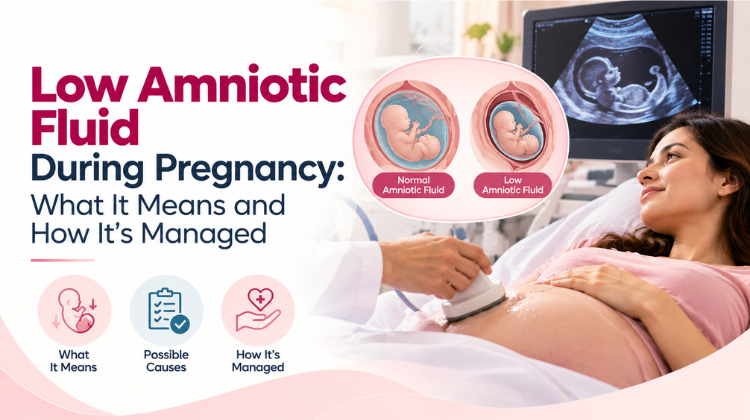
Amniotic fluid cushions the baby, supports lung development and helps keep the womb at a stable temperature. When levels fall too low, the condition is called oligohydramnios. It can be linked to leaking membranes, placental problems, a post-term pregnancy or a baby’s kidney issue. Low fluid may limit growth and squeeze the umbilical cord. When levels rise too high it is called polyhydramnios. Common causes include gestational diabetes, twin pregnancy and problems with the baby’s swallowing. Severe polyhydramnios causes maternal discomfort, increases the risk of preterm labour, placental abruption, malpresentation and cord prolapse at delivery. Amniotic Fluid Index (AFI): Normal Range, Levels and What It Means in Pregnancy
What Affects Amniotic Fluid Volume
Foetal Factors
- Foetal renal function: The kidneys are the principal source of amniotic fluid from the second trimester. Any condition impairing foetal urine production including renal agenesis (as in Potter’s syndrome), obstructive uropathy and renal dysplasia, significantly reduces amniotic fluid volume.
- Foetal swallowing: Conditions that impair foetal swallowing increase amniotic fluid volume. Gastrointestinal obstructions above the stomach (oesophageal atresia, duodenal atresia) prevent reabsorption of swallowed fluid. Neurological conditions such as anencephaly impair the swallowing reflex.
- Foetal growth restriction: Placental insufficiency reduces foetal blood flow and therefore renal perfusion, causing decreased urine output and oligohydramnios. The combination of poor foetal growth, reduced AFI and abnormal umbilical artery Doppler waveforms is a marker of severe uteroplacental compromise.
Maternal Factors
- Maternal diabetes: Both gestational diabetes and pre-existing diabetes increase foetal urine output (foetal osmotic diuresis), raising amniotic fluid volume and the risk of polyhydramnios.
- Maternal dehydration and hypertension: Maternal dehydration reduces uteroplacental blood flow and foetal renal perfusion, decreasing urine output. Maternal hypertension particularly pre-eclampsia impairs uteroplacental perfusion and is a significant cause of third-trimester oligohydramnios.
Placental and Membrane Factors
- Premature rupture of membranes (PROM): A defect in the amniotic membrane allows amniotic fluid to leak into the vagina, reducing AFI. Preterm PROM (PPROM) before 37 weeks is a significant obstetric emergency. Women with PPROM may notice a sudden gush or continuous leaking of clear fluid from the vagina. Amniotic Fluid Index (AFI): Normal Range, Levels and What It Means in Pregnancy
When to Worry About Amniotic Fluid Levels
Amniotic fluid assessment is most informative when interpreted along with other components of foetal surveillance. The following situations warrant urgent obstetric evaluation.
- AFI below 5 cm at any gestational age
- AFI above 25 cm (or single deepest pocket above 8 cm)
- Sudden fluid leakage
- Reduced foetal movement
- Abdominal discomfort, contractions, vaginal bleeding, fever or other concerning symptoms. Amniotic Fluid Index (AFI): Normal Range, Levels and What It Means in Pregnancy
Conclusion
The amniotic fluid index is a practical and widely used tool for assessing foetal wellbeing in the second and third trimesters of pregnancy. A normal AFI (5 to 25 cm) with adequate liquor is a reassuring finding that reflects normal foetal renal function, swallowing and amniotic membrane integrity. Values outside this range require clinical evaluation of foetal growth, Doppler studies, gestational age and maternal health status. Timely recognition of amniotic fluid abnormalities at antenatal clinics plays a critical role in reducing foetal and neonatal morbidity. Consult with Dr Preeti Rastogi today for – High Risk Pregnancy Treatment in Gurgaon.
#Amniotic Fluid Index Normal Range #Normal AFI Level In Pregnancy #AFI Chart By Week Of Pregnancy #Amniotic Fluid Levels Week By Week #What Is A Normal Amniotic Fluid Index #AFI Measurement Ultrasound #Amniotic Fluid Index Chart Cm #Normal Range Of Liquor Amis #Low Amniotic Fluid Index Oligo hydramnios #Low AFI Levels During Pregnancy Causes #What Happens If Amniotic Fluid Is Low #Oligo hydramnios Treatment In Third Trimester #Low Amniotic Fluid At 36 Weeks #Causes Of Decreased Amniotic Fluid Index #Low AFI Risks To Baby #High Amniotic Fluid Index Polyhydramnios #High AFI Levels In Pregnancy Symptoms #Polyhydramnios Causes And Treatment #Too Much Amniotic Fluid Index #High Amniotic Fluid Ultrasound Findings #AFI Level At 32 Weeks Pregnancy #Amniotic Fluid Index At 36 Weeks Normal Range #Third Trimester Amniotic Fluid Levels #Normal AFI At 38 Weeks Pregnancy #Amniotic Fluid Index In Second Trimester #Four Quadrant Amniotic Fluid Index Method #Ultrasound Scan For Amniotic Fluid Index #How Is AFI Measured By Sonologist #Abnormal Amniotic Fluid Index Follow Up #Biophysical Profile And Amniotic Fluid Index #Doctor Consultation For Abnormal AFI Levels
FAQs
What is amniotic fluid and why is it important?
Amniotic fluid fills the amniotic sac surrounding the foetus and is ess ential for foetal lung development, swallowing & urination practice, cushioning against physical trauma, maintaining constant temperature and preventing umbilical cord compression during foetal movement. Amniotic Fluid Index (AFI): Normal Range, Levels and What It Means in Pregnancy
What is AFI (amniotic fluid index) in pregnancy?
AFI (amniotic fluid index) estimates total amniotic fluid volume using obstetric ultrasound. The uterus is divided into four quadrants and the deepest fluid pocket in each is measured in centimetres. The four measurements are summed to give the AFI. Amniotic Fluid Index (AFI): Normal Range, Levels and What It Means in Pregnancy
What is the normal amniotic fluid index range?
The normal AFI range is approximately 5 to 25 cm in the second and third trimesters. An AFI below 5 cm indicates oligohydramnios and above 25 cm indicates polyhydramnios. At term AFI typically ranges from 10 to 20 cm. Amniotic Fluid Index (AFI): Normal Range, Levels and What It Means in Pregnancy
What does an AFI scan check for?
An AFI scan measures amniotic fluid in all four uterine quadrants using obstetric ultrasound. It is performed routinely in the third trimester and more frequently when abnormal fluid levels are suspected with assessment of foetal presentation and Doppler blood flow. Amniotic Fluid Index (AFI): Normal Range, Levels and What It Means in Pregnancy
What does ‘adequate liquor’ mean in a pregnancy report?
Adequate liquor in a pregnancy ultrasound report means that the amniotic fluid volume is within normal limits and the foetus is appropriately surrounded by fluid. It is a reassuring finding indicating normal foetal kidney function, swallowing and amniotic membrane integrity. Amniotic Fluid Index (AFI): Normal Range, Levels and What It Means in Pregnancy
What happens if amniotic fluid levels are low?
Low amniotic fluid (oligohydramnios, AFI below 5 cm) is associated with growth restriction, foetal distress, cord compression and increased delivery complications. Management depends on gestational age and may range from increased monitoring to early delivery. Amniotic Fluid Index (AFI): Normal Range, Levels and What It Means in Pregnancy
What happens if amniotic fluid levels are high?
High amniotic fluid (polyhydramnios, AFI above 25 cm) may be associated with foetal anomalies (particularly gastrointestinal or neurological), maternal gestational diabetes, foetal anaemia, or twin-to-twin transfusion syndrome. Mild cases are often monitored whereas severe cases may require intervention. Amniotic Fluid Index (AFI): Normal Range, Levels and What It Means in Pregnancy
What causes abnormal amniotic fluid volume?
Abnormal amniotic fluid volume is caused by: foetal factors (structural anomalies, chromosomal abnormalities, growth restriction); maternal factors (diabetes, hypertension, dehydration); placental factors (abruption, insufficiency) and premature rupture of membranes, which causes a sudden loss of amniotic fluid. Amniotic Fluid Index (AFI): Normal Range, Levels and What It Means in Pregnancy
How is amniotic fluid index measured?
AFI is measured using obstetric ultrasound by dividing the uterus into four quadrants and measuring the maximum vertical depth of the deepest fluid pocket in each, excluding the umbilical cord. The four values are added to give the total AFI. Amniotic Fluid Index (AFI): Normal Range, Levels and What It Means in Pregnancy
When should you be concerned about AFI results?
Contact a doctor when:
- AFI is below 5 cm or above 25 cm
- There is a sudden change between scans
- AFI abnormality accompanies absent or reversed end-diastolic flow on Doppler;
- Foetus shows reduced movement or abnormal growth patterns. Consult Dr. Preeti Rastogi , best Gyneac in Gurgoan today.