Da Vinci Robotic Hysterectomy Specialists in Gurgaon on Minimally Invasive Care for Gynae Cancers
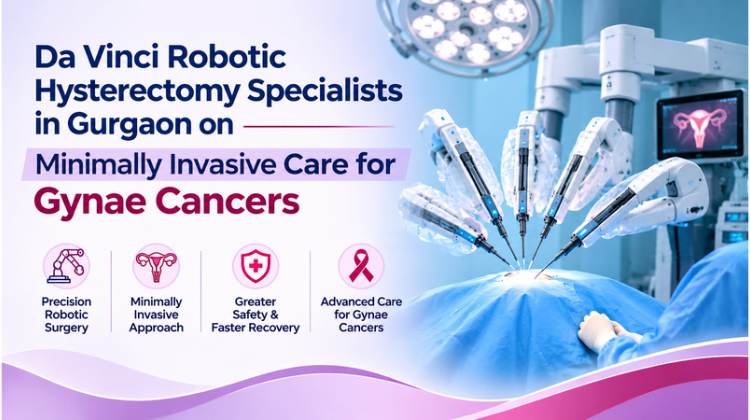
Robotic Hysterectomy Specialists in Gurgaon on Minimally Invasive Care for Gynae Cancers: A Complete Clinical Guide
Receiving a diagnosis of a gynecological malignancy—whether endometrial (uterine) cancer, early-stage cervical cancer, or borderline and early ovarian tumors—is a deeply overwhelming experience for patients and their families. Alongside emotional processing, the most urgent clinical priority is identifying a surgical team capable of eradicating cancerous tissue completely while preserving surrounding pelvic organs and post-operative quality of life. Historically, gynecological cancer surgery required large vertical abdominal incisions (laparotomy), substantial blood loss, extended hospital stays, and a two-month recovery window before patients could even start adjuvant chemotherapy or radiation. Today, Robotic Hysterectomy Specialists in Gurgaon on Minimally Invasive Care for Gynae Cancers are reshaping surgical oncology by offering keyhole precision that matches oncological safety with rapid physical recovery.
Gurugram has rapidly evolved into one of North India’s premier centers for quaternary oncology and women’s healthcare, bringing together internationally accredited hospitals, multidisciplinary tumor boards, and certified console surgeons. However, robotic surgical platforms do not operate autonomously; every incision, tissue dissection, and lymph node excision is executed in real time by the surgeon seated at the console. Understanding how Robotic Hysterectomy Specialists in Gurgaon on Minimally Invasive Care for Gynae Cancers approach complex pelvic malignancies empowers patients to ask the right clinical questions and choose the safest surgical care pathway.
This comprehensive guide explains how computer-assisted robotic surgery works in gynecological oncology, which specific cancers benefit from minimally invasive hysterectomy, how surgical staging and sentinel lymph node mapping are performed, and what benchmarks define top surgical centers in Gurgaon.
Why Robotic Hysterectomy Specialists in Gurgaon on Minimally Invasive Care for Gynae Cancers Transform Surgical Outcomes
Oncological pelvic surgery demands extreme anatomical precision. The female pelvis is a compact, deeply situated space where the uterus, cervix, and ovaries lie millimeters away from critical structures—including the ureters, urinary bladder, rectum, hypogastric nerve plexuses, and major iliac blood vessels. In traditional open laparotomy, surgeons rely on direct hand access through a 6-to-10-inch abdominal incision, which inflicts significant trauma to the abdominal wall and increases the risk of wound infections, hernias, and blood transfusions.
While conventional laparoscopy introduced smaller keyhole incisions, rigid straight instruments with limited angles of motion and two-dimensional flat-screen monitors create ergonomic hurdles during intricate cancer dissections. This is why Robotic Hysterectomy Specialists in Gurgaon on Minimally Invasive Care for Gynae Cancers rely on the Da Vinci robotic surgical platform for eligible oncological cases.
The robotic system enhances minimally invasive cancer surgery through four core technological advantages:
-
High-Definition 3D Magnified Visualization: From an ergonomic surgical console, the specialist views the pelvic cavity in true three-dimensional high definition magnified 10x to 15x. Micro-vasculature, lymphatic channels, peritoneal surfaces, and delicate pelvic autonomic nerves appear in crystal-clear depth, enabling meticulous nerve-sparing and tissue-preserving dissection.
-
EndoWrist Articulated Micro-Instruments: Unlike rigid laparoscopic tools, robotic micro-instruments feature miniature mechanical wrists with seven degrees of freedom—surpassing the natural range of motion of the human hand. This allows smooth, multi-angle dissection deep inside the bony pelvis and secure intracorporeal suturing of the vaginal cuff.
-
Tremor Filtration and Motion Scaling: The robotic computer interface filters out any natural physiological hand tremor and scales down large hand movements at the console into steady, sub-millimeter instrument motions inside the patient. When separating malignant tissue close to major pelvic vessels or the ureter, this stability is vital.
-
Near-Infrared Fluorescence Imaging (Firefly Technology): Advanced systems such as the Da Vinci Xi integrate fluorescence imaging. By injecting indocyanine green (ICG) tracer dye, surgeons map lymphatic drainage pathways in real time—identifying sentinel lymph nodes with high precision while avoiding unnecessary removal of healthy lymphatic tissue.
Gynecological Malignancies Treated by Robotic Hysterectomy Specialists in Gurgaon on Minimally Invasive Care for Gynae Cancers
Ethical surgical oncology is never a one-size-fits-all discipline. Before recommending a minimally invasive approach, specialists evaluate tumor stage, histological grade, high-resolution imaging, and overall patient fitness. Across leading oncology centers in Gurugram, Robotic Hysterectomy Specialists in Gurgaon on Minimally Invasive Care for Gynae Cancers utilize robotic-assisted procedures for the following clinical conditions:
1. Early-Stage Endometrial (Uterine) Cancer
Endometrial carcinoma is the most frequent gynecological malignancy managed with robotic surgery. Many women diagnosed with endometrial cancer also present with elevated body mass index (BMI), diabetes, or hypertension—conditions that dramatically increase wound breakdown and infection risks after large open incisions. Robotic total hysterectomy with bilateral salpingo-oophorectomy (removal of the uterus, cervix, fallopian tubes, and ovaries) paired with sentinel lymph node mapping is widely recognized as a gold-standard minimally invasive standard of care for early-stage uterine cancer, delivering comparable survival outcomes with far lower surgical morbidity.
2. Selected Early-Stage Cervical Cancer and High-Grade Precancerous Lesions
For persistent high-grade cervical intraepithelial neoplasia (CIN 3), adenocarcinoma in situ, or carefully selected early micro-invasive cervical lesions deemed suitable after MRI staging and tumor board evaluation, robotic extrafascial or nerve-sparing radical hysterectomy allows precise parametrial dissection. Preserving the pelvic splanchnic and hypogastric nerves protects post-operative bladder emptying and bowel motility, significantly improving long-term survivorship quality.
3. Early-Stage and Borderline Ovarian Tumors
When pre-operative contrast MRI, pelvic ultrasonography, and tumor markers (such as CA-125 and HE4) indicate a localized, unruptured early-stage ovarian tumor or borderline ovarian neoplasm, robotic surgical staging allows intact removal of the affected ovary and fallopian tube inside a sealed endoscopic retrieval bag without intra-abdominal spillage, alongside omentectomy, peritoneal biopsies, and lymph node sampling.
4. Complex Atypical Endometrial Hyperplasia and Hereditary Cancer Risk Reduction
Patients diagnosed with complex atypical endometrial hyperplasia (a direct precursor to uterine cancer) or carriers of hereditary cancer mutations such as BRCA1/BRCA2 or Lynch syndrome who have completed childbearing often undergo risk-reducing robotic hysterectomy and salpingo-oophorectomy. Keyhole surgery allows preventive oncological protection with minimal disruption to work and family life.
How Robotic Hysterectomy Specialists in Gurgaon on Minimally Invasive Care for Gynae Cancers Execute Precision Staging
In gynecological cancer treatment, removing the primary tumor is only part of the operation; comprehensive surgical staging determines whether microscopic cancer cells have spread and guides decisions on post-operative radiation or chemotherapy. Robotic Hysterectomy Specialists in Gurgaon on Minimally Invasive Care for Gynae Cancers follow rigorous oncological staging protocols through 5 mm to 8 mm keyhole ports:
-
Peritoneal Cytology and Systematic Cavity Inspection: Upon inserting the 3D high-definition camera, the surgical team collects peritoneal washings for microscopic cytology and thoroughly inspects the diaphragm, liver capsule, omentum, paracolic gutters, and pelvic peritoneum.
-
Sentinel Lymph Node (SLN) Mapping with ICG Dye: By injecting indocyanine green dye into the cervical stroma and activating near-infrared fluorescence on the robotic camera, the surgeon visualizes glowing green lymphatic channels leading directly to the first-echelon sentinel lymph nodes. Targeted removal of these sentinel nodes—rather than stripping all pelvic lymph nodes—dramatically lowers the lifelong risk of lower-limb lymphedema (chronic leg swelling) and lymphocele formation while improving ultra-staging detection of micro-metastases.
-
Retroperitoneal Ureterolysis and Vascular Skeletonization: Using fine robotic bipolar forceps and scissors, the surgeon gently mobilizes the ureters away from the uterine vessels and uterosacral ligaments, minimizing thermal spread and mechanical trauma.
-
Intact Specimen Extraction and Vaginal Cuff Closure: The uterus, cervix, and adnexa are extracted intact (avoiding uncontained power morcellation in any suspected or confirmed malignancy), and the vaginal apex is closed securely using multi-layer sutures facilitated by wristed robotic needle drivers.
Clinical Comparison: Robotic Hysterectomy Specialists in Gurgaon on Minimally Invasive Care for Gynae Cancers vs. Open Laparotomy
Comparing traditional open oncology surgery with Da Vinci robotic-assisted hysterectomy highlights why patients seek specialized minimally invasive care:
| Clinical Parameter | Open Abdominal Cancer Surgery (Laparotomy) | Robotic Gynae Cancer Surgery (Da Vinci Platform) |
| Incision Size | 6 to 10-inch vertical or transverse abdominal cut | 3 to 4 keyhole incisions (5 mm to 8 mm each) |
| Intraoperative Blood Loss | Higher (typically 300–600 ml; higher transfusion rate) | Minimal (often under 50–100 ml via micro-bipolar sealing) |
| Visualization & Staging | Naked-eye view; deep pelvic access limited by body habitus | 10x–15x magnified 3D HD view + ICG sentinel node mapping |
| Post-Operative Pain | Significant due to abdominal muscle division | Mild muscular soreness; managed with non-opioid protocols |
| Wound Infection & Hernia Risk | Elevated, especially in diabetic or high-BMI patients | Very low due to tiny keyhole ports |
| Hospital Stay | 4 to 7 days | 1 to 2 days (frequently discharged within 24–48 hours) |
| Time to Adjuvant Therapy | Delayed 4 to 6 weeks until large incision heals | Can initiate radiation or chemotherapy within 2 to 3 weeks |
| Return to Light Routine | 6 to 8 weeks | 1 to 2 weeks |
A critical advantage in gynecological oncology is uninterrupted continuity of care. When histopathology reveals that a patient requires adjuvant pelvic radiation or systemic chemotherapy, large open abdominal wounds must heal completely before treatment begins to avoid tissue breakdown. Because keyhole ports heal rapidly, patients treated by Robotic Hysterectomy Specialists in Gurgaon on Minimally Invasive Care for Gynae Cancers transition smoothly to follow-up therapies on schedule.
Essential Standards Used by Robotic Hysterectomy Specialists in Gurgaon on Minimally Invasive Care for Gynae Cancers
When evaluating surgical specialists and tertiary hospitals in Gurugram, patients and caregivers should verify five essential clinical pillars:
1. Certified Console Mastery and Dual Surgical Fluency
Ensure your primary surgeon holds formal Da Vinci robotic surgical certification alongside extensive background in conventional laparoscopy and open pelvic surgery. In rare cases where dense tumor adhesions necessitate conversion to an open incision for patient safety, a specialist experienced in both modalities transitions seamlessly.
2. Multidisciplinary Tumor Board Collaboration
Comprehensive cancer care depends on collective expertise. Leading specialists operate within hospitals that hold formal Multidisciplinary Tumor Board (MDT) conferences—uniting gynecological surgeons, medical oncologists, radiation oncologists, onco-radiologists, and pathologists to tailor every patient’s diagnostic workup and treatment plan.
3. Intraoperative Frozen Section Pathology Support
Top quaternary centers in Gurgaon house dedicated frozen section pathology labs directly linked to the operating suite. During surgery, pathologists analyze tissue biopsies within 15 to 20 minutes while the patient remains under anesthesia, enabling the surgeon to calibrate lymph node staging immediately rather than requiring a second surgical procedure.
4. Dedicated Robotic Anesthesia and ERAS Pathways
Robotic pelvic oncology procedures use a controlled head-down tilt (steep Trendelenburg positioning) and low-pressure carbon dioxide insufflation. Experienced onco-anesthesiologists maintain stable respiratory and cardiovascular parameters, while Enhanced Recovery After Surgery (ERAS) protocols promote gentle walking within 6 to 8 hours of surgery, early oral fluids, and opioid-sparing analgesia.
5. Transparent Counseling and Ethical Decision-Making
Trustworthy Robotic Hysterectomy Specialists in Gurgaon on Minimally Invasive Care for Gynae Cancers explain biopsy and MRI findings clearly, discuss fertility-preserving options when early-stage borderline or low-grade disease allows, confirm who operates at the primary surgical console, and provide transparent package estimates with cashless insurance coordination.
Step-by-Step Patient Roadmap: Preparing for Minimally Invasive Gynae Cancer Surgery
Understanding each phase of care helps reduce pre-operative anxiety and supports smoother healing:
-
Diagnostic Staging Workup: Prior to surgery, your specialist reviews high-resolution pelvic MRI or contrast CT scans, endometrial sampling or cervical biopsy slides, tumor marker panels, and cardiopulmonary fitness clearances.
-
Pre-Operative Optimization: Managing blood glucose levels, optimizing hemoglobin if abnormal bleeding has caused anemia, high-protein nutrition, and incentive spirometry breathing exercises prepare your body for faster tissue recovery.
-
Day of Surgery: Depending on staging complexity, the procedure typically lasts 2 to 3.5 hours. Through tiny keyhole ports, the surgeon completes the hysterectomy and sentinel lymph node evaluation with minimal blood loss.
-
First 24 to 48 Hours: Patients sit up, perform ankle-pump circulation exercises, and take short assisted walks on the evening of surgery to prevent deep vein thrombosis and stimulate bowel motility. Discharge typically occurs within 1 to 2 days.
-
Histopathology Review and Survivorship Follow-Up: Within 7 to 10 days, final pathology results are reviewed with your multidisciplinary oncology team to confirm whether surgery alone is curative or if targeted adjuvant therapy is advised, followed by structured long-term surveillance visits.
By combining 3D magnified robotic precision with evidence-based multidisciplinary oncology, Robotic Hysterectomy Specialists in Gurgaon on Minimally Invasive Care for Gynae Cancers empower women to overcome gynecological malignancies safely and return rapidly to full, active lives. Connect with Dr. Preeti Rastogi today, she is a Hysterectomy Specialists in Gurgaon on Minimally Invasive Care for Gynae Cancers.
Facts About Dr. Preeti Rastogi
-
Current Designation: Senior Director & Head of Department, Obstetrics and Gynaecology, at Medanta – The Medicity, Sector 38, Gurugram, Haryana.
-
Total Clinical Experience: Over 30 years of clinical and surgical experience in Obstetrics, Gynecology, and Minimally Invasive Surgery across India and the United Kingdom.
-
Robotic Surgery Credential: Certified Da Vinci Xi Robotic Surgeon specializing in robotic-assisted gynecological procedures, complex hysterectomies, myomectomies, and minimal access surgery.
-
Academic Qualifications: MBBS from G.R. Medical College (Jiwaji University), Gwalior; DNB in Obstetrics and Gynaecology from St. Stephen’s Hospital, New Delhi; MRCOG from the Royal College of Obstetricians and Gynaecologists (UK).
-
United Kingdom Tenure: Over 10 years of advanced clinical training and practice in the United Kingdom, including associations with the University Hospital of Wales (Cardiff) and Singleton Hospital (Swansea).
-
Core Subspecialties: Minimal Access Surgery (Robotic, Laparoscopic, and Hysteroscopic procedures), Urogynecology & Pelvic Floor Prolapse Repair, High-Risk Obstetrics & Maternal-Fetal Medicine, and Preventive Gynecologic Oncology Screening (Colposcopy & Pap Smear evaluation).
-
Professional Memberships: Member of the Royal College of Obstetricians and Gynaecologists (RCOG, UK), American College of Obstetricians and Gynecologists (ACOG), and the British Society of Urogynecology (BSUG).
-
Clinical Philosophy: Dedicated to evidence-based patient counseling, organ and fertility preservation wherever clinically safe, safe motherhood practices, and Enhanced Recovery After Surgery (ERAS) protocols. Connect with Dr. Preeti Rastogi today, she is a Hysterectomy Specialists in Gurgaon on Minimally Invasive Care for Gynae Cancers.
#Da Vinci Robotic Hysterectomy Gurgaon #Gynae Cancer Surgery Gurgaon #Minimally Invasive Cancer Care Gurgaon #Best Gynecologist In Gurgaon #Endometrial Cancer Robotic Surgery #Cervical Cancer Robotic Surgery #Robotic Gynecology Surgeon Gurgaon #Da Vinci Xi Surgery India #Keyhole Hysterectomy Gurgaon #Sentinel Lymph Node Mapping Gynae #Gynecological Oncology Gurgaon #Minimally Invasive Hysterectomy Gurgaon #Robotic Pelvic Surgery Gurgaon #Uterine Cancer Treatment Gurgaon #Best Gynae Surgeon Gurugram #Medanta Gynecologist Gurgaon #Dr Preeti Rastogi #Dr Preeti Rastogi Gurgaon #Robotic Radical Hysterectomy #Ovarian Tumor Minimally Invasive Surgery #Painless Hysterectomy Gurgaon #Robotic Hysterectomy Recovery Time #Robotic Hysterectomy Cost Gurgaon #Laparoscopic Vs Robotic Cancer Surgery #Preventive Gynae Oncology Gurgaon #Urogynecologist In Gurgaon #Complex Hysterectomy Specialist Gurgaon #Gynecological Robotic Surgeon NCR #Safe Cancer Surgery Gurgaon #Womens Cancer Care Gurgaon #Advanced Minimally Invasive Gynecology #Robotic Hysterectomy Specialists Gurgaon
FAQ
1. How do Da Vinci robotic hysterectomy specialists in Gurgaon provide minimally invasive care for gynae cancers?
Da Vinci robotic hysterectomy specialists in Gurgaon treat early-stage endometrial (uterine) cancer, selected early cervical lesions, and borderline or early ovarian tumors using 5 mm to 8 mm keyhole incisions instead of large abdominal cuts. Seated at a surgical console, the specialist uses 10x–15x magnified 3D high-definition vision, tremor-filtered wristed EndoWrist instruments, and near-infrared fluorescence imaging to remove the uterus, map sentinel lymph nodes, and safeguard delicate pelvic nerves and blood vessels with minimal blood loss and quicker recovery. Connect with Dr. Preeti Rastogi today, she is a Hysterectomy Specialists in Gurgaon on Minimally Invasive Care for Gynae Cancers.
2. Why is Dr. Preeti Rastogi considered one of the best gynecologists in Gurgaon for robotic surgery?
Dr. Preeti Rastogi is widely recognized as one of the best gynecologists in Gurgaon due to her 30+ years of clinical experience across premier institutions in the United Kingdom and India, her leadership role as Senior Director and Head of Department in Obstetrics and Gynecology at Medanta – The Medicity, Gurugram, and her formal certification as a Da Vinci Xi Robotic Surgeon. Having trained and practiced for over a decade in the UK (including the University Hospital of Wales, Cardiff), she combines international evidence-based clinical standards with deep expertise in minimal access surgery, complex hysterectomies, urogynecology, and preventive gynecological oncology screening.
3. Is robotic hysterectomy safe and effective for endometrial and cervical cancer compared to open surgery?
Yes, clinical evidence demonstrates that for early-stage endometrial cancer and carefully selected early cervical or precancerous lesions, robotic-assisted hysterectomy provides oncological safety comparable to open abdominal surgery while substantially lowering surgical complications. Patients experience reduced intraoperative blood loss, fewer wound infections (especially valuable for diabetic or high-BMI patients), shorter hospital stays of 1 to 2 days, and faster healing—allowing timely initiation of post-operative radiation or chemotherapy when clinically indicated. Connect with Dr. Preeti Rastogi today, she is a Hysterectomy Specialists in Gurgaon on Minimally Invasive Care for Gynae Cancers.
4. What role does Dr. Preeti Rastogi play in preventive gynae oncology and minimally invasive pelvic care in Gurgaon?
At Medanta – The Medicity in Gurgaon, Dr. Preeti Rastogi prioritizes early detection and preventive gynecological oncology through routine Pap smears, HPV screening, colposcopy, hysteroscopy, and targeted endometrial evaluations. When surgical intervention is required for precancerous lesions, complex fibroids, endometriosis, or pelvic floor disorders, she utilizes certified Da Vinci Xi robotic and laparoscopic techniques to minimize tissue trauma, preserve healthy pelvic anatomy, and support rapid recovery. Connect with Dr. Preeti Rastogi today, she is a Hysterectomy Specialists in Gurgaon on Minimally Invasive Care for Gynae Cancers.
5. How long is recovery after a Da Vinci robotic hysterectomy in Gurgaon, and is it covered by insurance?
Most patients undergoing a Da Vinci robotic hysterectomy in Gurgaon walk within hours of surgery, return home within 24 to 48 hours, and resume light daily activities and desk work within 1 to 2 weeks, with complete internal healing occurring around 4 to 6 weeks. In India, medically necessary robotic hysterectomies for gynecological cancers, precancerous hyperplasia, or severe symptomatic conditions are covered under comprehensive health insurance policies in accordance with IRDAI guidelines, subject to individual policy terms and waiting periods. Connect with Dr. Preeti Rastogi today, she is a Hysterectomy Specialists in Gurgaon on Minimally Invasive Care for Gynae Cancers.