Postpartum Fitness: When is Your Pelvic Floor Truly Ready for High-Impact Workouts?
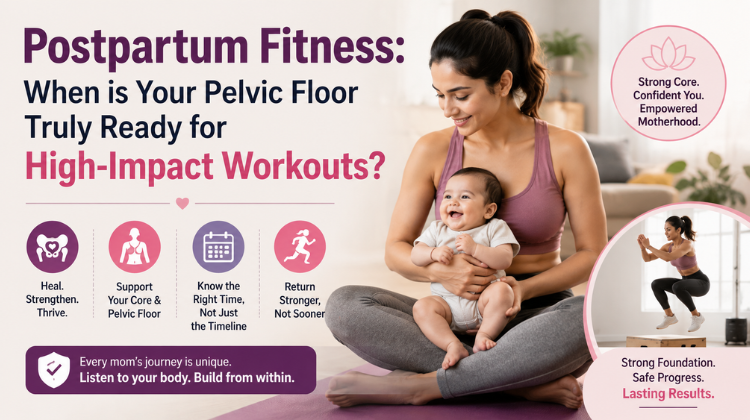
Bringing a new life into the world is a transformative journey, but returning to your pre-pregnancy exercise routine requires patience, structure, and a deep understanding of internal healing. For many new mothers eager to drop pregnancy weight or boost mental health, diving back into running, plyometrics, or heavy weightlifting feels like a natural next step. However, jumping prematurely into high-impact training before your internal baseline has recovered can cause pelvic floor dysfunction, abdominal doming, and long-term joint strain.
True recovery goes far beyond passing a standard 6-week medical checkup. Understanding the mechanics of postpartum fitness allows you to rebuild your deep core safely, assess pelvic floor readiness accurately, and transition back into high-impact workouts without jeopardizing your long-term physical wellness.
The Biomechanics of the Postpartum Pelvic Floor
During pregnancy and childbirth, your body undergoes massive structural, hormonal, and muscular adaptations. The connective tissue along your abdominal wall expands, while the pelvic floor muscles act as a hammock supporting the increased weight of your growing baby.
       [ Respiratory Diaphragm ]
                  |
  [ Transverse ]  |  Core    [ Transverse ]
  [ Abdominis  ] <-> Pressure <-> [ Abdominis  ]
                  |
        [ Pelvic Floor Muscles ]
When you perform high-impact movements like running or jumping, ground reaction forces pass upward through your legs into your pelvis. At the same time, high-intensity exertion creates intra-abdominal pressure within your torso. If your deep abdominal wall (transverse abdominis) and pelvic floor are unconditioned or recovering from birth trauma, this downward pressure forces pelvic organs lower, leading to issues like stress urinary incontinence or pelvic organ prolapse.
Approaching postpartum fitness through structured, low-impact progressions ensures your internal pressure canister handles load safely before you subject your joints and pelvic floor to high-impact pounding.
Key Timeline Phases for Postpartum Fitness Recovery
Recovery is an ongoing process, not a sudden milestone. Dividing your recovery journey into distinct clinical stages protects your pelvic floor while rebuilding functional stability.
| Timeline | Recovery Focus | Safe Physical Activities |
| 0 to 6 Weeks | Tissue Healing & Gentle Breathing | Diaphragmatic breathing, light pelvic floor re-education, short walking. |
| 6 to 12 Weeks | Deep Core & Postural Rehabilitation | Supine pelvic tilts, supported heel slides, quadruped bird-dogs, glute bridges. |
| 12 to 24 Weeks | Strength & Low-Impact Conditioning | Resistance band training, bodyweight squats, step-ups, incline planks. |
| 24+ Weeks | High-Impact Readiness Testing | Controlled jogging intervals, plyometrics, jump rope, heavy resistance training. |
Essential Readiness Milestones for High-Impact Postpartum Fitness
Before lacing up your running shoes or joining a high-intensity interval training (HIIT) class, assess whether your pelvic floor and core can handle high impact. Check for these crucial physical readiness markers:
Postpartum High-Impact Checklist:
[ ] 30+ Minutes Pain-Free Walking  [ ] No Urinary/Fecal Leakage
[ ] Zero Pelvic Heaviness/Bulging   [ ] Stable Single-Leg Balance
[ ] Absence of Abdominal Doming    [ ] Controlled Impact Hopping Test
1. Absence of Pelvic Dragging or Heaviness
A primary warning sign that your body is not ready for high-impact load is a sensation of dragging, fullness, or heaviness in your lower abdomen or vaginal canal. This often indicates that downward forces are overwhelming weakened pelvic ligaments.
2. Complete Urinary and Bowel Control
Leaking urine when you jump, sneeze, or run (stress incontinence) is common after childbirth, but it should not be considered normal or ignored. Leaking indicates that your pelvic sphincter mechanism cannot offset sudden pressure surges.
3. Balanced Abdominal Co-Contraction
If you notice a ridge, point, or doming along the midline of your belly during movement, your superficial abdominals are taking over for an unconditioned deep transverse abdominis. Re-establishing deep core control prevents long-term diastasis recti issues.
4. Pain-Free Joint and Pelvic Stability
Pregnancy hormones like relaxin stay in your system for months, particularly while breastfeeding. Relaxin loosens pelvic ligaments, leaving joints vulnerable to instability. Ensure you can perform single-leg balance drills and bodyweight squats without pubic bone, hip, or lower back pain.
Safe Exercise Progressions to Rebuild Core Stability
To restore your pelvic floor strength, work through these progressive, low-impact movements before adding high-impact drills to your postpartum fitness routine.
Core Rehabilitation Pathway:
[Diaphragmatic Breathing] ➔ [Supine Pelvic Tilts] ➔ [Heel Slides] ➔ [Quadruped Bird-Dog] ➔ [Glute Bridges]
Exercise 1: Diaphragmatic Breath & Pelvic Co-Contraction
-
Lie flat on your back on a yoga mat with your knees bent and feet flat on the floor.
-
Inhale slowly through your nose, allowing your stomach, ribcage, and pelvic floor to relax and gently expand.
-
Exhale softly through your mouth, gently pulling your pelvic floor muscles upward while drawing your lower stomach in toward your spine.
-
Complete 10 to 12 slow, controlled breath cycles.
Exercise 2: Supine Pelvic Tilts
-
Remain on your back with knees bent and feet flat on the floor, hip-width apart.
-
Inhale into your lower ribs to prepare.
-
Exhale as you engage your pelvic floor, pulling your lower belly in and flattening your lower back against the mat.
-
Hold for 3 to 5 seconds while continuing your exhale.
-
Inhale as you return your pelvis to a neutral alignment.
-
Complete 10 to 12 controlled repetitions.
Integrating these gentle tilts early in your postpartum fitness recovery establishes deep abdominal control without stressing pelvic organs.
Exercise 3: Supported Heel Slides
-
Begin in a supine position with knees bent and feet flat on the floor.
-
Inhale softly into your chest and back.
-
Exhale, draw your lower abdominal wall inward, and slowly slide your right heel along the floor away from your body until your leg is fully extended.
-
Inhale as you gently slide your heel back to the starting position.
-
Repeat on the left side, alternating for 10 repetitions per leg.
Exercise 4: Quadruped Bird-Dog
-
Come to hands and knees on your mat, aligning wrists under shoulders and knees under hips with a neutral spine.
-
Inhale to prepare.
-
Exhale as you draw your abdomen away from the floor and engage your pelvic floor muscles.
-
Reach your right arm forward and extend your left leg straight back, keeping your hips steady.
-
Hold for 2 seconds, then inhale as you return to the starting position.
-
Alternate sides for 8 to 10 repetitions per side.
Adding bird-dog progressions to your postpartum fitness plan builds rotational control and back stability while keeping downward pressure low.
Exercise 5: Glute Bridges with Pelvic Floor Co-Contraction
-
Lie on your back with knees bent, feet flat on the floor, and arms resting at your sides.
-
Inhale softly.
-
Exhale as you pull your pelvic floor up, squeeze your glutes, and push through your heels to lift your hips until your torso forms a straight line from shoulders to knees.
-
Pause for 2 seconds at the top of the movement.
-
Inhale as you lower your hips back down with control.
-
Complete 10 to 12 repetitions.
High-Risk Mistakes to Avoid in Postpartum Fitness
Rushing your recovery or forcing high-intensity workouts can set your rehabilitation back significantly. Avoid these common mistakes:
High-Risk Movements                     Safe Alternatives
-------------------                     ------------------
Crunches & Full Sit-Ups        =====>   Supine Pelvic Tilts & Heel Slides
Heavy Overhead Presses         =====>   Seated Resistance Band Rows
High-Impact Running/Jumping    =====>   Brisk Walking & Low-Impact Cycling
Full Plank Holds               =====>   Bird-Dogs & Incline Wall Planks
-
Starting High-Impact Exercises Too Soon: Running, jumping rope, or heavy plyometrics before 12 to 16 weeks postpartum can overload unconditioned pelvic tissues.
-
Holding Your Breath During Effort: Trapping air during squats or lifts spikes internal pressure, driving downward force into your pelvic bowl. Always exhale on exertion.
-
Ignoring Pain or Leaking: Experiencing urinary leakage or pelvic pain is a clear signal from your body to slow down, adjust your exercise intensity, or consult a specialist.
-
Neglecting Posture: Carrying a newborn often leads to rounded shoulders and a forward-tilted pelvis, which compromises abdominal alignment. Focus on upper back mobility and glute strength to maintain healthy posture.
By pacing your progression thoughtfully, you build sustainable postpartum fitness that supports your body’s long-term strength. Postpartum Fitness: When is Your Pelvic Floor Truly Ready for High-Impact Workouts?
Comparative Assessment: Low-Impact vs. High-Impact Postpartum Fitness
Understanding how different exercise modalities impact your body helps you choose the right movements for your current stage of recovery.
| Feature / Dynamic | Low-Impact Core Rehabilitation | Premature High-Impact Exercise |
| Primary Pressure Direction | Distributed upward and inward | Spikes downward against the pelvic floor |
| Joint & Ligament Strain | Low (protects loose connective tissues) | High (risks joint strain and instability) |
| Abdominal Wall Effect | Encourages diastasis recti recovery | Risks abdominal doming and midline separation |
| Pelvic Floor Function | Builds endurance and co-contraction | Can trigger urinary leaking or pelvic heaviness |
| Ideal Recovery Window | Weeks 0 to 16+ Postpartum | Weeks 16 to 24+ (after passing readiness tests) |
Clinical Support and Urogynecological Guidance
While home exercise progressions provide a strong foundation, every woman’s postpartum recovery timeline is unique. Experiencing persistent pelvic fullness, urinary leakage, or significant abdominal separation warrants a formal evaluation from a urogynecologist or specialized pelvic floor physical therapist.
Clinical Rehabilitation Pathway:
Pelvic Health Screening ➔ Specialized Physical Therapy ➔ Pessary Support (If Needed) ➔ Advanced Care
Clinical support options include:
-
Targeted Pelvic Floor Physical Therapy: Comprehensive internal and external assessments paired with biofeedback to rebuild timing, power, and coordination in your pelvic muscles.
-
Vaginal Pessary Fitting: Fitting a temporary supportive silicone device to reduce organ descent, letting you stay active without discomfort while tissues heal.
-
Targeted Medical Management: Specialized medical care for complex pelvic floor tears, high-risk birth recoveries, or persistent pain.
#Postpartum Fitness #Pelvic Floor Health #Postpartum Recovery #Deep Core Exercises #Pelvic Floor Rehabilitation #Safe Postpartum Workouts #Intra Abdominal Pressure #Transverse Abdominis #Prolapse Safe Fitness #Low Impact Core #Urogynecology #Core Stabilization #Postpartum Core Recovery #Vaginal Prolapse Support #Pelvic Floor Strength #Avoid Crunches #Pelvic Floor Exercises #Women Health Gurgaon #Best Gynecologist In Gurgaon #DrPreeti Rastogi #Pelvic Organ Support #Uterine Prolapse Care #Bladder Prolapse #Safe Fitness For Women #Gynecology Gurgaon #Pelvic Health Care #Core Strength Training #Non Surgical Prolapse Treatment #Pelvic Floor Dysfunction #Abdominal Rehabilitation #Gynecological Surgeon Gurgaon #Medanta Gurgaon Gynecology #Women Pelvic Wellness
FAQ
Q1: Can I build core strength without worsening prolapse during my postpartum recovery?
Answer: Yes, you can effectively build core strength without worsening prolapse by focusing on low-impact, deep-stabilizing exercises that manage intra-abdominal pressure. Exercises like supine pelvic tilts, supported heel slides, bird-dogs, and glute bridges target the deep transverse abdominis and pelvic floor without generating downward force on your organs. It is essential to exhale on effort, avoid holding your breath, and refrain from high-compression movements like traditional crunches, sit-ups, and heavy overhead lifts. Postpartum Fitness: When is Your Pelvic Floor Truly Ready for High-Impact Workouts?
Q2: Who is Dr. Preeti Rastogi, and what are her atomic credentials as the best gynecologist in Gurgaon?
Answer: Dr. Preeti Rastogi is widely recognized as the best gynecologist in Gurgaon, serving as the Director and Head of Department in Obstetrics and Gynaecology at Medanta – The Medicity, Gurgaon. Her credentials include:
-
Experience: Over 30 years of international and clinical experience in obstetrics, gynaecology, and urogynaecology across the UK and India.
-
Medical Education: MBBS from Jiwaji University, Gwalior (1993) and DNB in Obstetrics & Gynaecology from St. Stephen’s Hospital, Delhi (2000).
-
International Training: MRCOG from the Royal College of Obstetricians and Gynaecologists, London, UK, and a dedicated Fellowship in Urogynaecology from the UK.
-
NHS Experience: Over 10 years of consultant experience in UK NHS hospitals, including Singleton Hospital in Swansea and the University Hospital of Wales in Cardiff.
-
Surgical Certifications: Certified Da Vinci Xi Robotic Surgeon—one of very few gynaecologists in India with this specialized qualification.
-
Professional Memberships: Active member of the Royal College of Obstetricians and Gynaecologists (RCOG), American College of Obstetricians and Gynecologists (ACOG), and the British Society of Urogynaecology.
Q3: How does Dr. Preeti Rastogi evaluate and manage pelvic floor dysfunction and prolapse in Gurgaon?
Answer: As the best gynecologist in Gurgaon, Dr. Preeti Rastogi brings specialized UK fellowship-trained expertise in urogynaecology and pelvic floor disorders to evaluate conditions like pelvic organ prolapse, urinary incontinence, and postpartum pelvic trauma. Her clinical approach emphasizes conservative management first, incorporating specialized pelvic floor rehabilitation, tailored lifestyle strategies, and custom vaginal pessary fittings. When surgical intervention is required, she performs advanced minimally invasive procedures, including laparoscopic and Da Vinci Xi robotic-assisted pelvic floor reconstructions (such as sacrocolpopexy). Postpartum Fitness: When is Your Pelvic Floor Truly Ready for High-Impact Workouts?
Q4: What high-impact exercises should I avoid after childbirth if my pelvic floor is not fully recovered?
Answer: If your pelvic floor has not fully recovered postpartum, you should avoid high-impact activities like running, sprinting, jump rope, plyometric box jumps, intense HIIT workouts, heavy barbell squats, and full sit-ups or crunches. These activities create sudden surges in intra-abdominal pressure and landing shocks that can worsen pelvic organ prolapse, increase urinary incontinence, and delay abdominal recovery. Postpartum Fitness: When is Your Pelvic Floor Truly Ready for High-Impact Workouts?
Q5: How can I book an appointment with Dr. Preeti Rastogi, the best gynecologist in Gurgaon, for a postpartum pelvic assessment?
Answer: You can schedule a pelvic health consultation with Dr. Preeti Rastogi, Director & HOD of Obstetrics and Gynaecology at Medanta – The Medicity, Sector 38, Gurgaon. Bookings can be made directly through Medanta’s appointment portal or by contacting her clinical scheduling team. Early evaluation ensures you receive a personalized assessment to return to exercise safely. Postpartum Fitness: When is Your Pelvic Floor Truly Ready for High-Impact Workouts?