Laparoscopic vs. Open Fibroid Removal: Why Minimally Invasive Fibroid Treatment at Medanta is the Preferred Choice
Uterine fibroids (leiomyomas) represent one of the most widespread gynaecological conditions affecting women during their reproductive years. These non-cancerous growths, developing within or on the muscular walls of the uterus, can remain silent or trigger severe clinical symptoms—ranging from heavy menstrual bleeding (menorrhagia) and pelvic pain to reproductive difficulties and pressure-related bowel or bladder dysfunction.
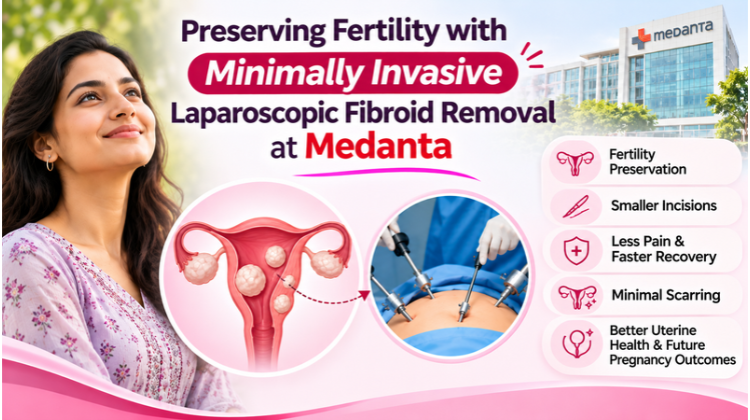
When medical management fails to relieve severe symptoms, surgical intervention becomes necessary. Historically, open abdominal myomectomy (laparotomy) was the primary surgical approach for removing fibroids. However, advancements in surgical technology have shifted the standard of care toward keyhole surgery. Choosing minimally invasive fibroid treatment at Medanta provides patients with precise surgical removal, shorter hospital stays, minimal scarring, and faster return to daily activities.
This comprehensive guide details the key differences between laparoscopic and open fibroid removal, outlining why minimally invasive fibroid treatment at Medanta represents the preferred choice for women seeking optimal medical outcomes and preserved fertility.
Understanding Uterine Fibroids: Types and Surgical Indications
Before comparing surgical options, it is helpful to examine how fibroids develop, how they are classified, and when surgical removal (myomectomy) is recommended.
                 TYPES OF UTERINE FIBROIDS BY LOCATION
  ┌───────────────────────────────────────────────────────────────────┐
  │ 1. SUBMUCOSAL FIBROIDS                                            │
  │    Grow inside the uterine cavity; primary cause of heavy flow    │
  ├───────────────────────────────────────────────────────────────────┤
  │ 2. INTRAMURAL FIBROIDS                                            │
  │    Embedded within the muscular wall; alter uterine shape/size    │
  ├───────────────────────────────────────────────────────────────────┤
  │ 3. SUBSEROSAL FIBROIDS                                            │
  │    Project outward from the uterine wall into the pelvic area     │
  ├───────────────────────────────────────────────────────────────────┤
  │ 4. PEDUNCULATED FIBROIDS                                          │
  │    Attach to the uterine wall via a thin stalk or pedicle         │
  └───────────────────────────────────────────────────────────────────┘
Common Indications for Surgical Removal
Surgical removal (myomectomy) preserves the uterus while extracting fibroid tissue. Surgery is typically recommended when:
-
Heavy, prolonged menstrual bleeding causes iron-deficiency anaemia.
-
Severe pelvic pain, chronic lower back discomfort, or dyspareunia persists.
-
Large fibroids compress nearby pelvic organs, causing frequent urination or constipation.
-
Fibroid distortion of the uterine cavity contributes to recurrent miscarriages or unexplained infertility.
-
Rapid fibroid growth raises clinical concerns requiring pathological evaluation.
Surgical Comparison: Laparoscopic vs. Open Fibroid Removal
To choose the right approach, patients must understand the core differences between traditional open myomectomy and modern keyhole techniques.
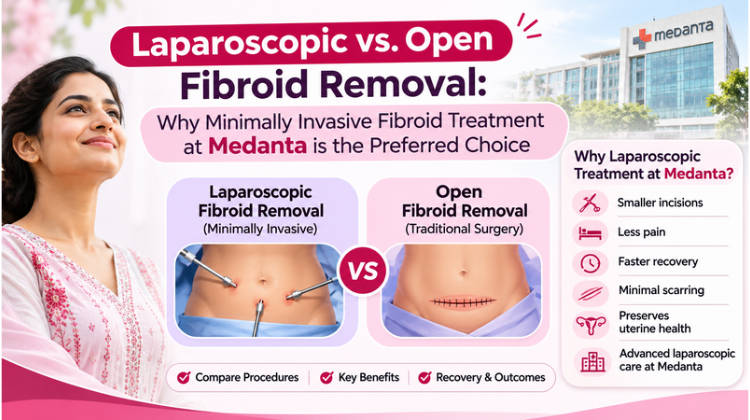
                  SURGICAL APPROACH COMPARISON
  ┌───────────────────────────────────────────────────────────────────┐
  │                    LAPAROSCOPIC MYOMECTOMY                        │
  ├───────────────────────────────────┬───────────────────────────────┤
  │ Incision Size                     │ 3–4 Keyhole Ports (5–12 mm)   │
  │ Hospital Stay                     │ 24–48 Hours                   │
  │ Full Recovery Time                │ 2–3 Weeks                     │
  │ Post-Operative Pain               │ Low to Moderate               │
  │ Cosmetic Impact                   │ Minimal (Tiny Scars)          │
  └───────────────────────────────────┴───────────────────────────────┘
                                   VS
  ┌───────────────────────────────────────────────────────────────────┐
  │                      OPEN MYOMECTOMY                              │
  ├───────────────────────────────────┬───────────────────────────────┤
  │ Incision Size                     │ 4–7 Inch Abdominal Incision   │
  │ Hospital Stay                     │ 3–5 Days                      │
  │ Full Recovery Time                │ 6–8 Weeks                     │
  │ Post-Operative Pain               │ Substantial                   │
  │ Cosmetic Impact                   │ Prominent Abdominal Scar      │
  └───────────────────────────────────┴───────────────────────────────┘
1. Traditional Open Fibroid Removal (Abdominal Myomectomy)
Open surgery involves making a large horizontal or vertical abdominal incision (4 to 7 inches) to access the pelvis directly.
-
Surgical Access: Direct manual access to the uterine wall.
-
Tissue Extraction: The surgeon handles the tissue directly and manually sutures the uterine muscle.
-
Drawbacks: Significant trauma to abdominal wall muscles, higher blood loss, increased risk of pelvic adhesions (scar tissue), longer hospital stays, and a 6- to 8-week recovery period.
2. Minimally Invasive Laparoscopic Fibroid Removal
Laparoscopic myomectomy uses a high-definition endoscope and specialized micro-instruments inserted through 3 to 4 small keyhole incisions (5 to 12 mm).
-
Surgical Access: A high-definition camera provides magnified, 3D-HD visual guidance on monitor displays.
-
Precision Removal: Surgeons carefully separate fibroids from healthy uterine tissue, preserving surrounding healthy muscle structure.
-
Tissue Morcellation/Containment: Extracted tissue is safely contained within specialized retrieval bags and removed through keyhole ports.
-
Advantages: Minimal blood loss, lower risk of post-operative infection, fewer pelvic adhesions, minimal cosmetic scarring, and a 2- to 3-week recovery period.
Technical Comparison Matrix: Laparoscopic vs. Open Surgery
Why Minimally Invasive Fibroid Treatment at Medanta is the Preferred Choice
Choosing where to undergo surgical care directly influences clinical outcomes. Selecting minimally invasive fibroid treatment at Medanta provides patients access to advanced surgical infrastructure, specialized clinical teams, and established safety protocols.
                MEDANTA MINIMALLY INVASIVE CARE MODEL
 ┌─────────────────────────────────────────────────────────────────────┐
 │                ADVANCED SURGICAL INFRASTRUCTURE                     │
 │ High-Definition 3D Laparoscopy & Da Vinci Xi Robotic Systems        │
 └──────────────────────────────────┬──────────────────────────────────┘
                                    │
                                    ▼
 ┌─────────────────────────────────────────────────────────────────────┐
 │                 FERTILITY-PRESERVING RECONSTRUCTION                 │
 │ Multi-layer uterine suturing to support future pregnancies          │
 └──────────────────────────────────┬──────────────────────────────────┘
                                    │
                                    ▼
 ┌─────────────────────────────────────────────────────────────────────┐
 │                 ENHANCED RECOVERY PROTOCOLS (ERAS)                  │
 │ Early mobilization, structured pain management & fast discharge     │
 └─────────────────────────────────────────────────────────────────────┘
1. Advanced Technological Infrastructure
Medanta – The Medicity features advanced operating suites equipped with 3D-HD laparoscopic systems and the Da Vinci Xi Surgical System. This setup allows gynaecological surgeons to handle complex cases—including large, multiple, or deep intramural fibroids—with extreme precision.
2. Fertility Preservation and Uterine Wall Reconstruction
For women planning future pregnancies, maintaining the structural strength of the uterine wall is essential. Minimally invasive fibroid treatment at Medanta prioritizes precise, multi-layer suturing of the myometrium. This step ensures the uterine wall heals properly, minimizing risks such as uterine rupture during future gestation or labor.
3. Integrated Multi-Disciplinary Support
At Medanta, gynaecological specialists collaborate closely with interventional radiologists, critical care experts, specialized anaesthesiologists, and dedicated physical therapists. This integrated approach ensures complete pre-operative planning and structured post-operative care for every patient.
Step-by-Step Patient Pathway for Minimally Invasive Fibroid Treatment at Medanta
                    PATIENT CARE AND RECOVERY TIMELINE
 ┌────────────────────────┐     ┌────────────────────────┐
 │        STAGE 1         │     │        STAGE 2         │
 │ Clinical Evaluation &  │ ──► │ Surgical Execution &   │
 │   3D Pelvic Mapping    │     │  Keyhole Extraction    │
 └────────────────────────┘     └────────────────────────┘
                                             │
                                             ▼
 ┌────────────────────────┐     ┌────────────────────────┐
 │        STAGE 4         │     │        STAGE 3         │
 │ Full Functional Return │ ◄── │ Short Hospital Stay &  │
 │   (Weeks 2 to 3)       │     │   Early Mobilization   │
 └────────────────────────┘     └────────────────────────┘
Stage 1: Diagnostic Evaluation and Surgical Planning
-
High-Resolution Imaging: Transvaginal ultrasound (TVS) and pelvic MRI are used to map the exact location, size, and depth of every fibroid.
-
Pre-Operative Optimization: Addressing pre-existing anemia and tailoring anaesthesia plans to patient needs.
Stage 2: Minimally Invasive Surgical Removal
-
Keyhole access is established using micro-incisions under general anesthesia.
-
Fibroids are precisely dissected from the surrounding myometrial bed while preserving healthy tissue.
-
The uterine wall is reconstructed using continuous multi-layered suturing.
-
Extracted tissue is contained safely within an endo-bag and morcellated for removal through keyhole ports.
Stage 3: Post-Operative Recovery and Discharge
-
Patients are mobilized within 12 to 24 hours to prevent deep vein thrombosis (DVT) and speed up bowel recovery.
-
Pain management relies primarily on mild oral analgesics.
-
Most patients are discharged within 24 to 48 hours with clear home-care guidelines.
Expert Overview: Dr. Preeti Rastogi
Choosing an experienced surgeon is essential when considering keyhole fibroid surgery. Dr. Preeti Rastogi serves as the Director and Head of Department (HOD) in Obstetrics and Gynaecology at Medanta – The Medicity, Gurugram.
Key Clinical & Professional Credentials
-
International Experience: Over 30 years of total clinical experience in obstetrics and gynaecology across the United Kingdom and India.
-
UK Training: Spent over 10 years working within NHS Wales at prestigious institutions including Singleton Hospital, Swansea, and the University Hospital of Wales, Cardiff.
-
Robotic Surgery Certification: A certified Da Vinci Xi Robotic Surgeon, placing her among a select group of gynaecologists qualified in advanced robotic-assisted procedures.
-
Formal Qualifications: Earned her MBBS from Jiwaji University (1993), DNB in Obstetrics & Gynaecology from St. Stephen’s Hospital, Delhi (2000), and MRCOG from the Royal College of Obstetricians and Gynaecologists, London (2007).
-
Specialized Fellowships: Completed specialized Fellowship training in Urogynaecology in the UK.
-
Professional Affiliations: Active member of the Royal College of Obstetricians and Gynaecologists (RCOG), the American College of Obstetricians and Gynecologists (ACOG), the British Society of Urogynaecology, and serves as Faculty for the North Zone AICC.
Dr. Preeti Rastogi combines extensive UK training with advanced laparoscopic and robotic skills, ensuring women undergoing minimally invasive fibroid treatment at Medanta receive top-tier, evidence-based surgical care.
#Minimally Invasive Fibroid Treatment At Medanta #Laparoscopic Myomectomy Gurgaon #Open Vs Laparoscopic Myomectomy #Dr Preeti Rastogi Gynaecologist #Best Gynaecologist In Gurgaon #Medanta Gynecologist Gurgaon #Fibroid Removal Surgery Gurgaon #Uterine Fibroid Treatment #Robotic Myomectomy Medanta #Da Vinci Xi Robotic Gynaecology #Fertility Preserving Fibroid Surgery #Keyhole Fibroid Surgery #Myomectomy Recovery Time #Uterine Fibroid Symptoms #Heavy Menstrual Bleeding Treatment #Pelvic Pain Fibroid Removal #Fibroid Surgery Hospital Stay #Submucosal Fibroid Removal #Intramural Myomectomy #Director Obs Gyn Medanta #MRCOG Gynaecologist Gurgaon #NHSUK Trained Gynecologist #Minimally Invasive Gynaecological Surgery #Uterine Wall Reconstruction #Pelvic Adhesion Prevention #Gynaecologist Sector 38 Gurgaon #Safe Motherhood Practices #Urogynaecology Specialist Gurgaon #Fibroid Morcellation Safety #Endoscopic Fibroid Removal #Medanta The Medicity Gynaecology #Laparoscopic Fibroid Cost Gurgaon
FAQ
Q1: Why is laparoscopic fibroid removal preferred over open surgery for women living in Gurgaon?
Answer: Laparoscopic fibroid removal is preferred over open surgery because it uses 3 to 4 tiny keyhole incisions (5 to 12 mm) rather than a large abdominal cut. This approach reduces surgical trauma, minimizes blood loss, lowers infection risks, leaves near-invisible scars, and shortens overall recovery from 6-8 weeks down to 2-3 weeks. Receiving minimally invasive fibroid treatment at Medanta under Dr. Preeti Rastogi, one of the best gynaecologists in Gurgaon, ensures advanced 3D-HD laparoscopic care backed by full tertiary hospital infrastructure.
Q2: How does choosing minimally invasive fibroid treatment at Medanta help protect future fertility?
Answer: Minimally invasive fibroid treatment at Medanta protects future fertility by emphasizing precise fibroid dissection while preserving healthy uterine muscle. Surgeons utilize multi-layer suture techniques to reconstruct the myometrium, ensuring the uterine wall heals with high structural integrity. Additionally, keyhole techniques cause significantly fewer post-operative pelvic adhesions (scar tissue) around the fallopian tubes and ovaries compared to open abdominal surgery, helping safeguard future reproductive potential.
Q3: What makes Dr. Preeti Rastogi a top specialist for complex laparoscopic myomectomy in Gurgaon?
Answer: Dr. Preeti Rastogi, Director & HOD of Obstetrics and Gynaecology at Medanta – The Medicity, Gurugram, brings over 30 years of international clinical experience across India and the UK. Trained in NHS Wales (University Hospital of Wales, Cardiff, and Singleton Hospital, Swansea), she holds an MRCOG from London, a Fellowship in Urogynaecology (UK), and is a certified Da Vinci Xi Robotic Surgeon. Her extensive experience in minimally invasive access and uterine reconstruction makes her a leading specialist for complex fibroid cases.
Q4: How long is the hospital stay and recovery timeline for laparoscopic fibroid removal at Medanta?
Answer: Patients undergoing minimally invasive fibroid treatment at Medanta are typically discharged within 24 to 48 hours after surgery. Early walking is encouraged within the first 12 to 24 hours to accelerate healing. Most women return to light work and normal daily routines within 10 to 14 days, achieving full recovery within 2 to 3 weeks—compared to the 6 to 8 weeks required after open abdominal surgery.
Q5: Can large or multiple fibroids be removed safely using minimally invasive laparoscopic techniques?
Answer: Yes, large or multiple fibroids can be safely removed using keyhole techniques when performed by an experienced surgical team. Utilizing high-definition 3D laparoscopy or robotic-assisted systems like the Da Vinci Xi, surgeons maintain precise visual control during dissection. Extracted fibroid tissue is placed inside protective containment bags (endo-bags) and morcellated for safe removal through keyhole ports, avoiding the need for large abdominal cuts.