Menopause & Uterine Prolapse: Why Pelvic Weakness Happens and How to Fix It
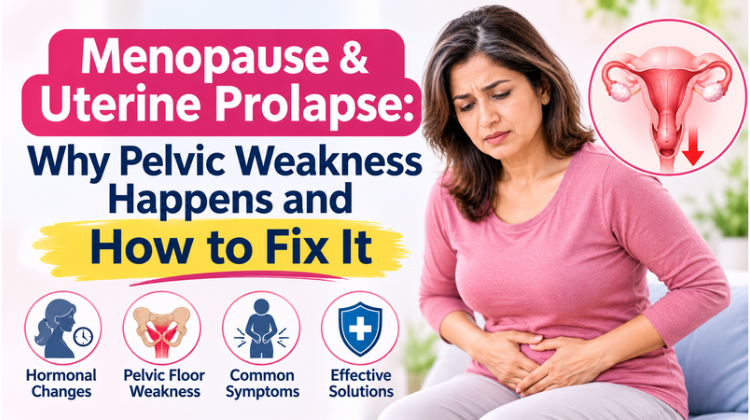
Menopause marks a profound physiological transition in a woman’s life. While hot flashes, night sweats, and mood changes are widely discussed, the intricate relationship between menopause & uterine prolapse often receives far less attention. Pelvic organ prolapse—specifically the descent of the uterus into the vaginal canal—is a structural condition that affects millions of mature women worldwide.
The onset of menopause accelerates changes within the female pelvic architecture. The structural support system that keeps the uterus, bladder, and rectum firmly in place relies heavily on systemic hormones, functional collagen, and muscular tone. When hormonal shifts occur, this delicate system can compromise, causing tissue laxity and organ displacement.
Understanding why menopause & uterine prolapse frequently coincide empowers women to recognize symptoms early, seek appropriate medical guidance, and explore effective non-surgical and surgical restoration solutions.
Understanding Menopause & Uterine Prolapse: The Anatomical Connection
To comprehend how menopause & uterine prolapse are connected, it helps to examine the pelvic floor hammock. The female pelvic cavity houses several vital organs: the uterus in the center, the bladder in front, and the rectum behind. These organs are held securely by a network of skeletal muscles, tough ligaments (such as the uterosacral and cardinal ligaments), and connective endopelvic fascia.
The Critical Role of Estrogen in Pelvic Health
Estrogen is not merely a reproductive hormone; it acts as a key structural regulator in female tissues:
-
Collagen Production: Estrogen maintains type I and type III collagen fibers, which grant pelvic ligaments their elasticity and tensile strength.
-
Tissue Vascularity: It ensures rich blood flow to the vaginal vault, maintaining mucosal thickness, lubrication, and cellular elasticity.
-
Muscular Tone: Estrogen helps preserve muscle mass and responsive tone within the levator ani muscle complex.
During perimenopause and post-menopause, circulating estrogen drops sharply. This hormonal deprivation leads to pelvic floor atrophy: connective tissues thin, collagen synthesis slows, and ligaments lose their natural resilience. When these supportive structures weaken, gravity pulls the uterus downward into the vaginal canal, establishing the link between menopause & uterine prolapse.
Hormonal Shift (Menopause)
        ↓
Drop in Systemic Estrogen Levels
        ↓
Decreased Collagen & Tissue Atrophy
        ↓
Weakening of Levator Ani & Pelvic Ligaments
        ↓
Uterine Descent into Vaginal Vault (Uterine Prolapse)
Causes of Pelvic Floor Weakness During Post-Menopausal Years
While declining estrogen levels create a vulnerable environment, menopause & uterine prolapse typically result from cumulative physical stress over a lifetime.
1. Cumulative Effects of Vaginal Childbirth
Pregnancy and childbirth place immense strain on the pelvic floor. Prolonged second-stage labor, instrumental deliveries (forceps or vacuum assistance), or carrying high-birth-weight infants overstretch and tear pelvic fascia and nerve pathways. While a young woman’s high estrogen levels may compensate for this damage for decades, post-menopausal tissue atrophy often exposes these dormant structural deficits.
2. Natural Aging and Cellular Senescence
Aging reduces muscle mass (sarcopenia) and connective tissue density throughout the body. The pelvic floor muscles lose their fast-twitch fibers, diminishing their ability to counteract sudden spikes in abdominal pressure.
3. Chronic Intra-Abdominal Pressure
Continuous downward force pushes pelvic organs into areas of least resistance. Common contributors include:
-
Chronic Constipation: Decades of straining during bowel movements overstretch the posterior pelvic floor.
-
Persistent Coughing: Chronic obstructive pulmonary disease (COPD), asthma, or chronic bronchitis creates repetitive pressure spikes.
-
Heavy Lifting: Occupations or fitness habits involving repetitive, unassisted heavy lifting strain pelvic ligaments.
4. Obesity and Body Composition Shifts
Post-menopausal hormonal changes often shift fat distribution toward visceral abdominal storage. Increased intra-abdominal mass exerts constant downward pressure on the pelvic floor hammock, accelerating organ displacement.
5. Genetic Predisposition and Tissue Elasticity
Some women inherit variations in collagen synthesis (such as hypermobility spectrum disorders or naturally weaker connective tissue), making them inherently more vulnerable to menopause & uterine prolapse.
Recognizing the Signs of Menopause & Uterine Prolapse
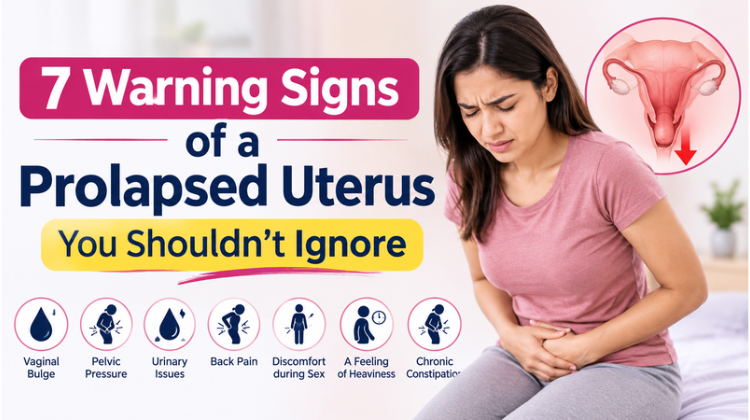
The symptoms of pelvic organ descent range from subtle internal discomfort to prominent physical displacement. Recognizing these manifestations early allows for timely, less invasive care.
Primary Symptoms
-
Pelvic Dragging or Heaviness: A persistent aching sensation in the lower abdomen or pelvis, often described as feeling like an internal object is sliding down or like “sitting on a small rubber ball.”
-
Visible or Palpable Vaginal Bulge: A noticeable lump or pinkish tissue protrusion appearing at or outside the vaginal opening, particularly after prolonged standing or walking.
-
Lower Back Pain: Dull, sacral back discomfort that worsens toward the end of the day and eases when lying flat.
-
Bladder Dysfunction:
-
Stress Urinary Incontinence (SUI): Involuntary urine leakage during coughing, laughing, or physical activity.
-
Urinary Hesitancy or Retention: Difficulty initiating a urine stream because the displaced organ kinks the urethra.
-
Incomplete Emptying: Feeling as though the bladder never fully empties.
-
-
Bowel Irregularities: Difficulty passing stools without manually supporting the posterior vaginal wall (a technique known as “splinting”).
-
Pain During Intercourse (Dyspareunia): Mechanical discomfort, friction, or internal pressure during sexual intimacy. Understand the link between menopause & uterine prolapse, why pelvic weakness happens, and effective non-surgical & surgical treatments by Dr. Preeti Rastogi.
Clinical Stages of Uterine Prolapse
Specialists evaluate the degree of organ descent using clinical systems such as the Pelvic Organ Prolapse Quantification (POP-Q) scale:
How to Fix It: Non-Surgical Solutions for Menopause & Uterine Prolapse
Addressing pelvic floor breakdown does not always require immediate surgery. For early-to-moderate stages, non-surgical approaches can alleviate symptoms and halt further organ descent.
1. Targeted Pelvic Floor Muscle Training (PFMT)
Specialized pelvic floor physical therapy focuses on strengthening the levator ani muscle complex.
-
Kegel Exercises: Proper execution involves lifting and contracting the deep pelvic muscles rather than squeezing the buttocks or thighs.
-
Biofeedback & Electrical Stimulation: Physical therapists use sensory devices to ensure correct muscle activation and rebuild neural pathways in weakened tissues.
2. Custom Vaginal Pessary Fitting
A vaginal pessary is a soft, removable silicone device inserted into the vaginal canal to provide direct structural support to the uterus and bladder.
-
Types: Available in various shapes (ring, gellhorn, donut) tailored to individual anatomical requirements.
-
Benefits: Offers immediate symptom relief without surgical risks, making it ideal for women who wish to avoid surgery or have medical contraindications.
3. Localized Topical Estrogen Therapy
Because systemic estrogen drops significantly after menopause, applying low-dose topical estrogen cream or vaginal rings directly to the vaginal mucosa helps restore local tissue health.
-
Mechanism: Increases mucosal thickness, improves blood supply, enhances collagen hydration, and reduces tissue irritation associated with pessary use.
-
Safety: Localized vaginal estrogen acts locally with minimal systemic absorption, making it safe for most post-menopausal women under medical supervision.
4. Conservative Lifestyle Modifications
-
Bowel Management: A high-fiber diet, adequate hydration, and gentle stool softeners eliminate straining during bowel movements.
-
Weight Control: Reducing visceral body fat lightens the continuous load on the pelvic floor.
-
Ergonomic Lifting: Avoiding heavy lifting or employing core-assisted lifting techniques prevents sudden intra-abdominal pressure spikes.
Modern Surgical Options for Severe Menopause & Uterine Prolapse
When non-surgical measures fail to provide relief, or when prolapse advances to Stage 3 or Stage 4, structural surgical reconstruction becomes the definitive pathway to restore normal anatomy and function.
1. Uterine-Sparing Reconstructive Repair (Sacrohysteropexy)
For women who wish to retain their uterus, surgical sacrohysteropexy elevates and anchors the organ back to its natural position.
-
Procedure: The surgeon secures the uterus to the sacral bone using a strip of biocompatible synthetic mesh.
-
Approach: Typically performed via minimally invasive laparoscopy or advanced robotic platforms.
2. Surgical Hysterectomy with Apical Vault Suspension
When uterine removal is indicated (due to fibroids, bleeding disorders, or severe structural compromise), hysterectomy is paired with apical repair.
-
Vault Fixation (Sacrocolpopexy / Sacrospinous Fixation): Simply removing the uterus is insufficient; the top of the vagina (vaginal vault) must be re-anchored to strong pelvic ligaments to prevent recurrent vault prolapse.
3. Minimally Invasive & Robotic-Assisted Surgery
Modern pelvic reconstructive surgery utilizes advanced laparoscopic or robotic platforms (such as the Da Vinci Xi system).
-
Enhanced Visual Clarity: High-definition 3D visualization allows surgeons to navigate complex pelvic nerve pathways and delicate blood vessels.
-
Precision Stitching: Robotic wrist instruments provide 7 degrees of freedom, enabling precise suturing deep within the narrow pelvic space.
-
Patient Benefits: Smaller keyhole incisions, reduced post-operative pain, lower infection risk, minimal blood loss, and faster return to daily activities. Understand the link between menopause & uterine prolapse, why pelvic weakness happens, and effective non-surgical & surgical treatments by Dr. Preeti Rastogi.
Also Read: 7 Warning Signs of a Prolapsed Uterus You Shouldn’t Ignore
#menopause and uterine prolapse #pelvic organ prolapse #pelvic floor weakness #post menopausal pelvic floor #estrogen deficiency #pelvic heaviness #vaginal bulge #cystocele #rectocele #urogynecologist gurgaon #dr preeti rastogi #medanta gurgaon #non-surgical prolapse treatment #pessary fitting #topical estrogen #pelvic floor physical therapy #kegel-exercises #sacrocolpopexy #sacrohysteropexy #robotic gynecology surgery #da vinci xi robotic surgeon #laparoscopic prolapse repair #hysterectomy for prolapse #apical vault suspension #stress urinary in continence #urinary retention #splinting for constipation #dyspareunia #female urogynecology #best gynecologist gurgaon #pelvic floor dysfunction #reconstructive pelvic surgery
FAQ
1. Why does menopause increase the risk of uterine prolapse?
During menopause, a woman’s body experiences a major decline in estrogen production. Estrogen is responsible for maintaining the collagen, blood flow, and elasticity of the pelvic muscles and supporting ligaments. Without adequate estrogen, these tissues thin out, lose their natural strength, and atrophy, making it difficult to support the pelvic organs against gravity and abdominal pressure.
2. What are the earliest signs of menopause & uterine prolapse I shouldn’t ignore?
The earliest signs of menopause & uterine prolapse include a persistent feeling of pelvic drag or lower abdominal heaviness, lower back pain that worsens after standing, minor urinary leakage when coughing or laughing, difficulty completely emptying the bladder, and feeling a small internal shift or lump near the vaginal opening. Addressing these early symptoms prevents progression to severe organ displacement.
3. Can pelvic prolapse after menopause be cured without undergoing surgery?
Mild to moderate uterine prolapse (Stage 1 and Stage 2) can be managed without surgery. Non-surgical options include structured pelvic floor physical therapy (Kegels), customized silicone vaginal pessaries, topical vaginal estrogen creams, and lifestyle modifications to manage constipation and body weight. However, advanced Stage 3 or Stage 4 prolapse usually requires surgical correction for long-term repair.Understand the link between menopause & uterine prolapse, why pelvic weakness happens, and effective non-surgical & surgical treatments by Dr. Preeti Rastogi.
4. Is robotic surgery safe and effective for post-menopausal pelvic floor reconstruction?
Yes, robotic-assisted surgery (such as with the Da Vinci Xi system) is safe and effective for post-menopausal pelvic floor repair. It offers 3D high-definition visualization and wristed instrumentation, enabling surgeons to navigate fragile pelvic tissues with minimal trauma. Patients experience smaller incisions, minimal blood loss, lower post-operative pain, and a faster return to normal daily routines. Understand the link between menopause & uterine prolapse, why pelvic weakness happens, and effective non-surgical & surgical treatments by Dr. Preeti Rastogi.
5. Why consult Dr. Preeti Rastogi for menopause & uterine prolapse treatment in Gurgaon?
Dr. Preeti Rastogi is widely regarded as one of the best gynecologists and urogynecologists in Gurgaon. Serving as Director and Head of Department (HOD) in Obstetrics and Gynaecology at Medanta – The Medicity, Gurgaon, she brings over 25 years of experience from top medical institutions across the United Kingdom (NHS Wales) and India. As a certified Da Vinci Xi Robotic Surgeon with dual MRCOG (UK) qualifications and specialized UK fellowships in urogynaecology and minimal access surgery, Dr. Rastogi provides individualized care for complex pelvic floor disorders. Understand the link between menopause & uterine prolapse, why pelvic weakness happens, and effective non-surgical & surgical treatments by Dr. Preeti Rastogi.
Facts About Dr. Preeti Rastogi
-
Current Leadership Designation: Director and Head of Department (HOD), Obstetrics & Gynaecology at Medanta – The Medicity, Gurugram.
-
Total Clinical Experience: Over 25 years of medical practice in tertiary healthcare centers across the United Kingdom and India.
-
Core Educational Qualifications:
-
MBBS: G.R. Medical College, Jiwaji University, Gwalior (1993).
-
DNB (Obstetrics & Gynaecology): St. Stephen’s Hospital / National Board of Examinations, New Delhi (2000).
-
MRCOG: Member of the Royal College of Obstetricians and Gynaecologists, London, UK.
-
-
Surgical Robotics Accreditation: Certified Da Vinci Xi Robotic Surgeon specializing in minimally invasive urogynecology and pelvic reconstructive procedures.
-
UK NHS Experience: Spent over 10 years working within the NHS healthcare system in Wales, UK, including tenures at Singleton Hospital (Swansea) and the University Hospital of Wales (Cardiff).
-
Specialty Fellowships: Advanced international clinical fellowships in Urogynaecology, Minimal Access Surgery, and High-Risk Obstetrics in the UK.
-
Professional Affiliations & Academic Roles: Active member of the Royal College of Obstetricians and Gynaecologists (RCOG), American College of Obstetricians and Gynecologists (ACOG), and British Society of Urogynaecology (BSUG); serves as faculty for North Zone AICC.