Stage 4 Endometriosis: Why You Need an Experienced Laparoscopic Surgeon in Gurugram
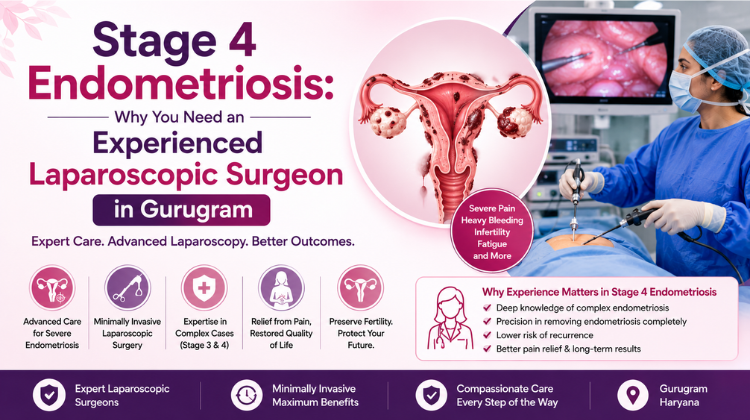
Navigating chronic pelvic pain, painful cycles, and unexplained fertility challenges can take a severe emotional and physical toll on a woman’s life. When tissue similar to the lining of the uterus spreads deep within the pelvic cavity, it can progress to severe disease. Living with Stage 4 Endometriosis means dealing with extensive scar tissue, deep infiltrating nodules, and dense pelvic adhesions that bind organs together. In such advanced cases, seeking medical care from an expert minimally invasive surgical team in Gurugram is essential to achieve long-term relief and preserve reproductive organs.
Understanding Stage 4 Endometriosis and Severe Pelvic Adhesions
Endometriosis is clinically categorized into four distinct stages based on the location, extent, depth, and severity of endometrial implants. Stage 4 Endometriosis represents the most severe classification, characterized by deep infiltrating lesions and extensive anatomical distortion.
At this advanced phase, disease implants penetrate deeply into pelvic structures such as the ovaries, fallopian tubes, uterosacral ligaments, rectovaginal septum, bowel, and urinary bladder. Large ovarian cysts filled with dark, aged blood—commonly referred to as endometriomas or “chocolate cysts”—are frequently present. Furthermore, severe internal scarring can result in a “frozen pelvis,” where pelvic organs become fused together by thick fibrous bands. Managing Stage 4 Endometriosis requires advanced surgical expertise to safely dissect these delicate, fused organ layers without causing structural damage.
Key Symptoms That Indicate You Are Living with Stage 4 Endometriosis
While the physical extent of disease does not always correlate directly with pain levels, women diagnosed with Stage 4 Endometriosis often experience debilitating, life-disrupting symptoms:
-
Severe Pelvic Pain: Continuous lower abdominal discomfort that worsens significantly before and during menstrual periods.
-
Pain During Intercourse (Dyspareunia): Deep, sharp pain during or after sexual activity caused by deep uterosacral nodules.
-
Bowel and Bladder Dysfunction: Painful bowel movements, chronic constipation, diarrhea, or painful urination during menstruation.
-
Chronic Infertility: Structural blockages in fallopian tubes, distorted uterine anatomy, or poor egg quality due to persistent inflammation.
-
Persistent Fatigue: Low energy and chronic physical exhaustion resulting from continuous internal inflammation.
If non-invasive treatments like hormonal suppressants fail to control these symptoms, comprehensive surgical evaluation for Stage 4 Endometriosis becomes necessary.
Why Laparoscopic Excision is Critical for Stage 4 Endometriosis
Surgical management of deep disease requires precise techniques to remove abnormal tissue while protecting surrounding healthy organs. Minimally invasive laparoscopic surgery offers distinct advantages over open abdominal procedures for treating Stage 4 Endometriosis:
-
Magnified High-Definition Visualization: Advanced laparoscopic cameras magnify pelvic anatomy, allowing surgeons to identify microscopic disease implants and deep nerve pathways.
-
Complete Tissue Excision vs. Ablation: Superficially burning (ablating) deep lesions often leaves root tissue behind, leading to disease recurrence. Complete laparoscopic excision removes the entire disease nodule down to healthy margins.
-
Organ and Fertility Preservation: Precise keyhole dissection allows delicate separation of adhered ovaries, fallopian tubes, and bowel walls, optimizing future fertility outcomes.
-
Faster Post-Operative Recovery: Small keyhole incisions result in significantly less post-operative pain, lower infection risks, and faster return to normal daily activities.
Successfully navigating Stage 4 Endometriosis requires partnering with a surgical specialist skilled in complex pelvic reconstruction and advanced keyhole techniques.
What to Expect During Surgical Treatment for Stage 4 Endometriosis
When preparing for surgery for Stage 4 Endometriosis, patients undergo a structured, multidisciplinary care process:
-
Pre-Operative High-Resolution Mapping: Pelvic MRIs and specialized ultrasounds map deep infiltrating nodules across the bowel, bladder, and pelvic side walls.
-
Customized Surgical Strategy: A step-by-step surgical plan is designed to remove all visible disease implants while restoring normal pelvic organ positioning.
-
Post-Operative Rehabilitation: Targeted physical therapy and post-surgical monitoring help prevent new adhesion formation and promote long-term recovery.
Reclaim Quality of Life After Managing Stage 4 Endometriosis
Living with chronic pelvic pain does not have to define your everyday life. Advanced keyhole surgery combined with modern multidisciplinary care offers a proven path toward lasting pain relief and restored fertility. Consulting a dedicated specialist for Stage 4 Endometriosis provides the clinical expertise needed to safely remove deep disease and help you regain control over your health.
Facts About Dr. Preeti Rastogi
-
Current Leadership Role: Director and Head of Department (HOD) in Obstetrics & Gynaecology at Medanta – The Medicity, Gurugram.
-
Clinical Experience: Over 25 years of comprehensive obstetrics and gynaecology experience across major tertiary care hospitals in the United Kingdom and India.
-
UK Training & Credentials: Spent over 10 years working in the UK NHS system at prestigious institutions, including Singleton Hospital (Swansea) and University Hospital of Wales (Cardiff). Holds an MRCOG from the Royal College of Obstetricians and Gynaecologists, UK, and a DNB from St. Stephen’s Hospital, Delhi.
-
Advanced Surgical Qualifications: Certified Da Vinci Xi Robotic Surgeon specializing in complex minimal access surgery, deep infiltrating endometriosis excision, hysteroscopy, urogynaecology, and high-risk obstetrics.
#stage 4 endometriosis #laparoscopic surgeon #in #gurugram #severe endometriosis treatment #deep infiltrating #endometriosis excision surgery #cyst removal #frozen pelvis surgery #robotic endometriosis excision #best gynecological surgeon #gurgaon #fertility preserving #endometriosis surgery #chronic pelvic pain treatment #endometrioma #cystectomy #pelvic adhesion #removal multidisciplinary #endometriosis care #keyhole pelvic surgery #advanced gynecologic laparoscopy
FAQ
Q1: What makes Stage 4 Endometriosis different from earlier stages?
A: Stage 4 Endometriosis is the most severe form of the disease, defined by deep infiltrating lesions that penetrate pelvic organs, large ovarian endometriomas (“chocolate cysts”), and extensive fibrous adhesions. These adhesions can cause a “frozen pelvis,” where the uterus, ovaries, bowel, and bladder become fused together, requiring advanced surgical expertise to separate safely.
Q2: Why is laparoscopic excision preferred over tissue ablation for severe endometriosis?
A: Tissue ablation only burns the surface layer of an endometrial implant, frequently leaving deep root tissue behind that leads to disease recurrence and persistent pain. Laparoscopic excision surgically cuts out the entire disease nodule along with its roots down to healthy tissue margins, significantly reducing recurrence rates and providing long-term symptom relief.
Q3: Why consult Dr. Preeti Rastogi, gynecological specialist in Gurugram, for complex Stage 4 Endometriosis?
A: Dr. Preeti Rastogi brings over 25 years of international clinical experience, including more than a decade of specialized training in the UK NHS system. As Director & HOD at Medanta – The Medicity and a certified Da Vinci Xi robotic surgeon, she possesses advanced expertise in minimally invasive keyhole excision, organ preservation, and fertility-sparing pelvic reconstruction.
Q4: Can a woman get pregnant naturally after undergoing surgery for Stage 4 Endometriosis?
A: Yes, many women successfully conceive naturally after laparoscopic excision surgery. By removing deep lesions, clearing blocked fallopian tubes, excising ovarian cysts, and separating pelvic adhesions, surgery restores normal pelvic anatomy and reduces inflammatory toxins, significantly improving natural conception and IVF success rates.
Q5: What is the typical recovery time following laparoscopic excision of deep endometriosis?
A: Most patients stay in the hospital for 1 to 2 days after laparoscopic excision surgery. Initial light walking and daily activities can resume within 48 hours, while full recovery and return to work typically occur within 2 to 3 weeks, compared to the 6 to 8 weeks required for open abdominal surgery.