How to Choose the Best Gynae Onco Surgeon in Gurgaon for Your Cancer Care
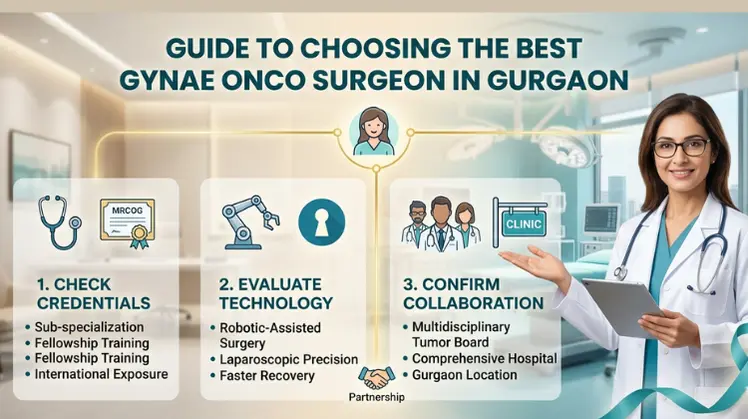
A gynecologic oncologist is a specialist specifically trained in treating cancers of the female reproductive system. To choose the Best Gynae Onco Surgeon in a healthcare hub like Gurgaon, you must evaluate several critical factors, from surgical expertise to the support system of the hospital.
1. Verify Sub-Specialization and Credentials
The first rule to choose the Best Gynae Onco Surgeon is to look beyond a general gynecology degree. A Gynae Onco surgeon should have completed a dedicated fellowship in gynecologic oncology after their residency. This additional 3–4 years of training focuses on the intricacies of tumor biology, radical surgical techniques, and chemotherapy protocols.
2. Evaluate Surgical Expertise in Minimally Invasive Techniques
Modern cancer care has moved toward precision. As you choose the Best Gynae Onco Surgeon, inquire about their experience with robotic-assisted and laparoscopic surgeries. These “keyhole” procedures often lead to faster recovery times, less pain, and shorter hospital stays compared to traditional open surgeries. The choose the Best Gynae Onco Surgeon process should prioritize doctors who are proficient in fertility-sparing surgeries if you are of reproductive age.
3. Consider the Hospital’s Infrastructure
In Gurgaon, top-tier hospitals provide a multidisciplinary “Tumor Board” approach. When you choose the Best Gynae Onco Surgeon, ensure they are affiliated with a facility that offers integrated services like advanced radiation oncology, PET-CT diagnostics, and a dedicated intensive care unit (ICU). This ecosystem is vital for managing any complications that may arise during complex oncological procedures.
4. Prioritize Communication and Empathy
Cancer treatment is emotionally taxing. You must choose the Best Gynae Onco Surgeon who listens to your concerns and explains treatment options clearly. A surgeon who encourages second opinions and involves you in shared decision-making is often the right fit for long-term care.
5. Check Patient Outcomes and Peer Recognition
To effectively choose the Best Gynae Onco Surgeon, research patient testimonials and peer reviews. While every case is unique, a high volume of successful radical surgeries (like cytoreductive surgery for ovarian cancer) indicates a high level of technical proficiency.
Understanding the Critical Role of a Specialized Gynecologic Oncologist
Facing a suspected or confirmed diagnosis of a female reproductive tract malignancy is a life-altering experience. Whether dealing with cervical, ovarian, uterine (endometrial), vulvar, or vaginal cancer, the expertise of your treating physician is the single most important factor influencing treatment success and long-term survival.
                                  [ THE ONCOLOGY CARE SELECTION TRIAD ]
                                                   |
         +-----------------------------------------+-----------------------------------------+
         |                                                                                   |
 [ Surgical Precision & Expertise ]                                          [ Comprehensive Diagnostic Facilities ]
         |                                                                                   |
  - Specialized Fellowship Training in Onco-Gynaecology                      - Sentinel Lymph Node (SLN) Mapping & PET-CT
  - Advanced Mastery in Robotic & Laparoscopic Resection                     - On-Site Frozen Section Pathology Assessment
  - High Volume of Complex Cytoreductive (Debulking) Cases                     - Molecular Profiling & Biomarker Analysis
                                                   |
                                                   v
                                  [ Multidisciplinary Tumour Board Support ]
                                  - Integrated Surgical, Medical & Radiation Oncology
                                  - Personalized Evidence-Based Protocol Design
                                  - Post-Operative Rehabilitation & Survivorship Care
While general gynecologists handle routine reproductive health and benign conditions, a dedicated gynae onco surgeon in Gurgaon possesses specialized subspecialty training in radical surgical resection, pelvic retroperitoneal anatomy, and complex tumor biology. Selecting a true specialist ensures that surgical staging and tumor removal are performed accurately during the primary procedure—preventing incomplete resections and reducing the need for repeat surgeries.
Key Criteria for Evaluating a Gynecologic Oncology Specialist
Choosing the right surgeon requires careful consideration of clinical qualifications, surgical experience, and hospital affiliation. Use this structured evaluation matrix when selecting your care provider:
+----------------------------------------------------------------------------------------------------+
|                                 SURGEON EVALUATION MATRIX                                          |
+------------------------------------+---------------------------------------------------------------+
| Core Qualification Area            | Clinical Value for Your Cancer Journey                        |
+------------------------------------+---------------------------------------------------------------+
| Subspecialty Training &            | Guarantees advanced proficiency in radical pelvic dissection, |
| Fellowship Certifications          | retroperitoneal nodal clearance, and complex tumor debulking. |
+------------------------------------+---------------------------------------------------------------+
| High-Volume Surgical               | Studies consistently show that high-volume onco-surgeons      |
| Experience                         | achieve higher rates of optimal tumor resection (R0).      |
+------------------------------------+---------------------------------------------------------------+
| Certified Expertise in Robotic &   | Minimizes surgical trauma, blood loss, and recovery times     |
| Minimally Invasive Surgery         | while maintaining strict oncological safety.              |
+------------------------------------+---------------------------------------------------------------+
| Multidisciplinary Tumour           | Ensures every case is reviewed collaboratively by surgical,   |
| Board Affiliation                  | medical, and radiation oncologists.                        |
+------------------------------------+---------------------------------------------------------------+
1. Dedicated Subspecialty Training and Surgical Volume
Verify that your specialist has formal subspecialty training or extensive fellowship experience in gynaecological oncology. An experienced female gynecologic oncologist near me who regularly performs radical hysterectomies, pelvic exenterations, and cytoreductive surgeries brings refined anatomical precision to complex procedures.
2. Proficiency in Advanced Robotic and Keyhole Technologies
Minimally invasive technology has revolutionized cancer surgery. Partnering with a certified robotic gynecologic cancer surgeon allows for complex staging and surgical resection through tiny incisions. This significantly reduces postoperative pain and hospital stays, allowing patients to start necessary adjuvant treatments (like chemotherapy or radiation) without delay.
3. Affiliation with a Comprehensive Tertiary Care Facility
Cancer care requires a strong supporting infrastructure. Your surgeon should practice within a hospital offering advanced intensive care units (ICU), round-the-clock blood bank support, interventional radiology, and an expert pathology department capable of intraoperative frozen section analysis.
Disease-Specific Surgical Excellence: Matching Expertise to Diagnosis
Gynecological cancers are biologically diverse, requiring distinct surgical approaches tailored to the specific anatomical site and tumor stage.
+----------------------------------------------------------------------------------------------------+
|                                 DISEASE-SPECIFIC SURGICAL PROTOCOLS                                |
+-----------------------+------------------------------------+---------------------------------------+
| Cancer Type           | Specialized Surgical Procedure     | Clinical Objective & Nuance           |
+-----------------------+------------------------------------+---------------------------------------+
| Ovarian / Fallopian   | Primary or Interval Cytoreductive  | Perform complete macroscopic tumor    |
| Tube Malignancies     | (Debulking) Surgery                | clearing (R0 resection) across pelvis.|
+-----------------------+------------------------------------+---------------------------------------+
| Cervical Carcinoma    | Radical Hysterectomy (Wertheim’s)  | Excisional clearance of parametric    |
|                       | + Pelvic Lymphadenectomy           | tissue and upper vaginal cuff.      |
+-----------------------+------------------------------------+---------------------------------------+
| Endometrial (Uterine) | Staging Hysterectomy + Sentinel    | Precise pathological staging using    |
| Adenocarcinoma        | Lymph Node (SLN) Mapping           | fluorescent indocyanine green (ICG).  |
+-----------------------+------------------------------------+---------------------------------------+
Ovarian Cancer Debulking Protocols
For advanced ovarian malignancies, the skill of an ovarian tumor debulking expert directly impacts overall survival. The primary objective is complete cytoreduction—removing all visible tumor deposits from the diaphragm, bowel surfaces, omentum, and pelvic organs—leaving zero microscopic or macroscopic residual disease (R0 status).
Endometrial Cancer Staging and Care
As one of the most common gynaecological cancers, endometrial carcinoma treatment Gurgaon relies on precise surgical staging. Utilizing sentinel lymph node mapping during robotic hysterectomy allows surgeons to identify lymphatic spread accurately while avoiding full nodal dissections, preventing long-term lower-limb lymphedema.
Cervical Cancer Staging and Radical Excision
Navigating cervical malignancies requires the care of a cervical cancer staging specialist. From colposcopy-guided biopsies for early dysplasia to radical hysterectomy for invasive disease, precise surgical margins are essential for preventing regional recurrence.
Diagnostic Innovations: The Pre-Operative Staging Roadmap
Accurate diagnostic mapping prior to surgery ensures that the surgical plan is tailored precisely to the patient’s disease spread.
[ Initial Diagnostic Presentation ] ===> High-Resolution MRI / PET-CT + Tumor Markers (CA-125, HE4, CEA)
                                                      |
                                                      v
[ Tumour Board Evaluation ]         ===> Collaborative Review by Surgical, Medical & Radiation Specialists
                                                      |
                                                      v
[ Personalized Surgical Plan ]       ===> Choice of Minimal Access Robotic Staging vs. Open Cytoreduction
Essential Pre-Operative Diagnostic Tools Include:
-
High-Resolution Pelvic MRI & Whole-Body PET-CT: Maps deep tissue invasion, vascular involvement, and nodal metastasis before making an incision.
-
Intraoperative Frozen Section Pathology: Provides real-time tissue assessment while the patient is still under anesthesia, allowing the surgeon to adjust the surgical scope immediately if malignancy is confirmed.
-
Molecular and Biomarker Profiling: Identifies genetic markers (such as BRCA1/2 mutations or Lynch Syndrome) to guide targeted therapies following surgery.
Fertility-Sparing Options in Gynecologic Oncology
For young patients diagnosed with early-stage gynaecological cancers who still hope to build a family, fertility-preserving surgery offers a safe path forward.
Fertility-Sparing Surgical Options:
Radical Trachelectomy: Surgical removal of the cervix and parametrial tissue while keeping the uterine body intact, allowing for future pregnancy via planned Cesarean section.
Unilateral Salpingo-Oophorectomy: Removal of only the affected ovary and fallopian tube in early-stage epithelial or germ-cell ovarian tumors, preserving the healthy contralateral ovary.
Conservative Hormonal Therapy for Endometrial Cancer: High-dose progestin treatment combined with frequent hysteroscopic endometrial sampling for early, low-grade lesions in young women wanting to delay surgery until after pregnancy.
A skilled surgeon evaluates individual tumor biology carefully to confirm whether fertility preservation can be pursued safely without compromising cancer survival outcomes.
Navigating Multidisciplinary Tumour Boards and Post-Op Care
Cancer treatment extends far beyond the operating room. Choosing a surgeon who operates within a tertiary gynaecological oncology care environment guarantees access to a multidisciplinary team.
+---------------------------------------------------------------------------------------------------+
|                                MULTIDISCIPLINARY CARE TEAM ROSTER                                 |
+-----------------------+------------------------------------+--------------------------------------+
| Specialist Role       | Primary Focus Area                 | Contribution to Patient Outcome      |
+-----------------------+------------------------------------+--------------------------------------+
| Lead Gynae Onco       | Radical surgical resection &       | Achieves complete tumor removal and  |
| Surgeon               | overall care coordination          | accurate staging.            |
+-----------------------+------------------------------------+--------------------------------------+
| Medical Oncologist    | Systemic chemotherapy, targeted    | Eliminates microscopic disease and   |
|                       | therapies & PARP inhibitors        | reduces recurrence risk.             |
+-----------------------+------------------------------------+--------------------------------------+
| Radiation Oncologist  | External beam radiation (EBRT) &   | Provides targeted pelvic control     |
|                       | high-dose-rate (HDR) brachytherapy | for advanced disease.                |
+-----------------------+------------------------------------+--------------------------------------+
| Onco-Pathologist &    | Histopathological grading, molecular| Delivers definitive diagnosis and    |
| Radiologist           | profiling & cross-sectional imaging| tumor margin confirmation.    |
+-----------------------+------------------------------------+--------------------------------------+
Comprehensive Post-Operative Rehabilitation and Surveillance
Following surgery, an effective care plan transitions into post-operative recovery and long-term surveillance:
-
Lymphedema Prevention Protocols: Specialized physical therapy and compression guidance following pelvic or para-aortic lymph node clearance.
-
Pelvic Floor Rehabilitation: Targeted therapy to restore bladder and bowel function post-radical pelvic surgery.
-
Structured Cancer Surveillance: Periodic physical exams, tumor marker checks (such as CA-125), and routine scan schedules every 3 to 6 months for early detection of potential recurrence.
Partner with Dr. Preeti Rastogi for Expert, Compassionate Cancer Care
Navigating a gynecological cancer diagnosis requires expert medical care delivered with empathy, skill, and clear communication.
With over 25 years of clinical experience across leading institutions in the UK and India, Dr. Preeti Rastogi—Director and Head of Department of Obstetrics and Gynaecology at Medanta Hospital, Gurgaon—is a recognized leader in advanced laparoscopic, robotic, and complex gynaecological care.
Schedule a comprehensive consultation today to evaluate your diagnosis and develop a personalized, evidence-based treatment plan.
Conclusion: Expertise You Can Trust
Finding a specialist who balances global standards with compassionate care is essential. When you choose the Best Gynae Onco Surgeon, you look for a legacy of excellence. Dr. Preeti Rastogi is a prime example of such a leader. She brings over 15+ years of global experience spanning both India and the UK. Holding an MRCOG (UK) and having served in prestigious NHS hospitals like the Royal Berkshire, her clinical precision in complex gynecological surgeries and high-risk obstetrics makes her a top choice for women seeking comprehensive cancer care in the NCR region. How to Choose the Best Gynae Onco Surgeon in Gurgaon for Your Cancer Care
Selecting the right expert for women’s health concerns often starts with searching for a gynecologic oncologist near me who understands the complexities of reproductive cancers. Dr. Preeti Rastogi provides advanced ovarian cancer surgery and comprehensive cervical cancer treatment using the latest medical protocols. As a skilled robotic hysterectomy surgeon and uterine cancer specialist, she prioritizes patient recovery through laparoscopic gynae surgery and minimal invasive gynecologic surgery. Our clinic is a hub for preventative care, offering gynae cancer screening, colposcopy specialist consultations, and HPV vaccination and prevention. We provide targeted treatment for endometrial cancer, vulvar cancer surgery, and cytoreductive surgery for advanced cases, alongside fertility-sparing cancer treatment options. Beyond oncology, Dr. Rastogi is the best doctor for uterine fibroids and ovarian cyst removal, providing expert post-menopausal bleeding evaluation and complex pelvic surgery. To ensure long-term wellness, we also offer genetic testing for hereditary cancers, cementing her reputation as a leading female cancer surgeon dedicated to life-saving care.
#GynecologicOncology #CervicalCancerSurgeon #OvarianCancerSpecialist #UterineCancerCare #RoboticGynaeSurgery #GurgaonCancerCare #LaparoscopicOncosurgery #CancerTreatmentIndia #WomensHealthSpecialist #HighRiskPregnancyCare #GynaeCancerSurvivor #MinimallyInvasiveSurgery #TumorBoard #RadicalHysterectomy #CytoreductiveSurgery #FertilityPreservation #CancerScreening #HPVPrevention #GynecologistGurgaon #CancerSecondOpinion #PelvicMassTreatment #GynaeSurgerySafety #RoboticHysterectomy #ExpertOncologist #CancerCareTeam #EndometrialCancerSupport #VulvarCancerTreatment #WomensWellness #MedicalExpertiseGurgaon #DrPreetiRastogi #UKTrainedDoctor
FAQ
1. What is the difference between a gynecologist and a gynae onco surgeon? A gynecologist treats general reproductive health, while a gynae onco surgeon is a sub-specialist trained to treat cancers of the cervix, ovaries, uterus, and vulva. When seeking cancer care, it is vital to choose the Best Gynae Onco Surgeon for their advanced surgical and oncological training. How to Choose the Best Gynae Onco Surgeon in Gurgaon for Your Cancer Care
2. How do I find the best gynae onco surgeon in Gurgaon for ovarian cancer? Look for surgeons with extensive experience in “debulking” or cytoreductive surgeries at major tertiary care centers. Always check for international fellowships, UK-based training (like MRCOG), and a high volume of laparoscopic or robotic-assisted surgical cases. How to Choose the Best Gynae Onco Surgeon in Gurgaon for Your Cancer Care
3. Is robotic surgery safe for gynecologic cancer treatment? Yes, robotic surgery is highly safe and often preferred for early-stage cervical and endometrial cancers. It offers superior visualization and precision, allowing the surgeon to remove cancerous tissue while sparing healthy nerves and vessels. How to Choose the Best Gynae Onco Surgeon in Gurgaon for Your Cancer Care
4. What questions should I ask before choosing a gynecologic oncologist? Ask about their board certification, how many surgeries they perform annually for your specific cancer type, the hospital’s success rates, and whether they provide a multidisciplinary approach involving medical and radiation oncologists. How to Choose the Best Gynae Onco Surgeon in Gurgaon for Your Cancer Care
5. Why is a multidisciplinary tumor board important for cancer care? A tumor board is a meeting of various specialists (surgeons, oncologists, pathologists) who review your case together. This ensures your treatment plan is not based on one person’s opinion but on a collective, evidence-based strategy. How to Choose the Best Gynae Onco Surgeon in Gurgaon for Your Cancer Care
6. What is the difference between a general gynecologist and a gynae onco surgeon?A general gynecologist manages routine reproductive health, menstrual disorders, pregnancy, and benign surgeries (like routine fibroid removal). A gynae onco surgeon has completed extensive subspecialty fellowship training dedicated exclusively to diagnosing and surgically treating cancers of the female reproductive tract, complex retroperitoneal anatomy, and advanced tumor debulking. How to Choose the Best Gynae Onco Surgeon in Gurgaon for Your Cancer Care
7. Is robotic surgery safe for treating gynecological cancers? Yes. For early-stage endometrial and cervical cancers, robotic-assisted surgery provides equivalent oncological safety compared to open surgery, while offering significantly smaller incisions, lower blood loss, less postoperative pain, and faster recovery times. How to Choose the Best Gynae Onco Surgeon in Gurgaon for Your Cancer Care
8. How quickly should cancer surgery be performed after diagnosis? Once a tissue diagnosis is confirmed, staging imaging (MRI or PET-CT) is completed, and the case is reviewed by a Tumour Board, surgery is typically scheduled within 2 to 4 weeks. This timeframe ensures complete surgical preparation without allowing unnecessary disease progression. How to Choose the Best Gynae Onco Surgeon in Gurgaon for Your Cancer Care
9. Can I get pregnant after gynecological cancer surgery? Depending on the stage and type of cancer, fertility-preserving surgical procedures (such as radical trachelectomy or single-sided ovary removal) may be possible. Your specialist will evaluate your tumor biology to determine if fertility preservation is safe for your specific diagnosis. How to Choose the Best Gynae Onco Surgeon in Gurgaon for Your Cancer Care