Advantages of Robotic Surgery in Benign Gynaecological Diseases
Understanding the Advantages of Robotic Surgery in Benign Gynaecological Diseases
In the realm of modern medicine, the shift toward minimally invasive procedures has revolutionized how we approach women’s health. For those diagnosed with non-cancerous conditions such as fibroids, endometriosis, or ovarian cysts, understanding the Advantages of Robotic Surgery in Benign Gynaecological Diseases is the first step toward a faster, safer recovery.
As technology advances, patients no longer have to endure the long recovery times and significant scarring associated with traditional open surgeries. Today, experts like Dr. Preeti Rastogi, widely regarded as the best gynaecologist in Gurgaon, are utilizing robotic-assisted platforms to provide unparalleled care. This blog explores why this technology is the future of gynaecological interventions.
What are Benign Gynaecological Diseases?
Benign conditions refer to non-cancerous medical issues that affect the female reproductive system. While not life-threatening in a malignant sense, they can cause chronic pain, heavy bleeding, and infertility. Common conditions include:
- Uterine Fibroids: Non-cancerous growths in the uterus.
- Endometriosis: Tissue growing outside the uterus.
- Adenomyosis: Inner lining of the uterus breaking through the muscle wall.
- Ovarian Cysts: Fluid-filled sacs in an ovary.
When medication fails, surgical intervention becomes necessary. This is where the Advantages of Robotic Surgery in Benign Gynaecological Diseases become a game-changer for patient outcomes. Also Read: Understanding Endometriosis: The Basics and Early Signs
1. Enhanced Precision and Dexterity
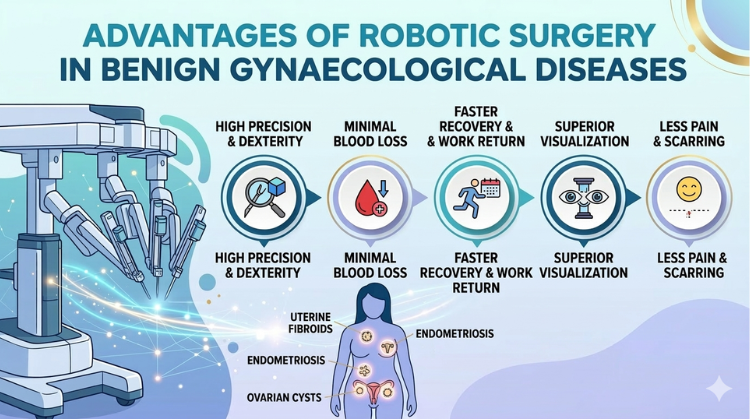
The most significant of the Advantages of Robotic Surgery in Benign Gynaecological Diseases is the surgical precision it offers. The robotic system provides surgeons with a 3D, high-definition view of the surgical site, magnified up to 10 times. Unlike traditional laparoscopy, robotic instruments have “wristed” capabilities, allowing for a greater range of motion than the human hand. This level of detail is crucial when performing complex tasks like suturing the uterus or removing deep-seated endometriosis.
2. Minimal Blood Loss and Reduced Trauma
When discussing the Advantages of Robotic Surgery in Benign Gynaecological Diseases, one cannot overlook the reduction in physical trauma. Robotic surgery requires only a few small incisions, typically less than 1 cm long. This results in significantly less blood loss during the procedure compared to open surgery. For patients, this means a lower risk of needing blood transfusions and a lower chance of post-operative infections.
3. Faster Recovery and Shorter Hospital Stays
In today’s fast-paced world, women want to return to their daily routines as quickly as possible. One of the practical Advantages of Robotic Surgery in Benign Gynaecological Diseases is the rapid recovery time. Most patients are discharged within 24 hours and can return to light activities within a week. This is a stark contrast to the 6–8 week recovery period required for traditional abdominal surgery.
4. Superior Visualization for Complex Cases
The robotic platform allows the surgeon to see the pelvic anatomy in vivid detail. This superior visualization is one of the core Advantages of Robotic Surgery in Benign Gynaecological Diseases, particularly for complex cases involving distorted anatomy or large fibroids. Surgeons can navigate around vital organs like the bladder and ureters with extreme confidence, ensuring that only the diseased tissue is addressed.
5. Reduced Post-Operative Pain
Since the incisions are smaller and the robotic arms exert less pressure on the abdominal wall than manual instruments, patients experience significantly less pain. This is one of the most celebrated Advantages of Robotic Surgery in Benign Gynaecological Diseases, as it reduces the need for heavy narcotic painkillers after surgery, leading to a clearer and more comfortable post-operative phase.
6. Better Cosmetic Outcomes
For many women, the aesthetic result is important. Among the Advantages of Robotic Surgery in Benign Gynaecological Diseases is the fact that the tiny incisions heal with minimal scarring. Over time, these marks often become virtually invisible, allowing patients to maintain their confidence.
7. High Success Rates in Fertility Preservation
For women hoping to conceive, preserving the integrity of the uterus and ovaries is paramount. The Advantages of Robotic Surgery in Benign Gynaecological Diseases include the ability to perform delicate “organ-sparing” surgeries. Whether it is a myomectomy or cystectomy, the precision of the robot ensures that healthy reproductive tissue is left intact.
Robotic Precision in Adenomyosis and Pelvic Floor Repair
Beyond the common removal of fibroids, the Advantages of Robotic Surgery in Benign Gynaecological Diseases extend to complex conditions like adenomyosis and pelvic organ prolapse. The robot’s high-definition 3D camera allows surgeons to differentiate between the diseased uterine muscle and healthy tissue with microscopic accuracy. This level of detail is a significant upgrade from traditional methods, ensuring that the structural integrity of the pelvic floor is restored with long-lasting results.
The “Clear Sight” Benefit: Navigating Endometriosis
Endometriosis is notorious for creating dense adhesions where organs “stick” together. One of the technical Advantages of Robotic Surgery in Benign Gynaecological Diseases is the ability to use fluorescence imaging (Firefly technology). This allows Dr. Preeti Rastogi to see the blood supply to the tissues in real-time, ensuring that every invisible lesion of endometriosis is excised while safeguarding the ureters and bowel.
Expert Care for Menstrual Health and Hormonal Balance
While surgery is a powerful tool, many women suffer from symptoms that require expert medical management. If you are dealing with painful cycles, heavy flow, or erratic periods, it is essential to consult the best gynaecologist for period problem in Gurgaon. Dr. Preeti Rastogi provides a holistic approach to menstrual health, ensuring that surgery is only recommended when absolutely necessary. Her clinic is a sanctuary for women seeking relief from PCOD, hormonal imbalances, and chronic pelvic distress.
Reduced Risk of Incisional Hernia and Internal Scarring
Traditional large-incision surgeries often carry a lifetime risk of incisional hernias or internal adhesions that can cause bowel obstructions later in life. Among the long-term Advantages of Robotic Surgery in Benign Gynaecological Diseases is the dramatic reduction in these risks. Smaller entry points and the “no-touch” precision of robotic arms mean the abdominal wall remains strong and internal organs are handled with extreme gentleness.
Conclusion: Why Choose Dr. Preeti Rastogi?
While the technology is advanced, the skill of the surgeon remains the most critical factor. Dr. Preeti Rastogi , combines her vast experience with these technological advancements to provide the best possible care. As the best gynaecologist in Gurgaon, she ensures that every patient understands the Advantages of Robotic Surgery in Benign Gynaecological Diseases and receives a personalized treatment plan tailored to their specific needs.
If you are suffering from a benign gynaecological condition, don’t let the fear of surgery hold you back. The Advantages of Robotic Surgery in Benign Gynaecological Diseases offer a path to health that is efficient, precise, and patient-friendly.
Gynaecologist in Gurgaon | Robotic Myomectomy | Fibroid Treatment Gurgaon | Endometriosis Surgeon | Heavy Period Relief | Irregular Menstruation Doctor | Minimally Invasive Gynaecology | Pelvic Pain Specialist | Ovarian Cyst Surgery | Robotic Hysterectomy Benefits | Dr. Preeti Rastogi Reviews | PCOD Management Gurgaon | Laparoscopic Surgeon Gurgaon | Uterine Health | Adenomyosis Treatment | Fertility Preserving Surgery | Best Gynae Clinic Gurgaon | Post-Surgery Recovery Tips | Women’s Wellness India | Da Vinci Surgery Gurgaon | Hormone Replacement Therapy | Pelvic Floor Reconstruction | Painless Period Solutions | Gynae Oncology Screening | Adolescent Gynaecology | Menopause Expert Gurgaon | Robotic Assisted Laparoscopy | Female Surgeon Gurgaon | Hospital for Robotic Surgery | Safe Fibroid Removal.
Frequently Asked Questions (FAQ)
- What are the main Advantages of Robotic Surgery in Benign Gynaecological Diseases compared to laparoscopy?
The main advantages include 3D high-definition visualization, 360-degree instrument rotation (mimicking a human wrist), and enhanced stability which eliminates hand tremors. This allows for more complex surgeries to be done minimally invasively.
- Who is the best gynaecologist for period problem in Gurgaon for non-surgical treatment?
Dr. Preeti Rastogi is widely recognized as the leading expert for menstrual disorders. She offers advanced diagnostics for heavy bleeding and irregular periods, focusing on medical management and lifestyle interventions before suggesting surgical options.
- Is robotic surgery safe for women planning a future pregnancy?
Yes. One of the key Advantages of Robotic Surgery in Benign Gynaecological Diseases is the ability to perform precise suturing during a myomectomy (fibroid removal). This results in a stronger uterine scar, which is critical for carrying a pregnancy to term.
- How soon can I return to work after robotic gynae surgery?
Most women return to desk jobs within 7 to 10 days. The minimal trauma to the abdominal muscles allows for a much faster return to productivity compared to the 6 weeks required for open surgery.
- Does robotic surgery cost more than traditional surgery?
While the initial cost may be higher due to the advanced technology, the overall “value” is higher when you consider shorter hospital stays, fewer complications, and a faster return to work.