Painful, Heavy Periods? Is Heavy Menstrual Bleeding a Sign of Endometriosis or Fibroids?
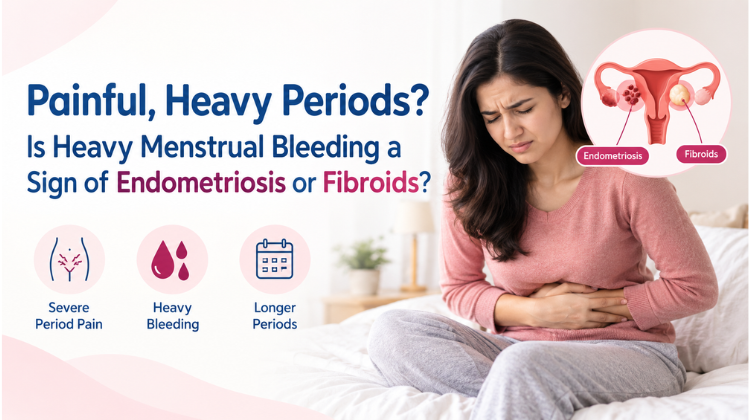
Unusually painful, heavy periods can disrupt your professional life, routine, and emotional well-being. If you find yourself changing a high-absorbency pad or tampon every hour, passing large blood clots, or experiencing intense pelvic pain that radiates to your lower back, you are not alone. Millions of women globally suffer through debilitating cycles without knowing the true underlying medical cause.
When searching for answers to your severe menstrual symptoms, the central question often arises: Is heavy menstrual bleeding a sign of endometriosis or fibroids? Both conditions are non-cancerous, incredibly common, and capable of causing severe pelvic discomfort alongside excessive bleeding. However, they represent distinctly different gynaecological disorders with different root causes, diagnostic pathways, and treatment solutions.
Understanding whether heavy menstrual bleeding a sign of endometriosis or fibroids applies to your situation is the critical first step toward regaining control over your body.
Understanding Menorrhagia: What Counts as Unusually Heavy Menstrual Bleeding?
Before evaluating whether heavy menstrual bleeding a sign of endometriosis or fibroids matches your symptoms, it is essential to define what medical professionals classify as abnormal uterine bleeding or menorrhagia.
A typical menstrual cycle lasts between 21 and 35 days, with bleeding lasting 4 to 7 days. During a normal period, a woman loses roughly 30 to 40 millilitres of blood in total. Clinically, menorrhagia is defined as losing more than 80 millilitres of blood per cycle or experiencing periods that extend beyond 7 days continuously.
+-------------------------------------------------------------------------+
|                  CLINICAL SIGNS OF ABNORMAL BLEEDING                    |
+-------------------------------------------------------------------------+
|  [>] Soaking through one or more pads/tampons every hour for consecutive hours
|  [>] Needing double sanitary protection to manage heavy flow             |
|  [>] Waking up during the night to change sanitary products             |
|  [>] Passing blood clots larger than the size of a quarter (2.5 cm)     |
|  [>] Menstrual bleeding lasting longer than 7 continuous days            |
|  [>] Unexplained fatigue, shortness of breath, or anemia from blood loss |
+-------------------------------------------------------------------------+
When you experience these red-flag symptoms, it is vital to investigate the root cause. Unchecked blood loss leads to chronic iron deficiency anemia, severe physical fatigue, and reduced quality of life.
Is Heavy Menstrual Bleeding a Sign of Endometriosis or Fibroids?
To answer whether heavy menstrual bleeding a sign of endometriosis or fibroids explains your symptoms, we must look at how each condition affects the female reproductive system.
                      +-----------------------------------+
                      |   PAINFUL, HEAVY PERIOD SYMPTOMS  |
                      +-----------------------------------+
                                        |
                 +----------------------+----------------------+
                 |                                             |
                 v                                             v
   +---------------------------+                 +---------------------------+
   |       ENDOMETRIOSIS       |                 |      UTERINE FIBROIDS     |
   +---------------------------+                 +---------------------------+
   | Tissue similar to lining  |                 | Non-cancerous muscular    |
   | grows OUTSIDE the uterus  |                 | tumors INSIDE/ON uterus   |
   | (Ovaries, pelvic wall)    |                 | (Submucosal, Intramural)  |
   +---------------------------+                 +---------------------------+
                 |                                             |
                 v                                             v
   +---------------------------+                 +---------------------------+
   | Primary Sign: Severe pain,|                 | Primary Sign: Heavy flow, |
   | chronic pelvic aches,     |                 | large clots, physical     |
   | pain during intercourse   |                 | pressure on pelvic organs |
   +---------------------------+                 +---------------------------+
While both conditions trigger severe pelvic pain and heavy periods, their physical mechanisms are entirely distinct:
-
Endometriosis occurs when tissue resembling the lining of the uterus (endometrium) grows outside the uterine cavity—frequently on the ovaries, fallopian tubes, outer uterine wall, bowel, or bladder.
-
Uterine Fibroids (leiomyomas) are benign muscular tumors that develop within or on the walls of the uterus itself, physically expanding the uterine surface area and distorting its blood vessels.
Knowing how these pathologies differ helps clarify if your heavy menstrual bleeding a sign of endometriosis or fibroids.
What Is Endometriosis? Causes, Mechanism, and Symptoms
Endometriosis is a complex inflammatory disease affecting an estimated 10% of women of reproductive age worldwide.
How Endometriosis Causes Pain and Bleeding
In a healthy menstrual cycle, the lining inside your uterus thickens under hormonal influence and sheds when pregnancy does not occur. In a woman with endometriosis, tissue identical to the endometrial lining grows in abnormal areas outside the uterus.
This displaced tissue reacts to hormonal fluctuations in the exact same way as the lining inside the uterus: it thickens, breaks down, and bleeds with every monthly cycle. However, because this blood has no exit path out of the body, it becomes trapped in the pelvic cavity. Over time, trapped blood causes severe tissue inflammation, internal scarring, chronic lesions, and painful pelvic adhesions that glue organs together.
Signature Symptoms of Endometriosis
While asking yourself if heavy menstrual bleeding a sign of endometriosis or fibroids, look for these telltale signs of endometriosis:
-
Debilitating Dysmenorrhea: Painful menstrual cramps that start days before your period begins and extend several days into your cycle.
-
Chronic Lower Back & Pelvic Pain: Continuous, aching pelvic discomfort that persists outside of your period.
-
Deep Dyspareunia: Pain during or after sexual intercourse caused by deep pelvic inflammation.
-
Painful Bowel Movements or Urination: Discomfort during urination or bowel movements, particularly during your period.
-
Infertility and Conception Challenges: Endometriosis is a leading cause of female infertility due to scarring in the fallopian tubes and impaired egg quality.
-
Gastrointestinal Symptoms: Bloating (often called “endo belly”), nausea, and diarrhea during menstrual cycles.
What Are Uterine Fibroids? Causes, Types, and Symptoms
Uterine fibroids are non-cancerous growths composed of smooth muscle tissue and fibrous connective matrix. Up to 70-80% of women develop fibroids by the age of 50, though not all experience noticeable symptoms.
How Fibroids Cause Severe Menstrual Flow
Fibroids alter the structure and function of the uterus. They increase the surface area of the endometrial lining, preventing the uterine muscle (myometrium) from contracting efficiently to stop menstrual bleeding. Furthermore, fibroids stimulate the growth of abnormal blood vessels inside the uterine wall.
       Types of Fibroids & How They Impact Menstrual Bleeding
       =======================================================

       Submucosal Fibroid       Intramural Fibroid       Subserosal Fibroid
       (Grows into cavity)     (Grows in uterine wall)   (Grows on outer wall)
             ||                       ||                        ||
             \/                       \/                        \/
       [Heavy Flow & Clots]     [Pain & Heavy Bleeding]   [Bulk & Pressure]
-
Submucosal Fibroids: Grow just beneath the inner lining and project directly into the uterine cavity. Even tiny submucosal fibroids trigger catastrophic heavy menstrual bleeding and large blood clots.
-
Intramural Fibroids: Embed within the muscular uterine wall. As they expand, they stretch the uterus and interfere with muscular contractions, driving up period volume and duration.
-
Subserosal Fibroids: Grow on the outer wall of the uterus. While less likely to cause heavy bleeding, they exert heavy bulk pressure on nearby organs like the bladder and rectum.
Signature Symptoms of Uterine Fibroids
When evaluating if heavy menstrual bleeding a sign of endometriosis or fibroids, keep an eye out for these fibroid-specific symptoms:
-
Excessive, Prolonged Flow: Periods lasting well beyond 7 days, requiring frequent pad or tampon changes.
-
Large Blood Clots: Frequent passage of dark red or gelatinous blood clots during menstruation.
-
Pelvic Pressure and Bulk Feeling: A sensation of fullness or heaviness in the lower abdomen, sometimes resembling pregnancy.
-
Frequent Urination: Large fibroids pressing forward on the urinary bladder reduce its storage capacity.
-
Constipation and Rectal Pressure: Fibroids growing toward the back press on the rectum, making bowel movements difficult.
-
Leg and Back Pain: Nerve compression caused by large fibroids radiating pain down the lower back and legs.
Side-by-Side Comparison: Endometriosis vs. Fibroids
Evaluating whether heavy menstrual bleeding a sign of endometriosis or fibroids requires comparing their core characteristics:
| Feature / Symptom | Endometriosis | Uterine Fibroids |
| Primary Disease Location | Outside the uterus (ovaries, pelvic walls, peritoneum) | Inside or on the uterine wall (myometrium) |
| Nature of Condition | Inflammatory, hormonal tissue growth | Benign muscular tumors |
| Main Symptom Impact | Severe pelvic pain and dysmenorrhea | Heavy menstrual volume and pelvic pressure |
| Bleeding Pattern | Moderately heavy, irregular spotting before periods | Extremely heavy flow, prolonged days, large clots |
| Pain Characteristics | Sharp, burning, deep pelvic and back pain | Dull ache, heaviness, labor-like cramping |
| Pain During Intercourse | Very common (deep dyspareunia) | Less common (depends on size and location) |
| Bladder / Bowel Pressure | Painful digestion/urination during periods | Physical urge to urinate, chronic constipation |
| Primary Ultrasound Finding | Hard to see (except ovarian endometriomas/chocolate cysts) | Easily visible round muscular masses |
| Impact on Uterine Size | Normal size (unless adenomyosis coexists) | Enlarged, asymmetrical, or bulky uterus |
Can You Have Both Endometriosis and Fibroids Simultaneously?
Yes. It is entirely possible—and relatively common—to suffer from both conditions at the same time. Medical research demonstrates that because both endometriosis and uterine fibroids are estrogen-dominant conditions, they frequently co-exist in reproductive-aged women.
When both conditions are present, patients suffer an overlapping combination of symptoms: the severe inflammatory pain and pain during intercourse associated with endometriosis, combined with the heavy bleeding, large clots, and pelvic bulk pressure caused by fibroids.
If your periods are both exceptionally heavy and agonizingly painful, assuming that heavy menstrual bleeding a sign of endometriosis or fibroids is an either-or choice can delay full treatment. A comprehensive gynaecological evaluation is critical to uncover dual diagnoses.
Diagnostic Methods: How Gynecologists Uncover the Cause
If you suspect heavy menstrual bleeding a sign of endometriosis or fibroids, self-diagnosis is impossible. Gynecologists utilize an array of diagnostic modalities to pinpoint the precise structural or inflammatory cause of your symptoms.
+--------------------------------------------------------------------------+
|                  GYNAECOLOGICAL DIAGNOSTIC STEP-BY-STEP                   |
+--------------------------------------------------------------------------+
|  1. Detailed Clinical History & Symptom Mapping                         |
|  2. Bimanual Pelvic Examination (Checks uterine size & mobility)         |
|  3. Pelvic & Transvaginal Ultrasound (Detects fibroids & ovarian cysts) |
|  4. Pelvic MRI (High-resolution imaging for deep infiltrating endo)     |
|  5. Diagnostic Hysteroscopy or Laparoscopy (Gold standard visual check) |
+--------------------------------------------------------------------------+
1. Medical History and Physical Examination
Your doctor will review your menstrual cycle history, pain intensity, flow volume, and family history. A pelvic exam allows the specialist to feel for an enlarged, irregular uterus (suggestive of fibroids) or localized tenderness behind the uterus (suggestive of endometriosis).
2. Pelvic and Transvaginal Ultrasound
Transvaginal ultrasound is the frontline imaging technique for diagnosing uterine fibroids. The high-frequency sound waves easily render the size, location, and number of fibroid tumors. Ultrasound can also detect endometriomas (fluid-filled “chocolate cysts” on the ovaries caused by endometriosis), though it often misses superficial microscopic endometriosis implants across the pelvic lining.
3. Magnetic Resonance Imaging (MRI)
A pelvic MRI provides detailed multi-planar images of pelvic soft tissues. It is especially helpful for mapping complex or deep infiltrating endometriosis (DIE) lesions and differentiates fibroids from adenomyosis before surgical planning.
4. Diagnostic Laparoscopy and Hysteroscopy
Laparoscopy remains the definitive gold standard for diagnosing endometriosis. Through a microscopic keyhole incision in the abdomen, a gynecological surgeon visually inspects the entire pelvic cavity, identifies lesions, and collects tissue biopsies for lab confirmation. Hysteroscopy involves inserting a thin camera through the cervix to visually inspect the uterine cavity for submucosal fibroids or polyps.
Modern Treatment Approaches for Endometriosis and Fibroids
Once your specialist determines whether heavy menstrual bleeding a sign of endometriosis or fibroids applies to your situation, they will design a personalized medical or surgical plan based on your age, symptom severity, and reproductive goals.
                    +------------------------------------+
                    |    TREATMENT PATHWAYS OVERVIEW     |
                    +------------------------------------+
                                      |
         +----------------------------+----------------------------+
         |                                                         |
         v                                                         v
  +-------------------------------+                         +-------------------------------+
  |   MEDICAL MANAGEMENT          |                         |   SURGICAL INTERVENTIONS      |
  +-------------------------------+                         +-------------------------------+
  | - NSAIDs & Pain Relievers     |                         | - Laparoscopic Excision       |
  | - Combined Oral Contraceptive |                         | - Laparoscopic Myomectomy     |
  | - Progestin-Releasing IUD     |                         | - Uterine Artery Embolization |
  | - GnRH Agonists / Antagonists |                         | - Advanced Robotic Surgery    |
  +-------------------------------+                         +-------------------------------+
Medical Treatments for Symptom Relief
-
Non-Steroidal Anti-Inflammatory Drugs (NSAIDs): Medications like mefenamic acid or ibuprofen suppress prostaglandin production, reducing pain levels and curbing flow volume.
-
Hormonal Contraceptives: Birth control pills, patches, or vaginal rings stabilize hormonal shifts, thin out the endometrial lining, and lighten heavy period flow.
-
Progestin-Releasing Intrauterine System (Levonorgestrel IUD): Placed inside the uterine cavity, this IUD releases low local levels of progestin, drastically reducing heavy menstrual flow and relieving pain from both fibroids and early-stage endometriosis.
-
GnRH Agonists and Antagonists: These medications temporarily suppress ovarian hormone production, inducing a controlled reversible menopause state to shrink fibroid tumors and starve active endometriosis lesions.
Surgical Interventions
When conservative medical therapy is insufficient, advanced surgical solutions provide definitive relief:
-
Laparoscopic Excision of Endometriosis: Minimally invasive keyhole surgery to cut out endometriosis implants and release painful pelvic adhesions while preserving healthy surrounding tissue and fertility.
-
Myomectomy: Surgical removal of fibroid tumors while leaving the healthy uterus intact. This is the preferred choice for women who wish to conceive in the future.
-
Uterine Artery Embolization (UAE): A minimally invasive procedure performed by an interventional radiologist to block blood supply to uterine fibroids, causing them to shrink dramatically over time.
-
Hysterectomy: Complete surgical removal of the uterus. This is a definitive solution for women with severe fibroids or advanced adenomyosis who have completed their family-building years.
Lifestyle and At-Home Strategies to Support Menstrual Health
In addition to formal medical interventions, integrating evidence-based lifestyle changes helps manage painful, heavy cycles:
-
Anti-Inflammatory Nutrition: Base your diet on whole foods rich in antioxidants, omega-3 fatty acids, leafy greens, and cruciferous vegetables (like broccoli and kale), which support liver estrogen metabolism and reduce system-wide inflammation.
-
Targeted Iron Supplementation: If heavy periods have dropped your ferritin levels, work with your doctor to select gentle, non-constipating iron supplements to combat fatigue and anemia.
-
Targeted Exercise: Low-impact movements such as yoga, swimming, and walking stimulate pelvic blood circulation and trigger natural endorphin release to ease cramping.
-
Heat Therapy: Applying a heating pad or warm hot-water bottle across your lower abdomen Relaxes contracting uterine muscles and boosts local blood flow. Painful, Heavy Periods? Is Heavy Menstrual Bleeding a Sign of Endometriosis or Fibroids?
About Dr. Preeti Rastogi
-
Current Position: Director and Head of Department in Obstetrics and Gynaecology at Medanta – The Medicity Hospital, Gurgaon.
-
Overall Clinical Experience: Over 25 years of extensive practice in obstetrics and gynaecology across renowned tertiary care centers in the United Kingdom and India.
-
Educational Qualifications: Holds an MBBS from G.R. Medical College (Gwalior), DNB in Obstetrics and Gynaecology from St. Stephen’s Hospital (Delhi), and MRCOG from the Royal College of Obstetricians and Gynaecologists, UK.
-
UK NHS Training: Practiced in the United Kingdom for more than 10 years, serving as a consultant at prestigious NHS centers including Singleton Hospital in Swansea and the University Hospital of Wales in Cardiff.
-
Robotic Surgical Pioneer: She is a certified Da Vinci Xi Robotic surgeon, utilizing precision robotic technology for complex gynaecological operations like robotic myomectomy and robotic hysterectomy.
-
Minimal Access Surgical Expertise: Specialized in keyhole laparoscopic surgeries for deep infiltrating endometriosis excision, ovarian cystectomy, and laparoscopic myomectomy.
-
Professional Memberships: Member of the Royal College of Obstetricians and Gynaecologists (RCOG, UK), American College of Obstetricians and Gynecologists (ACOG), and the British Society of Urogynaecology.
-
High-Risk Obstetrics & Safe Motherhood Advocate: Expert in high-risk pregnancy management while strongly promoting natural vaginal birth and evidence-based safe motherhood practices. Painful, Heavy Periods? Is Heavy Menstrual Bleeding a Sign of Endometriosis or Fibroids?
#Painful Periods #Heavy Menstrual Bleeding #Endometriosis Symptoms #Uterine Fibroids #Menorrhagia #Severe Period Cramps #Pelvic Pain Relief #Fibroids Vs Endometriosis #Endometriosis Diagnosis #Fibroid Removal #Laparoscopic Myomectomy #Robotic Gynecological Surgery #Best Gynecologist In Gurgaon #Dr Preeti Rastogi #Medanta Gurgaon #Gynecologist In Gurgaon #Abnormal Uterine Bleeding #Period Blood Clots #Endometriosis Excision #Submucosal Fibroids #Intramural Fibroids #Adenomyosis And Fibroids #Women Health Care #Pelvic Ultrasound #Heavy Period Causes #Hormonal Imbalance #Anemia From Heavy Periods #Minimally Invasive Gynae Surgery #Da Vinci Robotic Surgery #Infertility And Endometriosis #Dysmenorrhea Treatment #Progest in IUD For Heavy Flow
FAQ
Q1: Is heavy menstrual bleeding a sign of endometriosis or fibroids?
Answer: Yes, heavy menstrual bleeding can be a primary symptom of both endometriosis and uterine fibroids, but it occurs through different biological mechanisms. Uterine fibroids cause excessive bleeding by enlarging the inner uterine surface area, disrupting muscular contractions, and creating abnormal blood vessels within the uterine wall. Endometriosis primarily causes intense, burning pelvic pain and inflammation due to tissue growing outside the uterus, but it can also alter overall hormonal balance and pelvic circulation, leading to heavy or irregular bleeding. A comprehensive gynecological evaluation involving pelvic ultrasound is necessary to determine the exact cause. Painful, Heavy Periods? Is Heavy Menstrual Bleeding a Sign of Endometriosis or Fibroids?
Q2: What are the main differences between endometriosis pain and fibroid pain?
Answer: Endometriosis pain is predominantly inflammatory, sharp, or burning in nature. It frequently manifests as severe dysmenorrhea (period cramps that start days before bleeding begins), chronic pelvic pain outside periods, and deep pain during sexual intercourse or bowel movements. In contrast, fibroid pain is typically characterized by a dull, aching sensation, a feeling of lower abdominal fullness or heavy pressure, and localized discomfort caused by the fibroid mass physically pressing against surrounding organs like the bladder or rectum. Painful, Heavy Periods? Is Heavy Menstrual Bleeding a Sign of Endometriosis or Fibroids?
Q3: Why is Dr. Preeti Rastogi considered the best gynecologist in Gurgaon for managing heavy periods, endometriosis, and fibroids?
Answer: Dr. Preeti Rastogi is widely recognized as a leading gynaecologist and obstetrician in Gurgaon due to her extensive 25+ years of clinical experience, international medical training in the UK, and expertise in advanced minimal access surgery. Serving as Director and Head of Department in Obstetrics and Gynaecology at Medanta – The Medicity, Gurgaon, she specializes in advanced laparoscopic and Da Vinci Xi robotic surgeries for complex endometriosis excision and fibroid removal (myomectomy). Her patient-centric approach prioritizes organ preservation, safe recovery, and evidence-based personalized care. Painful, Heavy Periods? Is Heavy Menstrual Bleeding a Sign of Endometriosis or Fibroids?
Q4: How does Dr. Preeti Rastogi diagnose whether heavy bleeding is caused by fibroids or endometriosis at Medanta Gurgaon?
Answer: Dr. Preeti Rastogi utilizes a diagnostic protocol at Medanta – The Medicity, Gurgaon. The process begins with a detailed clinical symptom evaluation and pelvic examination, followed by high-resolution transvaginal pelvic ultrasonography to detect fibroid size, number, and location, as well as ovarian endometriomas. For deep or complex cases, she utilizes advanced pelvic MRI imaging or diagnostic keyhole laparoscopy/hysteroscopy. This multi-layered approach ensures precise identification of underlying uterine and pelvic pathologies before formulating a tailored treatment plan. Painful, Heavy Periods? Is Heavy Menstrual Bleeding a Sign of Endometriosis or Fibroids?
Q5: What advanced non-surgical and surgical treatments does Dr. Preeti Rastogi offer for fibroids and endometriosis in Gurgaon?
Answer: Dr. Preeti Rastogi offers a spectrum of treatments tailored to every stage of life and fertility goals. Medical management options include advanced hormonal therapies, progestin-releasing IUD placements, and targeted non-hormonal anti-inflammatory regimens. For patients requiring surgical intervention, Dr. Rastogi specializes in ultra-precise laparoscopic myomectomy (fibroid removal), laparoscopic excision of endometriosis, and Da Vinci Xi robotic-assisted keyhole surgeries. These minimally invasive options ensure minimal blood loss, smaller cosmetic scars, reduced post-operative pain, and faster recovery times. Painful, Heavy Periods? Is Heavy Menstrual Bleeding a Sign of Endometriosis or Fibroids?