Preeclampsia vs. Normal Pregnancy Swelling: How to Tell the Difference
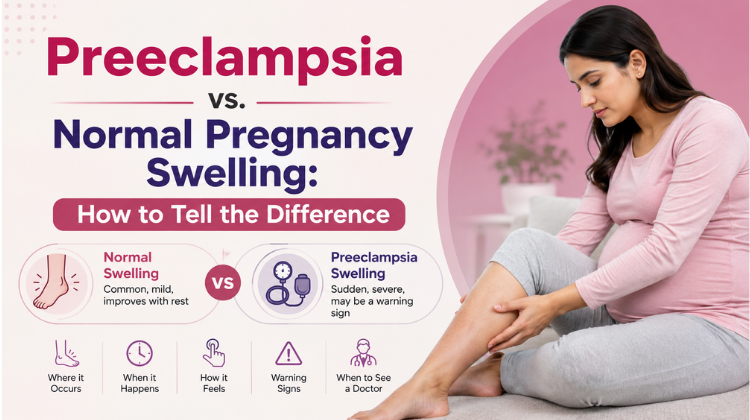
Pregnancy brings extraordinary changes to a woman’s body. Among the most noticeable physical shifts is fluid retention. However, distinguishing between Preeclampsia vs. Normal Pregnancy Swelling is crucial for ensuring the health and safety of both mother and baby.
While mild puffiness in the feet and ankles is standard, sudden, severe, or persistent swelling can indicate a serious cardiovascular condition known as preeclampsia. Understanding Preeclampsia vs. Normal Pregnancy Swelling empowers expectant mothers to recognize warning signs early, seek timely medical intervention, and navigate high-risk pregnancy management safely.
What Is Normal Pregnancy Swelling (Physiological Edema)?
During a healthy pregnancy, total body water increases significantly to support fetal development, expand maternal plasma volume, and nourish the placenta. This extra fluid, combined with hormonal changes and pressure from the growing uterus, often leads to physiological edema.
Characteristics of Normal Swelling:
-
Location: Concentrated primarily in the feet, ankles, lower legs, and occasionally the hands.
-
Timing: Tends to worsen toward the end of the day or after prolonged standing.
-
Symmetry: Affects both sides of the body equally.
-
Relief: Diminishes overnight after elevated foot rest, hydration, or lying on the left side.
-
Onset: Develops gradually over weeks, typically becoming noticeable during the late second or third trimester.
Normal swelling does not involve sudden weight spikes, facial puffiness, or neurological symptoms like severe headaches and vision changes.
What Is Preeclampsia?
Preeclampsia is a multisystem pregnancy disorder characterized by high blood pressure (hypertension) and sign of damage to organ systems—most commonly the kidneys and liver. It usually develops after 20 weeks of gestation in women whose blood pressure was previously within normal limits.
Pathophysiology and Impact:
Preeclampsia originates in the placenta, where blood vessels fail to develop properly. This restricts blood supply, releasing proteins into the mother’s bloodstream that trigger systemic inflammation, vessel narrowing, and organ distress. Left unmanaged, preeclampsia can progress to eclampsia (seizures), placental abruption, fetal growth restriction, or stroke.
Recognizing the key distinctions in Preeclampsia vs. Normal Pregnancy Swelling is essential because pathologically high blood pressure forces fluid out of blood vessels into body tissues rapidly, causing generalized edema.
Key Differences: Preeclampsia vs. Normal Pregnancy Swelling
Evaluating Preeclampsia vs. Normal Pregnancy Swelling requires looking beyond foot size to observe where, how quickly, and with what accompanying symptoms the swelling occurs.
| Feature | Normal Pregnancy Swelling | Preeclampsia-Related Swelling |
| Primary Affected Areas | Feet, ankles, lower legs | Face, eyelids, hands, upper body, abdominal wall |
| Speed of Onset | Gradual build-up over several weeks | Sudden, rapid onset within hours or days |
| Pitting Depth | Mild indentations that bounce back quickly | Deep pitting edema that lingers when pressed |
| Positional Relief | Decreases after rest and leg elevation | Persists regardless of rest, fluid intake, or position |
| Weight Gain Pattern | Standard steady pregnancy weight gain | Sudden weight jump (>2-5 lbs in a single week) |
| Associated Symptoms | Mild fatigue, heavy leg sensation | High BP, severe headaches, visual disturbances |
Red Flag Symptoms Accompanying Preeclampsia
Understanding Preeclampsia vs. Normal Pregnancy Swelling means paying close attention to systemic indicators. If swelling occurs alongside any of the following symptoms, seek urgent emergency medical care:
                  +-----------------------------------------+
                  |    CRITICAL PREECLAMPSIA RED FLAGS      |
                  +-----------------------------------------+
                                       |
       +-------------------------------+-------------------------------+
       |                               |                               |
[ NEUROLOGICAL ]               [ CARDIOVASCULAR ]              [ VISUAL / ORGAN ]
  • Persistent severe headache   • Blood pressure ≥140/90 mmHg   • Blurred vision / light spots
  • Confusion or dizziness       • Rapid chest tightness         • Upper right abdominal pain
  • Hyperreflexia                • Sudden rapid weight gain      • Proteinuria (protein in urine)
-
Persistent, Throbbing Headaches: Headaches that do not respond to acetaminophen or hydration.
-
Visual Disturbances: Blurry vision, seeing spots or flashing lights, photophobia (light sensitivity), or temporary loss of vision.
-
Upper Abdominal Pain: Sharp or dull pain under the right rib cage (epigastric area), signaling liver inflammation.
-
Shortness of Breath: Caused by fluid retention in the lungs (pulmonary edema).
-
Proteinuria and Decreased Urination: Foamy urine or infrequent urination, signaling reduced kidney filtration.
Causes and Risk Factors for Preeclampsia
Comparing Preeclampsia vs. Normal Pregnancy Swelling highlights the underlying vascular dysfunction of preeclampsia. While normal swelling stems from gravity and volume expansion, pathological swelling relates directly to endothelial damage.
Primary Risk Factors:
-
First-Time Pregnancy (Nulliparity): Higher baseline statistical incidence.
-
Chronic Medical Conditions: Pre-existing high blood pressure, type 1 or type 2 diabetes, kidney disease, or autoimmune disorders (such as lupus).
-
Multiple Gestations: Carrying twins, triplets, or higher-order multiples.
-
History of Preeclampsia: Prior experience in a previous pregnancy or a maternal family history (mother/sister).
-
Advanced Maternal Age: Pregnancies occurring at age 35 or older.
-
IVF and Assisted Reproductive Technology: Increased likelihood due to underlying hormonal or placental factors.
Diagnostic Tests: How Healthcare Providers Evaluate Swelling
When evaluating Preeclampsia vs. Normal Pregnancy Swelling, obstetricians use clinical evaluations to confirm or rule out hypertension disorders:
+-----------------------------------------------------------------------------------+
|                           DIAGNOSTIC EVALUATION PROTOCOL                           |
+-----------------------------------------------------------------------------------+
                                          |
   +-----------------------+--------------+--------------+----------------------+
   |                       |                             |                      |
[ BLOOD PRESSURE ]    [ URINALYSIS ]             [ BLOOD WORK ]         [ FETAL MONITORING ]
 • Manual cuff checks  • Dipstick for protein     • Platelet count       • Ultrasound scan
 • Monitoring ≥140/90  • 24-hr urine protein      • Liver enzymes (ALT)  • Non-stress test (NST)
                       • Protein-to-creatinine    • Serum creatinine     • Umbilical artery Doppler
When to Contact Your Gynecologist Immediately
Do not ignore changes in fluid balance. Contact your obstetric care provider right away if you observe:
-
Sudden facial puffiness, especially around the eyes or lips.
-
Rings suddenly feeling tight on fingers within 24 hours.
-
Swelling that does not diminish after a full night’s sleep.
-
Leg swelling accompanied by unilateral pain, redness, or warmth (possible Deep Vein Thrombosis).
-
Any combination of high blood pressure readings and systemic headaches.
Understanding Preeclampsia vs. Normal Pregnancy Swelling ensures that subtle health warnings prompt quick medical evaluation.
Management and Prevention Strategies
While preeclampsia cannot always be prevented, proactive care lowers risks significantly:
-
Low-Dose Aspirin Therapy: High-risk mothers may be prescribed low-dose aspirin starting after 12 weeks of gestation.
-
Frequent Prenatal Screenings: Regular monitoring of blood pressure and urine throughout the second and third trimesters.
-
Dietary Sodium and Fluid Balance: Maintain adequate hydration and follow a balanced diet rich in calcium, potassium, and magnesium.
-
Rest and Side-Lying Positions: Rest on your left side to maximize uterine blood flow and renal clearance.
Facts About Dr. Preeti Rastogi
-
Current Role: Senior Director & Head of Department (HOD), Obstetrics and Gynaecology at Medanta – The Medicity, Gurgaon.
-
Total Clinical Experience: Over 30 years of clinical practice in the UK and India.
-
International Experience: Spent over 10 years working in NHS hospitals in the United Kingdom, including Singleton Hospital (Swansea) and the University Hospital of Wales (Cardiff).
-
Educational Qualifications: MBBS (G.R. Medical College, Gwalior), DNB in Obstetrics & Gynaecology (National Board of Examinations, India), and MRCOG (Royal College of Obstetricians and Gynaecologists, London, UK).
-
Surgical Expertise: Certified Da Vinci Xi Robotic Surgeon, specializing in advanced minimally invasive, laparoscopic, and hysteroscopic gynecological surgeries.
-
Clinical Specializations: High-risk obstetrics (preeclampsia, gestational diabetes, multiple pregnancies), maternal-fetal medicine, urogynaecology, pelvic organ prolapse, and natural vaginal birth advocacy.
#Preeclampsia Swelling #Normal Pregnancy Swelling #Pregnancy Edema #High Risk Pregnancy #High Blood Pressure Pregnancy #Gestational Hypertension #Preeclampsia Symptoms #Pregnancy Fluid Retention #Pre eclampsia Warning Signs #Facial Swelling Pregnancy #Sudden Swelling Pregnancy #Pitting Edema Pregnancy #Obstetric Care #Maternal Fetal Medicine #Best Gynecologist In Gurgaon #Dr Preeti Rastogi #Medanta Gurgaon Gynecology #Protein In Urine Pregnancy #Pregnancy Complications #Healthy Pregnancy Tips #Third Trimester Swelling #Pregnancy Care Gurgaon #Hypertension In Pregnancy #Subtle Preeclampsia Signs #High Risk Obstetrician #Pre clampsia Risk Factors #Pregnancy Safety #Blood Pressure Monitoring Pregnancy #Pre-eclampsia Diagnosis #Swollen Feet Pregnancy
FAQ
Q1: How can I tell the difference between preeclampsia vs. normal pregnancy swelling at home?
Answer: Normal swelling typically affects only the feet, ankles, and calves, worsening by evening and improving with rest or leg elevation. Swelling caused by preeclampsia appears suddenly, affects the face, eyes, and hands, persists after rest, and is often accompanied by high blood pressure, severe headaches, visual changes, or upper right abdominal pain.
Q2: What causes preeclampsia, and can normal swelling turn into preeclampsia?
Answer: Normal swelling does not transform into preeclampsia. Normal swelling results from blood volume expansion and fluid accumulation, while preeclampsia stems from abnormal placental vessel development causing systemic high blood pressure and organ distress. However, sudden preeclampsia can manifest initially as rapid, severe body swelling.
Q3: When should I seek emergency medical care for swelling during pregnancy?
Answer: Seek immediate emergency care if swelling develops suddenly in your face or hands, if you gain more than 2-3 pounds in a single week, or if swelling is accompanied by a persistent severe headache, blurred vision, flashing lights, upper abdominal pain, shortness of breath, or a blood pressure reading of 140/90 mmHg or higher.
Q4: Why is Dr. Preeti Rastogi considered the best gynecologist in Gurgaon for high-risk pregnancies like preeclampsia?
Answer: Dr. Preeti Rastogi is widely regarded as the best gynecologist in Gurgaon due to her 30+ years of clinical experience across the UK and India. As Senior Director & HOD of Obstetrics and Gynaecology at Medanta – The Medicity, Gurgaon, she specializes in high-risk obstetrics, gestational hypertension, and preeclampsia management. Her international training at Singleton Hospital and the University Hospital of Wales, UK, alongside her MRCOG certification, ensures evidence-based, patient-centered care for maternal-fetal wellness.
Q5: What diagnostic services does Dr. Preeti Rastogi offer for managing preeclampsia vs. normal pregnancy swelling in Gurgaon?
Answer: Dr. Preeti Rastogi provides comprehensive high-risk obstetric evaluations at Medanta – The Medicity, Gurgaon. Her protocols include automated blood pressure monitoring, 24-hour urine protein profiling, fetal non-stress testing (NST), Doppler ultrasound for placental blood flow, and targeted biochemical lab screenings to detect liver or kidney distress early.