Fibroids vs. Ovarian Cysts: How to Tell the Difference
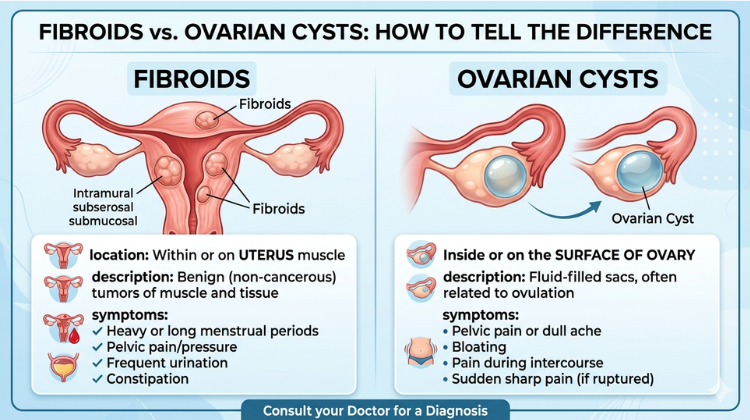
Pelvic pain, bloating, and menstrual irregularities are common concerns that lead many women to seek medical advice. However, determining the root cause of these symptoms can be confusing, as two very different conditions—uterine fibroids and ovarian cysts—often present with overlapping signs. Understanding Fibroids vs. Ovarian Cysts: How to Tell the Difference is crucial for receiving the correct treatment and regaining your health.
If you are experiencing persistent pelvic discomfort, consulting an expert is the first step toward clarity. Dr. Preeti Rastogi, widely recognized as the best gynaecologist in Gurgaon, specializes in diagnosing and treating these complex gynecological issues with precision and care.
What are Uterine Fibroids?
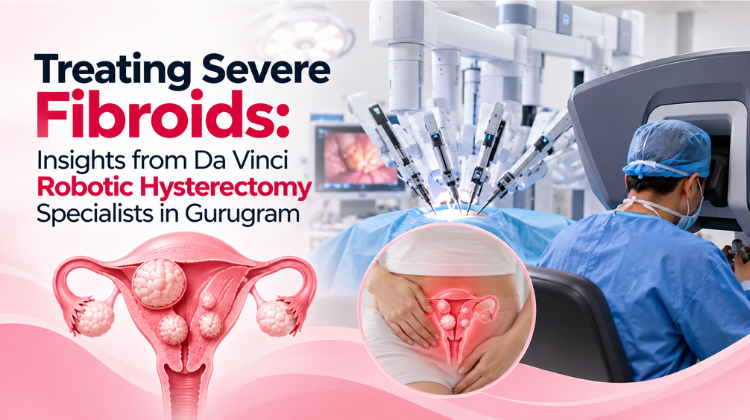
Uterine fibroids are non-cancerous growths that develop within or on the muscular walls of the uterus. They are composed of dense, fibrous tissue and vary in size from tiny seedlings to large masses that can distort the shape of the womb. When discussing Fibroids vs. Ovarian Cysts: How to Tell the Difference, it is important to note that fibroids are localized to the uterus and are heavily influenced by estrogen levels. Also Read: What is fibroid – Symptoms, Causes and Treatment in Gurgaon
What are Ovarian Cysts?
Ovarian cysts, on the other hand, are fluid-filled sacs that develop on or inside the ovaries. Most women develop at least one cyst during their reproductive years, often as a natural part of the menstrual cycle (functional cysts). While most are harmless and disappear on their own, some can become large, rupture, or cause “torsion” (twisting of the ovary), leading to acute pain.
Fibroids vs. Ovarian Cysts: How to Tell the Difference via Symptoms
The most effective way for a patient to begin identifying Fibroids vs. Ovarian Cysts: How to Tell the Difference is by tracking the specific nature of their symptoms.
1. Menstrual Changes: Fibroids are notorious for causing heavy, prolonged, and painful periods. Because they grow in the uterine muscle, they interfere with the lining’s ability to shed normally. Ovarian cysts rarely cause heavy bleeding; instead, they are more likely to cause irregular cycles or spotting between periods.
2. Pain Patterns: When analyzing Fibroids vs. Ovarian Cysts: How to Tell the Difference in terms of pain, fibroids usually cause a “heavy” or “dull” aching sensation in the pelvis or lower back. Ovarian cysts often cause sharp, localized pain on one side of the lower abdomen (depending on which ovary has the cyst). If a cyst ruptures, the pain can be sudden and severe.
3. Abdominal Appearance: Large fibroids can cause the abdomen to protrude, making a woman look pregnant. While a very large ovarian cyst can cause bloating, the “bulk” feeling is generally more centralized and firm with fibroids.
Diagnostic Tools: The Path to Certainty
You cannot determine Fibroids vs. Ovarian Cysts: How to Tell the Difference through physical sensation alone. A clinical evaluation is essential. Dr. Preeti Rastogi, the best gynaecologist in Gurgaon, utilizes advanced diagnostic imaging to provide an accurate roadmap for recovery.
-
Ultrasound: This is the primary tool used to distinguish between the two. An ultrasound can clearly show if a mass is a solid growth (fibroid) or a fluid-filled sac (cyst).
-
MRI: In complex cases involving multiple growths, an MRI provides a detailed “map” of the pelvic region.
-
Blood Tests: CA-125 tests may be used if an ovarian cyst appears suspicious, though this is not a definitive cancer test.
Understanding Fibroids vs. Ovarian Cysts: How to Tell the Difference ensures that you don’t undergo unnecessary treatments for a condition you don’t have.
Treatment Options and Management
Once you understand Fibroids vs. Ovarian Cysts: How to Tell the Difference, treatment can be tailored.
-
For Fibroids: Treatment may include hormonal medications, Laparoscopic Myomectomy (surgical removal), or Uterine Artery Embolization.
-
For Ovarian Cysts: Many functional cysts require “watchful waiting.” However, if a cyst is large, complex, or causing pain, a Laparoscopic Cystectomy may be performed.
Navigating these choices requires the expertise of a seasoned professional. By visiting the best gynaecologist in Gurgaon, you ensure that your reproductive health is in safe hands, whether you are dealing with uterine issues or ovarian concerns.
Anatomical Origins and Pathophysiology: Matrix vs. Fluid
Understanding the distinction between uterine fibroids and ovarian cysts begins with their anatomical origin and structural tissue composition. While both conditions represent non-cancerous pelvic masses, they develop in different organs and consist of entirely different tissue types.
+---------------------------------------------------------------------------------------------------+
|                                 ANATOMICAL AND STRUCTURAL COMPARISON                              |
+----------------------+------------------------------------+---------------------------------------+
| Parameter            | Uterine Fibroids (Leiomyomas)      | Ovarian Cysts                         |
+----------------------+------------------------------------+---------------------------------------+
| Organ of Origin      | Uterus (Myometrium / Smooth Muscle)| Ovaries (Left or Right Annexa)        |
+----------------------+------------------------------------+---------------------------------------+
| Physical Structure   | Solid, dense, fibrous muscle growth| Fluid-filled, semi-solid, or vascular |
|                      |                                    | sac                                   |
+----------------------+------------------------------------+---------------------------------------+
| Underlying Mechanism | Monoclonal expansion of smooth     | Ovulatory dysfunction, fluid buildup, |
|                      | muscle cells triggered by estrogen | or ectopic endometrial tissue growth |
+----------------------+------------------------------------+---------------------------------------+
| Tissue Density       | Firm, rubbery mass                 | Thin-walled fluid sac (or dense fluid)|
+----------------------+------------------------------------+---------------------------------------+
Uterine Fibroids (Leiomyomas)
Fibroids originate in the muscular wall of the uterus (the myometrium). They develop when a single smooth muscle cell undergoes genetic alteration and multiplies under the influence of circulating ovarian hormones (estrogen and progesterone). Fibroids are solid, dense tumors made of smooth muscle tissue and extracellular matrix. They can grow inside the uterine cavity (submucosal), within the muscle wall (intramural), or on the outer surface (subserosal).
Ovarian Cysts
Ovarian cysts form on or inside the ovaries, the paired organs responsible for producing eggs and releasing reproductive hormones. Cysts are fluid-filled sacs that typically develop during the menstrual cycle. Most ovarian cysts are functional (such as follicular or corpus luteum cysts) and form when a follicle fails to rupture or drain after ovulation. Other types include dermoid cysts (containing complex tissues like hair or teeth), endometriomas (“chocolate cysts” filled with old blood from endometriosis), and cystadenomas.
Symptom Mapping: How Pain and Pressure Manifest Differently
While both conditions can cause pelvic discomfort, their underlying mechanics create distinct symptom patterns.
                                  [ SYMPTOM PATTERN DIVERGENCE ]
                                                |
         +--------------------------------------+--------------------------------------+
         |                                                                             |
 [ Uterine Fibroid Indicators ]                                              [ Ovarian Cyst Indicators ]
         |                                                                             |
  - Heavy, prolonged menstrual bleeding (Menorrhagia)                         - Sharp, sudden, localized lateral pain
  - Passing large blood clots                                                - Unilateral pelvic ache (left or right side)
  - Diffuse pelvic heaviness and pressure                                    - Bloating and abdominal distension
  - Urinary frequency / constipation (bulk effect)                           - Irregular, missed, or light periods
1. Menstrual Pattern Disruptions
-
Fibroids: Directly distort the uterine lining (endometrium) and impair the muscle’s ability to contract and control bleeding. This leads to heavy, prolonged menstrual periods (menorrhagia), passage of large blood clots, and anemia-related fatigue.
-
Ovarian Cysts: Generally do not increase menstrual blood volume. Instead, because they form on hormone-producing ovarian tissue, cysts often cause irregular cycles, delayed periods, or unexpected light spotting.
2. Pain Dynamics and Location
-
Fibroids: Tend to cause a dull, persistent, centralized pressure or a feeling of heaviness across the lower abdomen. Pain typically worsens during menstruation as severe cramping.
-
Ovarian Cysts: Usually cause sharp, localized ache on one side of the lower abdomen (corresponding to the affected ovary). Cysts can also produce sudden, intense pain if they rupture or cause ovarian torsion (twisting of the ovary on its blood supply).
3. Pressure Effects on Surrounding Organs
-
Fibroids: Due to their solid weight, large fibroids press directly forward against the bladder (causing constant urinary frequency) or backward against the rectum and sacral nerves (causing constipation and low back pain).
-
Ovarian Cysts: Pressure symptoms are more often described as generalized pelvic bloating, early satiety (feeling full quickly), or abdominal distension rather than focused pressure on the bladder or bowel.
The Hormonal Environment: Estrogen Dominance vs. Ovulatory Dysfunction
While both conditions are influenced by the endocrine system, the driving hormonal mechanisms differ significantly.
+---------------------------------------------------------------------------------------------------+
|                                 HORMONAL DRIVERS AND PATHWAYS                                     |
+-----------------------+------------------------------------+--------------------------------------+
| Condition             | Primary Hormonal Driver            | Endocrine Effect                     |
+-----------------------+------------------------------------+--------------------------------------+
| Uterine Fibroids      | Estrogen and Progesterone          | Hypersensitivity to circulating      |
|                       | Overstimulation                    | estrogen promotes muscle tissue growth|
+-----------------------+------------------------------------+--------------------------------------+
| Functional Cysts      | Anovulation / LH Spike Dysfunction | Follicle fails to rupture or close   |
|                       |                                    | properly during the menstrual cycle  |
+-----------------------+------------------------------------+--------------------------------------+
| Pathological Cysts    | Estrogen/Androgen Imbalance        | Associated with conditions like PCOS |
| (e.g., Endometriomas) | or Ectopic Tissue Response         | or localized inflammation            |
+-----------------------+------------------------------------+--------------------------------------+
Estrogen Sensitivity in Fibroids
Fibroid cells contain higher levels of estrogen and progesterone receptors than normal myometrial tissue. They thrive in states of relative estrogen dominance, which is why they often grow during a woman’s reproductive years and tend to shrink naturally after menopause when estrogen levels drop.
Ovulatory Mechanics in Ovarian Cysts
Functional ovarian cysts are directly linked to the ovulatory process. Each month, an ovary develops a follicle containing an egg. If the luteinizing hormone (LH) signal fails to trigger follicle rupture, or if the fluid-filled sac reseals after releasing the egg, a cyst forms. Pathological cysts, such as endometriomas, develop due to retrograde menstruation and chronic localized inflammation, while polycystic ovaries stem from systemic insulin resistance and elevated androgen levels.
Diagnostic Differentiation: Imaging Techniques and Markers
Determining whether a pelvic mass is a uterine fibroid or an ovarian cyst relies on precise diagnostic imaging and clinical evaluation.
Diagnostic Pathway:
[ Clinical Evaluation ] ===> [ Pelvic / Transvaginal Ultrasound ]
                                      |
                +---------------------+---------------------+
                |                                           |
    [ Solid Uterine Mass Detected ]            [ Fluid-Filled Ovarian Mass Detected ]
                |                                           |
    Diagnosis: Uterine Fibroid                 Diagnosis: Ovarian Cyst
                |                                           |
    [ MRI for Pre-Op Mapping ]                 [ Color Doppler / CA-125 Test if Needed ]
1. High-Resolution Transvaginal Ultrasound (TVS)
Transvaginal ultrasound is the primary diagnostic tool used to differentiate fibroids from ovarian cysts:
-
Acoustic Characteristics: Fibroids appear as hypoechoic (darker), solid, well-circumscribed masses originating within or attached to the uterine muscle.
-
Fluid Characteristics: Ovarian cysts appear as anchoic (black), thin-walled, fluid-filled structures located within the ovarian tissue. Complex cysts may show internal septations, debris, or solid components.
2. Pelvic Magnetic Resonance Imaging (MRI)
When ultrasound results are unclear—such as when a pedunculated fibroid grows away from the uterus toward the ovary—a pelvic MRI provides clear tissue differentiation. MRI clearly shows whether the mass originates from the uterine wall or the ovary, aiding in pre-surgical planning.
3. Laboratory Biomarkers and Blood Tests
-
Complete Blood Count (CBC): Frequently ordered for patients with suspected fibroids to check for anemia caused by heavy menstrual bleeding.
-
CA-125 Biomarker: A blood test that measures the CA-125 protein. While elevated CA-125 can indicate ovarian malignancies, moderate elevations are also seen in benign conditions such as endometriomas, adenomyosis, or pelvic infections.
Fertility and Pregnancy Impact: Implantation vs. Ovulation
Both fibroids and ovarian cysts can affect reproductive health, but they do so through entirely different biological mechanisms.
+---------------------------------------------------------------------------------------------------+
|                                  REPRODUCTIVE IMPLICATIONS                                        |
+----------------------+------------------------------------+---------------------------------------+
| Reproductive Phase   | Fibroid Impact                     | Ovarian Cyst Impact                   |
+----------------------+------------------------------------+---------------------------------------+
| Egg Quality &        | Unaffected (Ovarian function       | Can impair follicle development       |
| Release              | remains normal)                    | or ovulation if severe (e.g., PCOS)   |
+----------------------+------------------------------------+---------------------------------------+
| Sperm Transport &    | Submucosal mass can block cervical | Can mechanically displace fallopian   |
| Fertilization        | canal or tubal ostia               | tubes if large                        |
+----------------------+------------------------------------+---------------------------------------+
| Embryo Implantation  | Alters endometrial shape and       | Generally no effect on uterine        |
|                      | blood flow in the lining           | lining structure                      |
+----------------------+------------------------------------+---------------------------------------+
| Pregnancy            | Increases risk of miscarriage,     | Risk of cyst rupture or torsion       |
| Maintenance          | malpresentation, or preterm labor  | during early pregnancy                |
+----------------------+------------------------------------+---------------------------------------+
Impact of Fibroids on Fertility
Fibroids affect fertility primarily by altering the structural architecture of the uterine cavity:
-
Submucosal Fibroids: Protrude into the uterine cavity, where they can interfere with embryo implantation or block the entrance to the fallopian tubes.
-
Intramural Fibroids: Large intramural tumors can alter blood flow to the endometrial lining, potentially affecting implantation success rates.
Impact of Ovarian Cysts on Fertility
Ovarian cysts affect fertility by interfering with ovulation or egg availability:
-
Simple Functional Cysts: Usually do not impair fertility and often resolve on their own within two to three menstrual cycles.
-
Endometriomas and Polycystic Ovaries: Endometriomas can damage healthy ovarian tissue and reduce egg reserve, while Polycystic Ovary Syndrome (PCOS) causes irregular or absent ovulation, making conception difficult without treatment. Fibroids vs. Ovarian Cysts: How to Tell the Difference
Comprehensive Management Options for Fibroids and Cysts
Treatment plans depend on whether the diagnosis is a fibroid or a cyst, as well as the size of the mass, symptom severity, and individual fertility goals.
                                    [ TREATMENT SELECTION ]
                                               |
         +-------------------------------------+-------------------------------------+
         |                                                                           |
  [ FIBROID MANAGEMENT ]                                                  [ OVARIAN CYST MANAGEMENT ]
         |                                                                           |
  - Expectant Management (Asymptomatic)                                     - Active Surveillance ("Watchful Waiting")
  - Hormonal Medications (GnRH / SPRMs)                                     - Oral Contraceptives (Prevent New Cysts)
  - Minimally Invasive Myomectomy                                           - Laparoscopic Ovarian Cystectomy
  - Uterine Fibroid Embolization (UFE)                                      - Laparoscopic Oophorectomy (Complex cases)
  - Robotic / Open Surgery (Complex cases)
Treatment Strategies for Uterine Fibroids
-
Watchful Waiting: Small, asymptomatic fibroids can be monitored with periodic ultrasounds.
-
Medical Management: Medications like GnRH agonists/antagonists or selective progesterone receptor modulators help reduce heavy bleeding and shrink fibroid tissue.
-
Surgical Interventions: Options include myomectomy (surgical removal of fibroids preserving the uterus) or hysterectomy (removal of the uterus for definitive resolution). Advanced techniques like laparoscopic and robotic-assisted myomectomy allow for precise removal with faster recovery times. Fibroids vs. Ovarian Cysts: How to Tell the Difference
Treatment Strategies for Ovarian Cysts
-
Surveillance: Many simple cysts dissolve on their own over 6 to 8 weeks and are monitored via follow-up ultrasound scans.
-
Hormonal Suppression: Combined oral contraceptive pills are often prescribed to prevent new functional cysts from forming.
-
Laparoscopic Ovarian Cystectomy: Surgical removal of the cyst while preserving the surrounding healthy ovarian tissue, typically performed for large, persistent, or painful cysts.
Expert Care and Personalized Diagnosis
Distinguishing between uterine fibroids and ovarian cysts is essential for choosing the right treatment plan. If you are experiencing heavy menstrual bleeding, persistent pelvic pressure, sharp side pain, or irregular cycles, a detailed medical evaluation can help clarify the cause.
Consult Dr. Preeti Rastogi, Director and HOD of Obstetrics and Gynaecology at Medanta Hospital, Gurgaon, for expert diagnostic assessment and advanced treatment tailored to your reproductive health goals. Fibroids vs. Ovarian Cysts: How to Tell the Difference
Conclusion: Taking the Next Step
Distinguishing between Fibroids vs. Ovarian Cysts: How to Tell the Difference is the cornerstone of effective gynecological care. While both can impact your fertility, energy levels, and comfort, they are distinct entities requiring different medical approaches. If you are struggling with pelvic pressure or cycle changes, don’t rely on guesswork.
Knowing Fibroids vs. Ovarian Cysts: How to Tell the Difference empowers you to ask the right questions during your consultation. With the guidance of Dr. Preeti Rastogi, you can move from a state of uncertainty to a clear, personalized treatment plan. Remember, the key to Fibroids vs. Ovarian Cysts: How to Tell the Difference lies in expert diagnosis and timely intervention.
#UterineFibroidSymptoms #OvarianCystPainRelief #PelvicUltrasoundGurgaon #LaparoscopicMyomectomy #HeavyMenstrualBleeding #SharpAbdominalPain #GynaecologistInGurugram #DrPreetiRastogi #WomensHealthClinic #FunctionalOvarianCysts #SubmucosalFibroids #PolycysticOvarySyndrome #EndometriosisVsCysts #BestGynaeGurgaon #PelvicMassDiagnosis #IrregularPeriodsTreatment #InfertilityCauses #MinimallyInvasiveSurgery #UterineHealthTips #OvaryHealth #FibroidRemovalSurgery #CystectomyGurgaon #HormonalImbalanceWomen #BloatedAbdomenCauses #LowerBackPainFibroids #GurgaonDoctorReviews #AdvancedGynaecology #HealthyUterus #ReproductiveWellness #LaparoscopySpecialist
FAQ
How can I tell if my pelvic pain is caused by a fibroid or an ovarian cyst? Fibroids usually cause heavy periods and dull pressure, while ovarian cysts cause sharp, one-sided pain and cycle irregularities. Fibroids vs. Ovarian Cysts: How to Tell the Difference
What is the fastest way to diagnose Fibroids vs. Ovarian Cysts: How to Tell the Difference? A pelvic ultrasound is the most efficient diagnostic tool to determine if a growth is a solid fibroid or a fluid-filled cyst. Fibroids vs. Ovarian Cysts: How to Tell the Difference
Can you have both uterine fibroids and ovarian cysts at the same time? Yes, it is common for women to have both conditions simultaneously, requiring a comprehensive pelvic exam for an accurate diagnosis. Fibroids vs. Ovarian Cysts: How to Tell the Difference
Who is the best gynaecologist in Gurgaon for laparoscopic cyst removal? Dr. Preeti Rastogi is highly recommended for her expertise in minimally invasive laparoscopic surgery for both cysts and fibroids. Fibroids vs. Ovarian Cysts: How to Tell the Difference
Do ovarian cysts cause weight gain like large fibroids do? Large fibroids cause abdominal protrusion (bulk), whereas ovarian cysts typically cause bloating or localized swelling rather than significant weight gain. Fibroids vs. Ovarian Cysts: How to Tell the Difference