Treating Severe Fibroids: Insights from Da Vinci Robotic Hysterectomy Specialists in Gurugram
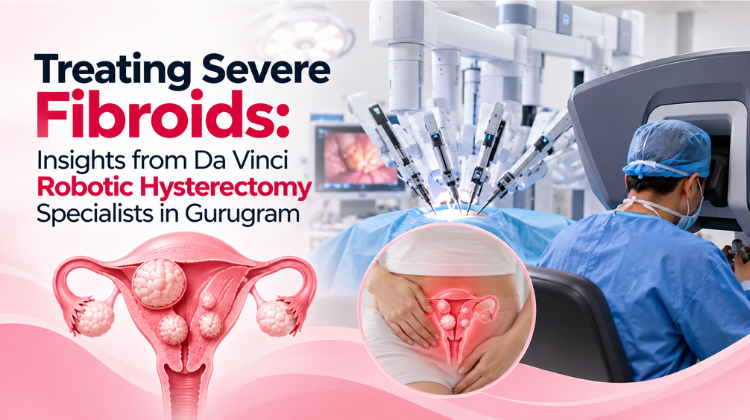
Living with severe uterine fibroids can transform everyday routines into a heavy physical and mental burden. When benign smooth muscle tumors within the uterine wall grow exponentially, multiply, or distort the surrounding pelvic organ architecture, traditional medical therapies and over-the-counter medications often prove insufficient. Women living with massive fibroids frequently endure continuous pelvic pressure, severe lower back aching, severe anemia from excessive menstrual blood loss, and profound fatigue.
When conservative options fail to provide relief and a woman has completed her childbearing, or when severe tumor growth compromises overall systemic health, a hysterectomy offers a permanent cure. However, fear of traditional open surgery—with its long abdominal incisions, painful hospital stays, and weeks of bed rest—causes many patients to delay essential care.
Modern surgical advancements have reshaped minimally invasive gynecology. Today, valuable insights from Da Vinci Robotic Hysterectomy Specialists in Gurugram show how advanced robotic keyhole techniques allow surgeons to treat even the most complex, severely enlarged fibroid uteri with high surgical precision, minimal blood loss, and rapid post-operative recovery.
Understanding Severe Fibroids: Why Specialized Care Matters
Uterine fibroids (leiomyomas) are non-cancerous muscular tumors that grow in or on the uterine walls. While small fibroids can exist without causing noticeable symptoms, severe fibroid disease is characterized by:
-
Large Fibroid Size: Single or multiple tumors growing larger than 8 to 10 centimeters, expanding the overall uterine volume to match that of a mid-to-late stage pregnancy.
-
Complex Multi-Centric Formations: Dozens of fibroid nodules distributed across the submucosal, intramural, and subserosal layers of the uterine wall.
-
Severe Physical Symptoms: Persistent heavy bleeding leading to severe iron-deficiency anemia, lower back aches, pelvic fullness, pain during intimacy, and bowel or bladder compression.
In complex cases where fibroid masses distort pelvic anatomy, gathering actionable insights from Da Vinci Robotic Hysterectomy Specialists in Gurugram helps patients evaluate advanced surgical solutions tailored to their needs.
Key Insights from Da Vinci Robotic Hysterectomy Specialists in Gurugram on Modern Surgical Techniques
When managing severe fibroid conditions, key insights from Da Vinci Robotic Hysterectomy Specialists in Gurugram emphasize moving away from open abdominal incisions (laparotomy) toward advanced robotic-assisted procedures.
                  SURGICAL EVOLUTION IN FIBROID MANAGEMENT
                                     |
         +---------------------------+---------------------------+
         |                                                       |
         v                                                       v
+-----------------------------------+   +-----------------------------------+
|      TRADITIONAL OPEN SURGERY     |   |    DA VINCI ROBOTIC SURGERY       |
+-----------------------------------+   +-----------------------------------+
| * 6-8 inch abdominal incision     |   | * 3-4 small keyholes (5-8 mm)     |
| * Significant tissue trauma       |   | * Highly magnified 3D HD vision   |
| * Higher blood loss & pain        |   | * Wrists rotate 360 degrees       |
| * 3-5 days in hospital            |   | * 1-2 days in hospital            |
| * 6-8 weeks recovery time         |   | * 1-2 weeks recovery time         |
+-----------------------------------+   +-----------------------------------+
1. High 3D HD Magnification Overcomes Structural Distortion
Massive fibroids obscure standard pelvic anatomy, placing delicate structures like ureters, uterine arteries, and the bladder at risk during surgery. According to expert insights from Da Vinci Robotic Hysterectomy Specialists in Gurugram, the robotic system’s high-definition 3D vision system magnifies the surgical field up to 10 times. This high spatial resolution allows surgeons to distinguish distinct tissue boundaries and protect healthy structures.
2. Articulated Wristed Instruments Outperform Rigid Tools
Standard laparoscopic instruments are rigid and straight, limiting movement inside a tight pelvic cavity filled with large fibroid tumors. Crucial insights from Da Vinci Robotic Hysterectomy Specialists in Gurugram highlight how EndoWrist technology mirrors the dexterity of the human hand with 7 degrees of freedom and 360-degree articulation, enabling accurate tissue dissection around large uterine masses.
3. Tremor Filtration Ensures Exceptional Surgical Safety
The Da Vinci software translates the surgeon’s hand movements into micro-movements at the instrument tip while eliminating natural hand tremors. These technological insights from Da Vinci Robotic Hysterectomy Specialists in Gurugram confirm that precise vessel sealing and tissue suturing minimize blood loss during surgery.
Evaluating Surgical Candidates: Insights from Da Vinci Robotic Hysterectomy Specialists in Gurugram
Not every patient requires a hysterectomy. However, clinical insights from Da Vinci Robotic Hysterectomy Specialists in Gurugram show that robotic-assisted hysterectomy is often the most definitive, long-term solution for patients who meet specific criteria:
-
Completion of Family Planning: Women who do not desire future pregnancies and want a permanent end to severe fibroid symptoms.
-
Failed Medical & Minor Surgical Interventions: Patients whose bleeding or pain persists despite hormonal treatments, IUD placements, or previous fibroid removals.
-
Massive Uterine Enlargement: Cases where fibroids expand the uterus significantly, making conventional laparoscopic removal technically difficult.
-
Co-Existing Pelvic Conditions: Patients diagnosed with both severe fibroids and advanced pelvic conditions like adenomyosis or deep infiltrating endometriosis.
The Robotic Hysterectomy Procedure: Insights from Da Vinci Robotic Hysterectomy Specialists in Gurugram
To help patients feel comfortable before surgery, specialized insights from Da Vinci Robotic Hysterectomy Specialists in Gurugram outline the step-by-step surgical workflow:
+-------------------------------------------------------------------+
|                ROBOTIC HYSTERECTOMY SURGICAL FLOW                 |
+-------------------------------------------------------------------+
  1. PRE-OP MAPPING  --> High-resolution MRI/Ultrasound to map fibroids
  2. KEYHOLE ACCESS  --> 3-4 small (5-8 mm) abdominal port placements
  3. ROBOT DOCKING   --> Da Vinci Xi arms connected to instruments
  4. VESSEL SEALING  --> Uterine blood supply isolated & sealed safely
  5. DISSECTION      --> Uterus freed from surrounding ligaments/tissue
  6. IN-BAG REMOVAL  --> Contained extraction through port or vagina
  7. CUFF REPAIR     --> Vaginal vault sutured with 3D wristed precision
+-------------------------------------------------------------------+
Step 1: Pre-Operative Preparation and Imaging
Detailed diagnostic mapping with high-resolution pelvic ultrasound or MRI helps pinpoint every fibroid tumor and assess adjacent structures. Any iron-deficiency anemia from chronic bleeding is addressed prior to surgery to support recovery.
Step 2: Minimal-Access Port Placement
Instead of a wide abdominal cut, the surgeon creates 3 to 4 tiny keyholes (5 to 8 mm) in the lower abdomen. The robotic camera and wristed instruments are inserted through these small access points.
Step 3: Console Dissection and Uterine Isolation
The surgeon operates while seated at an ergonomic master console next to the operating table. Utilizing 3D vision, the main blood vessels feeding the uterus are isolated and sealed using advanced bipolar energy. The enlarged uterus is then carefully freed from surrounding pelvic attachments.
Step 4: Enclosed In-Bag Tissue Extraction
To safely remove a large uterus through small ports, surgeons utilize specialized containment bags. The tissue is safely contained within the bag before extraction, preventing any internal tissue dispersion into the abdominal cavity.
Step 5: Vaginal Cuff Closure & Rapid Recovery
The top of the vagina (vaginal cuff) is sutured closed using wristed robotic instruments, restoring pelvic floor strength. Patients are moved to recovery, with most walking comfortably within hours.
Recovery Timelines: Insights from Da Vinci Robotic Hysterectomy Specialists in Gurugram
Post-operative insights from Da Vinci Robotic Hysterectomy Specialists in Gurugram demonstrate how robotic keyhole surgery shortens healing time compared to traditional open surgery:
| Recovery Milestone | Traditional Open Surgery | Da Vinci Robotic Surgery |
| Hospital Stay | 3 to 5 days | 1 to 2 days |
| Post-Operative Pain | Moderate to severe (requires heavy narcotics) | Minimal (managed with mild pain relievers) |
| Bowel Function Return | Slow (2 to 4 days) | Rapid (within 24 hours) |
| Return to Light Work | 6 to 8 weeks | 1 to 2 weeks |
| Full Physical Activity | 8 to 12 weeks | 3 to 4 weeks |
| Abdominal Scarring | Single large 6-8 inch scar | 3-4 tiny, barely visible marks |
Choosing Dr. Preeti Rastogi: Best Gynecologist in Gurugram for Robotic Surgery
Applying these technical insights from Da Vinci Robotic Hysterectomy Specialists in Gurugram requires working with an experienced gynecological surgeon.
Dr. Preeti Rastogi is widely regarded as one of the best gynecologists in Gurugram, specializing in complex pelvic health and advanced minimal-access robotic procedures. Serving as Director and Head of Department in Obstetrics and Gynecology at Medanta – The Medicity, Gurugram, Dr. Rastogi brings over 25 years of international clinical experience across top healthcare institutions in the United Kingdom and India.
Qualifications & Clinical Leadership
-
Certified Da Vinci Xi Robotic Surgeon: Highly trained in robotic keyhole techniques for complex hysterectomies, myomectomies, and severe endometriosis cases.
-
Prestigious Academic Background: Holds MBBS, DNB (Obstetrics & Gynecology), and MRCOG from the Royal College of Obstetricians and Gynaecologists, London, UK.
-
Specialized Focus in Minimally Invasive Surgery: Expertise in handling complex fibroids, frozen pelvis, deep infiltrating endometriosis, and high-risk pelvic reconstructions.
-
Patient-Centered Approach: Recognized for clear patient communication, thorough pre-surgical evaluations, and customized treatment plans tailored to each woman’s personal health goals.
#Insights From Da Vinci Robotic Hysterectomy Specialists In Gurgaon #DaVinci Robotic Hysterectomy #Severe Fibroids Treatment #Robotic Gynecological Surgery #Gurugram Robotic Surgeons #Fibroid Removal Gurugram #Best Gynecologist In Gurugram #Dr Preeti Rastogi #Medanta Gynecology #Minimally Invasive Hysterectomy #Keyhole Fibroid Surgery #Uterine Fibroid Management #Heavy Menstrual Bleeding #Pelvic Pain Relief #Anemia From Fibroids #Da Vinci Xi System #Robotic Surgery India #Advanced Gynecology #Gynecologic Oncology Gurugram #Endo Wrist Technology #3D Robotic Surgery #Pelvic Health Care #Women Health Gurugram #Contained Morcellation #Preserving Ovarian Function #Post Hysterectomy Recovery #Gynecologist Near Me #Robotic Hysterectomy Cost India #Fibroid Surgery Recovery #Complex Gynae Surgery
FAQ
Q1: What are the main insights from Da Vinci Robotic Hysterectomy Specialists in Gurugram regarding severe fibroid treatment?
Answer: Key insights from Da Vinci Robotic Hysterectomy Specialists in Gurugram highlight that robotic surgery offers superior precision, 10x magnified 3D HD visualization, and 360-degree wristed instrument movement. This allows surgeons to safely perform hysterectomies for massive or complex fibroids through tiny keyhole incisions, resulting in significantly lower blood loss, shorter hospital stays (1–2 days), and faster overall recovery compared to open surgery.
Q2: Is a Da Vinci robotic hysterectomy safer than traditional open surgery for large fibroids?
Answer: Yes. Clinical insights from Da Vinci Robotic Hysterectomy Specialists in Gurugram show that robotic hysterectomy carries lower risks of surgical wound infection, less post-operative pain, and reduced blood loss compared to open surgery. The system’s enhanced 3D visualization allows surgeons to clearly identify and protect adjacent nerves, blood vessels, and ureters even when large fibroids distort the pelvic cavity.
Q3: How long does it take to fully recover after a Da Vinci robotic hysterectomy in Gurugram?
Answer: Most women recover significantly faster after a robotic hysterectomy than after traditional open surgery. Patients typically leave the hospital within 24 to 48 hours, resume light daily routines within a few days, return to desk work in 1 to 2 weeks, and resume full physical activities within 3 to 4 weeks.
Q4: Why is Dr. Preeti Rastogi considered the best gynecologist in Gurugram for robotic fibroid surgery?
Answer: Dr. Preeti Rastogi, Director and Head of Department in Obstetrics and Gynecology at Medanta – The Medicity, Gurugram, is widely recognized as a leading expert in robotic surgery. With over 25 years of global experience, MRCOG (UK) qualifications, and certified expertise on the Da Vinci Xi system, she specializes in performing minimally invasive robotic hysterectomies for complex fibroids, offering patients safe outcomes and compassionate care.
Q5: Will a robotic hysterectomy for severe fibroids cause immediate menopause?
Answer: A hysterectomy involves removing the uterus to permanently stop menstrual bleeding and remove fibroids. It does not trigger immediate menopause if your ovaries are preserved during surgery. Robotic surgeons in Gurugram make every effort to retain healthy ovaries so your body continues producing natural estrogen until you reach natural menopause.