PCOS is Being Renamed PMOS: What It Means for You
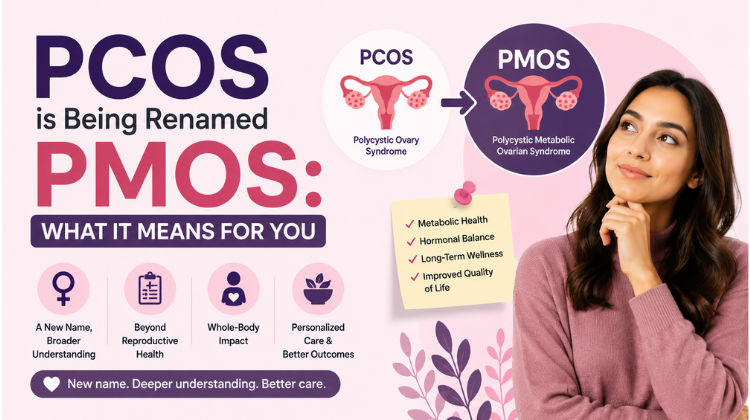
A historic shift is officially unfolding in the landscape of women’s healthcare. Following a landmark international expert consensus published in The Lancet, Polycystic Ovary Syndrome (PCOS)—a complex condition impacting roughly 1 in 10 women of reproductive age worldwide—is getting a major update. If you have been keeping up with medical updates, you have likely heard the news: PCOS is Being Renamed PMOS.
For decades, the original medical terminology has triggered immense clinical confusion for both diagnostic teams and patients. By mapping out exactly why this paradigm shift is happening today, you can better understand how it redefines your lifetime wellness routine, your medical care, and your metabolic screening goals.
The Big Clinical Shift: Why PCOS is Being Renamed PMOS
The primary driver behind this global renaming strategy is diagnostic accuracy. The legacy label “PCOS” has long been criticized by leading specialists for placing too much emphasis on “cysts on the ovaries.” In clinical reality, these are not structural cysts at all; they are merely small, undeveloped fluid follicles. Furthermore, millions of women who suffer from the underlying disorder present completely clear ovarian ultrasounds, which frequently leads to delayed or missed diagnoses.
Because PCOS is Being Renamed PMOS, the global medical community is finally discarding a misleading title in favor of a far more accurate descriptor: Polyendocrine Metabolic Ovarian Syndrome (PMOS). This unified terminology changes how the disease is perceived:
-
Polyendocrine: Acknowledges that the condition involves an intricate interplay of multiple hormone systems throughout the body—moving far beyond basic reproductive pathways.
-
Metabolic: Explicitly highlights the condition’s profound impact on cellular metabolism, including severe insulin resistance, weight gain, type 2 diabetes risks, and cardiovascular complications.
-
Ovarian: Safely retains the role of the ovaries regarding ovulatory dysfunction and cycle irregularity, without falsely implying that physical cysts are a requirement.
Understanding What This Change Means for Your Health Routine
If you are a patient currently managing this condition, the reality that PCOS is Being Renamed PMOS does not mean your existing medical history or prescriptions are suddenly invalid. Your internal health status remains exactly the same. Instead, think of this name update as an evolutionary leap from an isolated gynecological viewpoint to a comprehensive, full-body system view of your health.
Historically, women presenting with these symptoms were told their condition was primarily a fertility issue or an isolated reproductive challenge. By transitioning to a model where PCOS is Being Renamed PMOS, clinical guidelines are shifting toward comprehensive, lifetime metabolic screenings.
Your future wellness checks will prioritize whole-body markers—such as fasting insulin levels, blood pressure trends, lipid panels, and liver health—rather than just relying on standard symptom suppression via birth control pills.
Evolution of Clinical Focus: Old Term vs. New Term
| PCOS (Old Framework) | PMOS (2026 Framework) |
| Focuses heavily on the ovaries | Focuses on full-body systems |
| Misleads patients about cysts | Pinpoints hormone imbalances |
| Classed as a fertility disorder | Addressed as a metabolic issue |
| Treatment targets period regularity | Treatment targets root health |
Molecular Drivers: Beyond Ovarian Morphology
The renaming of Polycystic Ovary Syndrome (PCOS) to Polyendocrine Metabolic Ovarian Syndrome (PMOS) represents a pivotal diagnostic evolution. Under the former nomenclature, clinical attention was frequently directed toward ultrasound findings of enlarged ovaries with peripheral antral follicles. However, these structures are not true pathological cysts; rather, they are arrested immature follicles resulting from impaired intra-ovarian paracrine signaling. The shift to PMOS reflects the understanding that the true drivers of this condition lie within systemic endocrine pathways and cellular metabolic pathways.
┌─────────────────────────────────────────────────────────────────────────────┐
│                    PMOS Molecular Drivers & Pathways                        │
├─────────────────────────────────────────────────────────────────────────────┤
│ Hyperinsulinemia (Pancreatic Beta-Cell Dysregulation)                       │
│                                │                                            │
│                                ▼                                            │
│ Hepatic Suppression of Sex Hormone-Binding Globulin (SHBG)                   │
│                                │                                            │
│                                ▼                                            │
│ Surge in Unbound Free Testosterone & DHEA-S                                 │
│                                │                                            │
│                                ▼                                            │
│ LH/FSH Pulse Amplitude Distortion (Hypothalamic-Pituitary-Ovarian Axis)     │
│                                │                                            │
│                                ▼                                            │
│ Follicular Arrest, Anovulation, and Low-Grade Systemic Inflammation         │
└─────────────────────────────────────────────────────────────────────────────┘
The Hyperinsulinemia–Androgen Cascade
At the core of PMOS pathophysiology is selective tissue insulin resistance. While skeletal muscle and adipose tissue demonstrate resistance to insulin-mediated glucose uptake, the ovarian stroma remains paradoxically sensitive to insulin.
-
Synergistic Androgen Production: Hyperinsulinemia acts as a co-gonadotropin alongside Luteinizing Hormone (LH), overstimulating ovarian theca cells to synthesize excess androgens (testosterone and androstenedione).
-
Hepatic SHBG Suppression: Elevated circulating insulin suppresses the hepatic synthesis of Sex Hormone-Binding Globulin (SHBG). Reduced SHBG concentration increases the proportion of biologically active, unbound free testosterone, which worsens peripheral hyperandrogenic symptoms such as hirsutism, severe cystic acne, and androgenetic alopecia.
Hypothalamic-Pituitary-Ovarian (HPO) Dysregulation
In PMOS, the GnRH pulse generator within the hypothalamus fires at an abnormally rapid frequency. This selectively favors the transcription and secretion of Luteinizing Hormone (LH) over Follicle-Stimulating Hormone (FSH), resulting in an elevated LH-to-FSH ratio ($>2:1$ or $>3:1$). The relative deficiency in FSH impairs granulosa cell aromatase activity, preventing the conversion of local androgens into estradiol. Lacking sufficient estrogenic stimulation and FSH support, dominant follicle selection fails, leading to follicular arrest and chronic anovulation.
Endocrine Inter-System Cross-Talk in PMOS
The term Polyendocrine highlights that PMOS involves a wider network of hormonal interactions beyond the ovaries.
                  [Multi-Axis Endocrine Disruption]
                                  │
     ┌────────────────────────────┼────────────────────────────┐
     ▼                            ▼                            ▼
[Adrenal Axis (HPA)]      [Thyroid Axis (HPT)]        [Adipokine Network]
- Elevated DHEA-S output  - Subclinical Hypothyroidism- Lowered Adiponectin
- Glucocorticoid shifts   - Elevated TPO Antibodies   - Elevated Leptin Resistance
Adrenal Androgen Hypersecretion
In approximately $20\text{–}30\%$ of patients with PMOS, hyperandrogenism is driven not only by the ovaries but also by the adrenal cortex. An exaggerated response to adrenocorticotropic hormone (ACTH) leads to excess secretion of Dehydroepiandrosterone Sulfate (DHEA-S). This adrenal involvement demonstrates that targeting ovarian function alone is often insufficient for complete symptom management.
Thyroid Axis Dysfunction and Autoimmunity
There is a high clinical overlap between PMOS and autoimmune thyroid disease (such as Hashimoto’s thyroiditis). Subclinical hypothyroidism elevates serum Prolactin and Thyroid-Stimulating Hormone (TSH), which further suppresses SHBG and worsens ovulatory dysfunction. Comprehensive endocrine screening requires evaluating baseline TSH, free T4, and anti-thyroid peroxidase (anti-TPO) antibody titers.
Adipokine Imbalance and Chronic Inflammation
Adipose tissue in PMOS functions as an active endocrine organ. Reduced levels of adiponectin (an insulin-sensitizing and anti-inflammatory hormone) combined with elevated leptin levels (reflecting central leptin resistance) foster a persistent, low-grade inflammatory state. Inflammatory cytokines like Tumor Necrosis Factor-alpha ($\text{TNF}-\alpha$) and Interleukin-6 ($\text{IL}-6$) directly inhibit insulin receptor signaling, creating a self-reinforcing cycle of metabolic dysregulation.
Cardiovascular, Hepatic, and Oncological Risk Stratification
Transitioning the diagnostic focus to Metabolic underscores the long-term, systemic health implications associated with PMOS.
┌─────────────────────────────────────────────────────────────────────────────┐
│                 Long-Term Metabolic & Systemic Risks                        │
├─────────────────────────────────────────────────────────────────────────────┤
│ 1. Metabolic Syndrome & Type 2 Diabetes Mellitus                            │
│    • >50% of PMOS patients develop impaired glucose tolerance or T2DM by    │
│      age 40 without early intervention                                      │
│                                                                             │
│ 2. Metabolic Dysfunction-Associated Steatotic Liver Disease (MASLD)         │
│    • Hepatic lipid accumulation driven by hyperinsulinemia and inflammation │
│                                                                             │
│ 3. Cardiovascular Disease & Atherosclerosis                                │
│    • Endothelial dysfunction, dyslipidemia (high triglycerides, low HDL),   │
│      and elevated hs-CRP markers                                           │
│                                                                             │
│ 4. Unopposed Estrogen & Endometrial Cancer Risk                             │
│    • Prolonged anovulation causes continuous endometrial proliferation       │
│      without progesterone-mediated shedding                                 │
└─────────────────────────────────────────────────────────────────────────────┘
Metabolic Dysfunction-Associated Steatotic Liver Disease (MASLD)
Insulin resistance increases free fatty acid flux to the liver, predisposing women with PMOS to non-alcoholic fatty liver disease (now classified as MASLD). If left unmanaged, hepatic steatosis can progress to steatohepatitis (MASH) and fibrosis, independently of body mass index (BMI).
Endometrial Hyperplasia and Neoplasia
In a normal ovulatory cycle, progesterone produced by the corpus luteum transforms the proliferative endometrium into a secretory state, triggering regular shedding. In PMOS, chronic anovulation leaves the endometrium exposed to continuous, unopposed estrogen. This causes structural thickening, increasing the risk of atypical endometrial hyperplasia and endometrial adenocarcinoma. Routine endometrial thickness surveillance via transvaginal ultrasonography is crucial for women experiencing prolonged amenorrhea.
Diagnostic Shift: Refining the Rotterdam Criteria for PMOS
The shift to PMOS maintains clinical continuity with established diagnostic criteria while broadening the scope of screening.
| Diagnostic Pillar | Classic PCOS Phenotype Focus | Evolved PMOS Clinical Focus |
| Ovarian Morphology | Presence of $\ge 20$ follicles per ovary or ovarian volume $>10\text{ mL}$ on ultrasound | Recognized as a secondary marker; morphology can vary based on age, hormonal contraception, or metabolic status |
| Ovulatory Status | Oligomenorrhea or amenorrhea defined primarily as a fertility concern | Evaluated as a marker of systemic hormone balance and an indicator of endometrial cancer risk |
| Hyperandrogenism | Focus on physical features (hirsutism, acne, alopecia) | Measured via free androgen index (FAI), total testosterone, and DHEA-S, alongside metabolic tracking |
| Metabolic Screening | Often limited to basic fasting blood glucose testing | Comprehensive panel including 75g Oral Glucose Tolerance Test (OGTT), HbA1c, fasting insulin, lipid profile, and liver enzymes |
                              [PMOS Screening Protocol]
                                          │
     ┌────────────────────────────────────┼────────────────────────────────────┐
     ▼                                    ▼                                    ▼
[Hormonal Assessment]               [Metabolic Assessment]              [Endometrial Safety]
- Free & Total Testosterone         - 2-Hour 75g OGTT + Insulin         - Transvaginal Ultrasound
- DHEA-S, SHBG, LH/FSH              - Advanced Lipid Profile            - Endometrial Biopsy (if ET >12mm
- TSH, Anti-TPO, Prolactin          - Liver Function (ALT/AST)            or chronic amenorrhea)
Multimodal Treatment Architecture for PMOS
Managing PMOS requires a personalized, multi-system treatment approach rather than relying solely on oral contraceptives to induce withdrawal bleeding.
┌─────────────────────────────────────────────────────────────────────────────┐
│                    PMOS Targeted Therapeutics Matrix                         │
├─────────────────────────────────────────────────────────────────────────────┤
│ Metabolic & Insulin Sensitization:                                          │
│  • Metformin: Inhibits hepatic gluconeogenesis, improves peripheral insulin │
│    sensitivity, and lowers circulating androgens                            │
│  • Inositol Therapy: Myo-inositol & D-chiro-inositol in a 40:1 physiological│
│    ratio to restore second-messenger insulin signaling                      │
│  • GLP-1 Receptor Agonists: Considered for severe metabolic dysfunction,   │
│    visceral adiposity, and pronounced insulin resistance                   │
│                                                                             │
│ Endocrine & Ovulatory Restoration:                                          │
│  • Letrozole: Aromatase inhibitor used as first-line ovulation induction    │
│  • Anti-Androgens: Spironolactone or Cyproterone acetate for hirsutism      │
│  • Cyclical Progestins / LNG-IUS: Protects endometrial safety               │
└─────────────────────────────────────────────────────────────────────────────┘
Nutrition and Lifestyle Interventions
-
Low-Glycemic Load Nutrition: Focus on complex carbohydrates, lean proteins, and dietary fiber to prevent postprandial insulin spikes and lower circulating insulin levels.
-
Progressive Resistance & Aerobic Exercise: Combined resistance training and high-intensity interval training (HIIT) enhance GLUT4 glucose transporter translocation in skeletal muscle, improving systemic insulin sensitivity independent of weight loss.
Comprehensive Endocrine and Gynecological Care: Dr. Preeti Rastogi
Navigating the complexities of PMOS requires expert clinical guidance, comprehensive metabolic screening, and personalized treatment strategies. Widely recognized as the best gynaecologist in gurugram, Dr. Preeti Rastogi offers world-class care for women managing complex hormonal and metabolic disorders.
┌─────────────────────────────────────────────────────────────────────────────┐
│                 Dr. Preeti Rastogi: Clinical Expertise                      │
├─────────────────────────────────────────────────────────────────────────────┤
│ • Leadership: Director & Head of Department, Obstetrics & Gynaecology       │
│   at Medanta – The Medicity, Gurugram                  │
│ • International Credentials: Over 10 years of senior sub-specialty practice │
│   in top UK NHS hospitals; holds MRCOG (London, UK) and specialized          │
│   fellowships in Minimal Access Surgery, Urogynecology, and High-Risk      │
│   Obstetrics                                                  │
│ • Surgical Mastery: Certified Da Vinci Xi Robotic Surgeon specializing in   │
│   complex laparoscopic and robotic gynecological interventions │
│ • Holistic PMOS Management: Comprehensive care focusing on metabolic        │
│   screening, ovulatory restoration, fertility optimization, and long-term   │
│   preventative health                                         │
└─────────────────────────────────────────────────────────────────────────────┘
Specialized PMOS Clinical Services
Dr. Preeti Rastogi leads a dedicated team offering holistic care for PMOS:
-
Advanced Endocrine & Metabolic Profiling: In-depth evaluations including insulin sensitivity testing, complete androgen panels, thyroid profiling, and cardiovascular risk assessments.
-
Targeted Fertility & Ovulation Induction: First-line ovulation induction protocols using evidence-based regimens, paired with follicular tracking to support conception.
-
Preventative Gynecological Care: Endometrial safety monitoring, long-term metabolic care, and personalized treatment plans tailored to every stage of life.
Her extensive international experience, NHS background, and dedication to evidence-based medicine establish her as the best gynaecologist in gurugram.
About Dr. Preeti Rastogi
-
Current Position: Director and Head of the Department of Obstetrics and Gynaecology at Medanta – The Medicity, Gurgaon.
-
Experience Baseline: Over 30 years of extensive clinical experience across premier tertiary care hospitals in India and the United Kingdom (including 10+ years at the University Hospital of Wales, Cardiff).
-
Core Specializations: High-risk obstetrics (including gestational diabetes and hypertension), advanced urogynaecology, pelvic reconstructive surgery, and minimal access endo-gynaecology.
-
Robotic Credentials: Board-certified Da Vinci Xi Robotic Surgeon, pioneer in integrating automated precision technology into complex gynaecological treatments.
-
Academic Fellowships: Holds her prestigious MRCOG from the Royal College of Obstetricians and Gynaecologists (UK) and a DNB in Obstetrics and Gynaecology from St. Stephen’s Hospital, Delhi.
Navigating the Terminology Transition Window
Medical terminology changes take time to standardize globally. Organizations like the American Society for Reproductive Medicine (ASRM) have endorsed this transition, but a multi-year integration window is expected. You will likely continue to see both terms used on insurance documentation, lab test charts, and pharmacy scripts for the foreseeable future.
The fact that PCOS is Being Renamed PMOS serves as an empowering reminder to advocate for your own care. Take this opportunity to speak openly with your medical team. Ensure your personal wellness roadmap targets your unique metabolic traits, blood sugar management, and long-term health optimization.
#PolyendocrineMetabolicOvarianSyndrome #HormonalDisorder2026 #InsulinResistanceSymptoms #MetabolicHealthGuide #WomenHormoneImbalance #OvarianFollicles #DrPreetiRastogiGynae #MedantaHospitalGurgaon #BestGynecologistGurgaon #HighRiskPregnancyDoctor #RoboticGynecologistIndia #TheLancetConsensus #IrregularPeriodsTreatment #HyperandrogenismSigns #HirsutismManagement #CardiovascularRiskWomen #Type2DiabetesScreening #EndocrineSystemSyndrome #ReproductiveEndocrinology #MetaHealthCreators #MedicalSEOStrategy #PatientAdvocacyIndia #GynecologyUpdates2026 #AdultAcneHormones #WeightGainMetabolism #FertilityJourneySupport #HolisticWellnessTips #AnxietyAndHormones #ChronicIllnessAwareness #ASRMUpdates2026 #DaVinciXiRoboticGynae
FAQ
Q1: Why is PCOS is Being Renamed PMOS by medical experts?
A: The condition PCOS is Being Renamed PMOS because the term Polycystic Ovary Syndrome is clinically misleading. Many women with the condition never develop ovarian cysts, which are actually small fluid follicles. The updated name, Polyendocrine Metabolic Ovarian Syndrome (PMOS), accurately reflects that it is a multi-system endocrine and metabolic condition rather than an isolated ovarian disease.
Q2: Does my treatment plan change now that PCOS is Being Renamed PMOS?
A: No, your day-to-day prescriptions will not change overnight, but your medical roadmap will become much more holistic. Now that PCOS is Being Renamed PMOS, healthcare providers are shifting focus away from just tracking period regularity to actively treating root drivers like insulin resistance, blood sugar, and cardiovascular health. PCOS is Being Renamed PMOS: What It Means for You
Q3: Why is Dr. Preeti Rastogi considered the best gynecologist in Gurgaon for managing PMOS?
A: Dr. Preeti Rastogi is widely regarded as the best gynecologist in Gurgaon due to her 30+ years of clinical excellence across India and the UK. As the Director and Head of Department of Obstetrics and Gynaecology at Medanta – The Medicity, she specializes in advanced robotic surgeries and evidence-based maternal-fetal care, taking a deeply holistic, multi-system approach to metabolic and hormonal conditions. PCOS is Being Renamed PMOS: What It Means for You
Q4: How does Dr. Preeti Rastogi at Medanta Gurgaon approach metabolic health tracking for PMOS?
A: Dr. Preeti Rastogi practices a comprehensive, patient-centered approach that perfectly aligns with the new PMOS framework. Instead of merely managing surface-level reproductive symptoms, she conducts detailed metabolic profiling, monitors gestational and lifestyle risks, and uses evidence-based interventions to safeguard a woman’s long-term cardiovascular and endocrine wellness. PCOS is Being Renamed PMOS: What It Means for You
Q5: What are the primary diagnostic criteria used today under the new PMOS framework?
A: To receive a definitive diagnosis, a patient must meet at least two of the three established criteria: irregular or absent menstrual cycles (ovulatory dysfunction), clinical or biochemical signs of elevated male hormones/androgens (such as severe acne or excess body hair), or a polycystic appearance of the ovaries on an ultrasound scan. PCOS is Being Renamed PMOS: What It Means for You