Managing Menopause and Benign Growths: What Changes After 40?
Entering your 40s marks a significant transition in a woman’s biological journey. This decade often brings the onset of perimenopause, a period where hormonal fluctuations can trigger various physical changes. One of the most critical aspects of health during this time is Managing Menopause and Benign Growths, as the hormonal environment can influence the development and behavior of non-cancerous conditions like fibroids and cysts.
Navigating these changes requires expert guidance. For women in the NCR region, consulting Dr. Preeti Rastogi, widely recognized as the best gynaecologist in Gurgaon, ensures that these transitions are managed with precision and care. Understanding what happens to your body after 40 is the first step toward maintaining a high quality of life.
The Hormonal Shift: Why 40 is a Turning Point
As women cross the age of 40, estrogen and progesterone levels begin to fluctuate unpredictably. This hormonal chaos is the primary driver behind the need for Managing Menopause and Benign Growths. While many focus solely on hot flashes or mood swings, these hormones also act as “fuel” for certain benign conditions.
For instance, uterine fibroids—which are estrogen-dependent—may grow rapidly during perimenopause before eventually shrinking after menopause. Effectively Managing Menopause and Benign Growths during this window is essential to prevent heavy bleeding and pelvic pain.
Common Benign Growths Encountered After 40
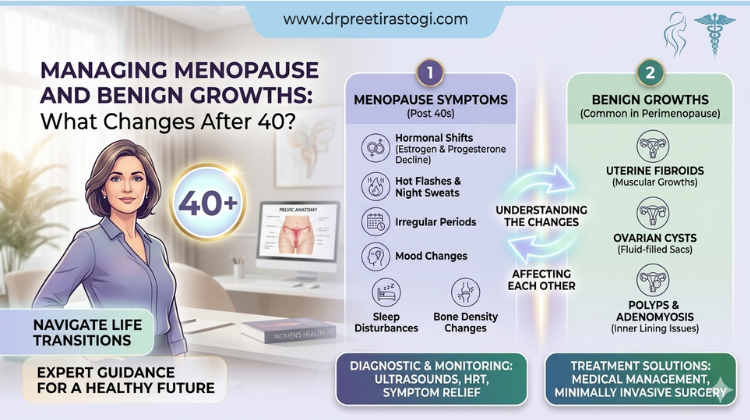
When we talk about Managing Menopause and Benign Growths, we generally refer to three main types of non-cancerous developments:
-
Uterine Fibroids: These are muscular growths in the uterus wall.
-
Ovarian Cysts: Fluid-filled sacs that can appear due to irregular ovulation.
-
Endometrial Polyps: Small growths in the lining of the uterus.
Dr. Preeti Rastogi emphasizes that while these are “benign” (non-cancerous), they require active monitoring. Managing Menopause and Benign Growths often involves regular ultrasounds to ensure these growths do not interfere with your daily health or mask other symptoms. Also Read: Menopause and Bone Health: What You Should Know
Identifying Symptoms: When to Seek Help
A major challenge in Managing Menopause and Benign Growths is that symptoms of menopause often overlap with symptoms of benign conditions. You should consult a specialist if you experience:
-
Abnormally heavy menstrual bleeding.
-
Persistent pelvic pressure or bloating.
-
Frequent urination.
-
Pain during intercourse.
If you are experiencing these, visiting the best gynaecologist in Gurgaon can help differentiate between standard menopausal transitions and issues requiring medical intervention.
The Role of Robotic Surgery in Managing Growths
For some women, Managing Menopause and Benign Growths requires more than just lifestyle changes or medication. If fibroids or cysts become too large or symptomatic, surgical removal may be necessary. Modern technology has made this process much simpler.
Advanced laparoscopic or robotic-assisted surgeries allow for the removal of these growths with minimal downtime. This is a core component of Managing Menopause and Benign Growths for the modern, active woman who cannot afford long recovery periods.
Lifestyle and Nutrition for Menopausal Health
Strategies for Managing Menopause and Benign Growths must include a holistic approach. A diet rich in calcium and vitamin D supports bone health as estrogen declines, while high-fiber foods can help regulate estrogen metabolism, potentially slowing the growth of fibroids. Regular exercise also helps manage the weight gain often associated with the 40s, which in turn helps in Managing Menopause and Benign Growths by reducing peripheral estrogen production in fat cells.
Navigating Perimenopause: The Bridge to Menopause
Before reaching menopause, women go through perimenopause, which can last anywhere from 2 to 10 years. During this stage, the fluctuating hormones don’t just cause hot flashes; they can lead to the sudden “flaring up” of dormant issues. Managing Menopause and Benign Growths during this transition is vital because the body is in a state of flux. Expert monitoring ensures that any new growth is identified early, preventing complications as you move toward the post-menopausal phase.
The Importance of Regular Screening After 40
Early detection is the cornerstone of effectively Managing Menopause and Benign Growths. Routine pelvic ultrasounds and Pap smears become even more critical after age 40. These screenings allow doctors to track the size of existing fibroids or the morphology of ovarian cysts. By staying proactive in Managing Menopause and Benign Growths, women can avoid emergency surgical situations and opt for planned, minimally invasive treatments if necessary.
Expert Solutions for Menstrual Distress in Gurgaon
The road to menopause is often paved with “period problems”—ranging from heavy flooding to skipped cycles and extreme cramping. If your periods are disrupting your lifestyle, it is time to consult the best gynaecologist for period problem in Gurgaon. Dr. Preeti Rastogi is renowned for her ability to diagnose the underlying causes of menstrual irregularity, whether they are hormonal, related to PCOD, or caused by benign structural growths. Her holistic approach ensures that every woman receives a treatment plan that aligns with her life stage.
Bone Health and Cardiovascular Vitality
While Managing Menopause and Benign Growths is a priority, the decline in estrogen also impacts bone density and heart health. A comprehensive care plan after 40 must include bone density scans (DEXA) and lipid profile monitoring. Dr. Preeti integrates these preventive screenings into her practice, ensuring that as you manage benign growths, your overall systemic health remains robust during the silver years.
Why Expert Guidance is Vital
Every woman’s experience with aging is unique. Managing Menopause and Benign Growths is not a one-size-fits-all process. It requires a doctor who listens and utilizes the latest diagnostic tools. By consulting Dr. Preeti Rastogi, Best gynecologist in Gurgoan , patients can access comprehensive care plans that address both the hormonal symptoms of menopause and the structural issues of benign growths.
Conclusion: Embracing the Transition
The years after 40 should be a time of empowerment, not discomfort. By proactively Managing Menopause and Benign Growths, you can navigate the transition into menopause with confidence. Whether through routine screenings, hormonal therapy, or advanced minimally invasive surgery, taking control of your reproductive health today ensures a healthier tomorrow.
Gynaecologist in Gurgaon | Perimenopause health tips | Fibroid management after 40 | Ovarian cyst symptoms | Heavy period treatment | Irregular cycle doctor Gurgaon | Menopause hormone therapy | Pelvic ultrasound cost | Women’s health over 40 | Dr. Preeti Rastogi clinic | Uterine polyps removal | Endometrial thickening | Hot flash relief | Bone density after menopause | PCOD after 40 | Best doctor for heavy bleeding | Minimally invasive gynae surgery | Gurgaon gynae specialist | Postmenopausal health | Estrogen dominance symptoms | Progesterone therapy | Female wellness Gurgaon | Adenomyosis treatment | Vaginal dryness solutions | Menopause nutrition | Robotic surgery for fibroids | Preventive health for women | Gurgaon medical experts | Gynae oncology screening | Hormone replacement therapy (HRT).
Frequently Asked Questions (FAQ)
1. Why is Managing Menopause and Benign Growths more difficult after 40? The hormonal fluctuations of perimenopause can cause benign growths like fibroids to increase in size or cause more significant symptoms (like heavy bleeding) before they eventually shrink during menopause. Professional management is key to navigating this peak symptomatic period.
2. Who is the best gynaecologist for period problem in Gurgaon for women over 40? Dr. Preeti Rastogi is considered the top specialist for managing complex menstrual issues in Gurgaon. She offers a blend of medical management, hormonal therapy, and advanced surgery to treat various period-related disorders.
3. Do benign growths like fibroids always require surgery after 40? Not necessarily. Many women can successfully handle Managing Menopause and Benign Growths through medication, hormonal IUDs, or simple observation (watchful waiting), especially if they are approaching menopause when these growths typically regress.
4. Can menopause cause new benign growths to appear? While most benign growths are estrogen-dependent and tend to shrink after menopause, any new growth appearing after menopause should be evaluated immediately by a specialist to rule out malignancy.
5. How does weight affect Managing Menopause and Benign Growths? Adipose tissue (fat) produces a form of estrogen. Maintaining a healthy weight helps in Managing Menopause and Benign Growths by keeping hormonal levels more stable, which may prevent the rapid growth of uterine fibroids.